Interactive software platform Unity (NYSE: U) reported revenue ahead of Wall Street’s expectations in Q3 2026, with revenue up 32.2% year on year to $622.1 million. Its non-GAAP profit of $0.44 per share was 27.5% above analysts’ consensus estimates.
For more on Unity, read our free full research report.
Unity (U) Q3 2026 highlights:
- Revenue $622.1 million vs S&P analysts’ consensus estimates of $567.3 million (32.2% year-on-year growth, 9.7% beat)
- Adjusted EPS $0.44 vs S&P analysts’ consensus estimates of $0.35 (27.5% beat)
- Adjusted EBITDA $256.6 million vs analysts’ consensus estimates of $189.5 million (41.2% margin, 35.4% beat)
- EBITDA guidance $292.5 million at the midpoint for Q4 2026, above analysts’ consensus estimates of $209.3 million
- Operating margin 16.2%, up from -26.7% in the same quarter last year
- Free cash flow margin 35.3%, down from 37% in the previous quarter
- Billings $633.5 million at quarter end, up 32.5% year on year
- Market capitalization $18.69 billion
"Third-quarter performance was our strongest ever, with Vector growing 126% year-over-year and 40% quarter-over-quarter, and the first GAAP profitable quarter since our IPO," said Matt Bromberg, President and CEO of Unity.
Revenue growth
A company’s long-term performance is an indicator of its overall quality. Any business can report a good quarter or two, but the best consistently grow over the long haul. Over the last five years, Unity grew its revenue at a 16.5% annual rate. Though this growth is acceptable on an absolute basis, software companies need to deliver more than just revenue growth, as the sector can display significant earnings volatility. The bar for the sector is particularly high, reflecting the non-essential and hit-driven nature of the products and services offered. Additionally, the five-year compound annual growth rate starts around Covid, when revenue was depressed then rebounded.
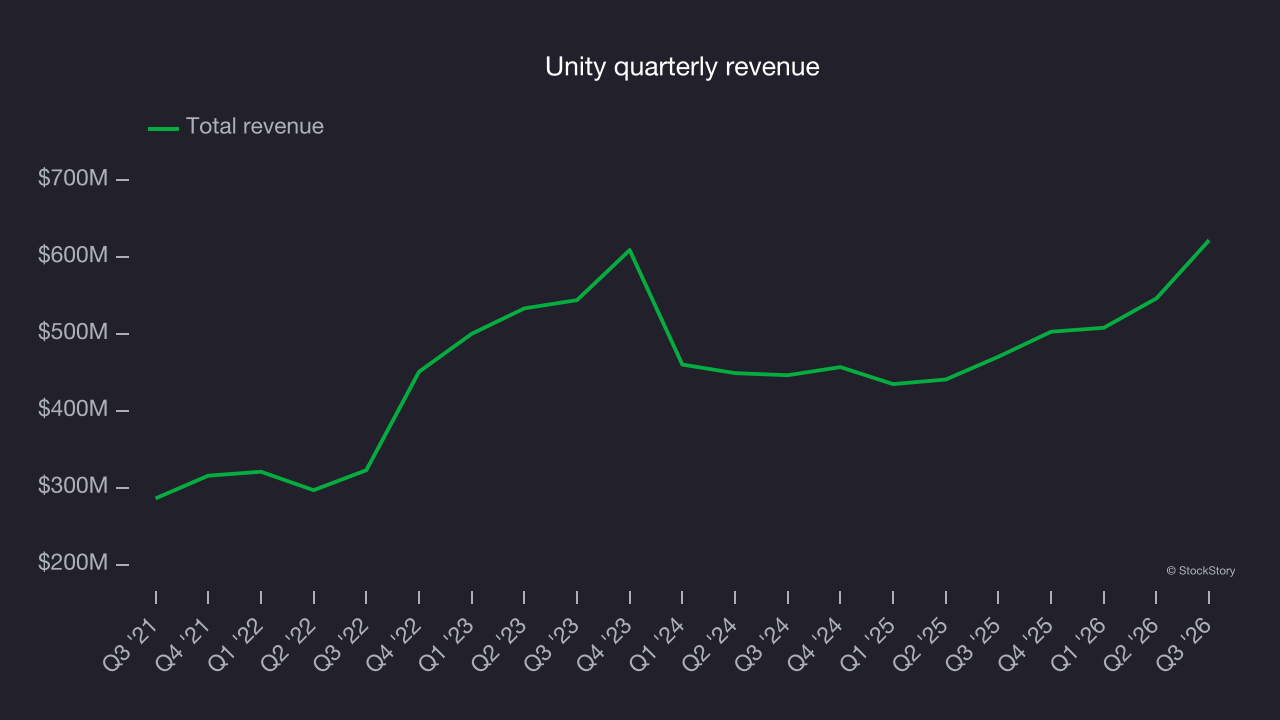
Long-term growth is the most important, but within software, a half-decade historical view may miss new innovations or demand cycles. Unity’s recent performance shows its demand has slowed as its annualized revenue growth of 5.3% over the last two years was below its five-year trend. Decelerating revenue growth in the sector warrants caution, as it could signal changing consumer tastes aided by low switching costs. 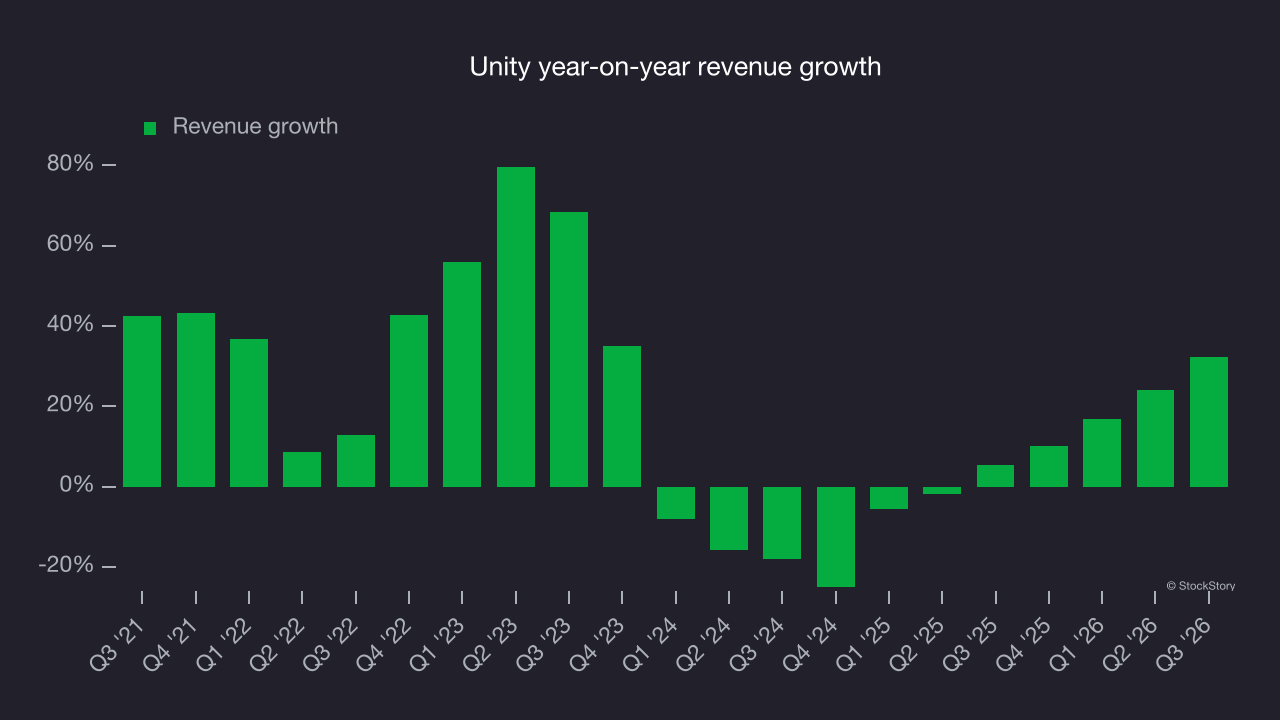
This quarter, Unity reported strong year-on-year revenue growth of 32.2%, and its $622.1 million of revenue exceeded Wall Street’s consensus estimates by 9.7%.
Looking ahead, sell-side analysts expect revenue to grow 17.5% over the next 12 months, according to S&P, an improvement versus the last two years. This projection is noteworthy and indicates its newer products and services will drive faster revenue growth.
Billings
Billings is a non-GAAP metric that is often called “cash revenue” because it shows how much money the company has collected from customers in a certain period. This is different from revenue, which must be recognized in pieces over the length of a contract.
Unity’s billings came in at $633.5 million in Q3, and over the last four quarters, billings growth was strong, averaging 19.8% year on year. This performance aligned with its total revenue growth, indicating healthy customer demand. The high level of cash collected from customers also enhances liquidity and supports future investment and growth. 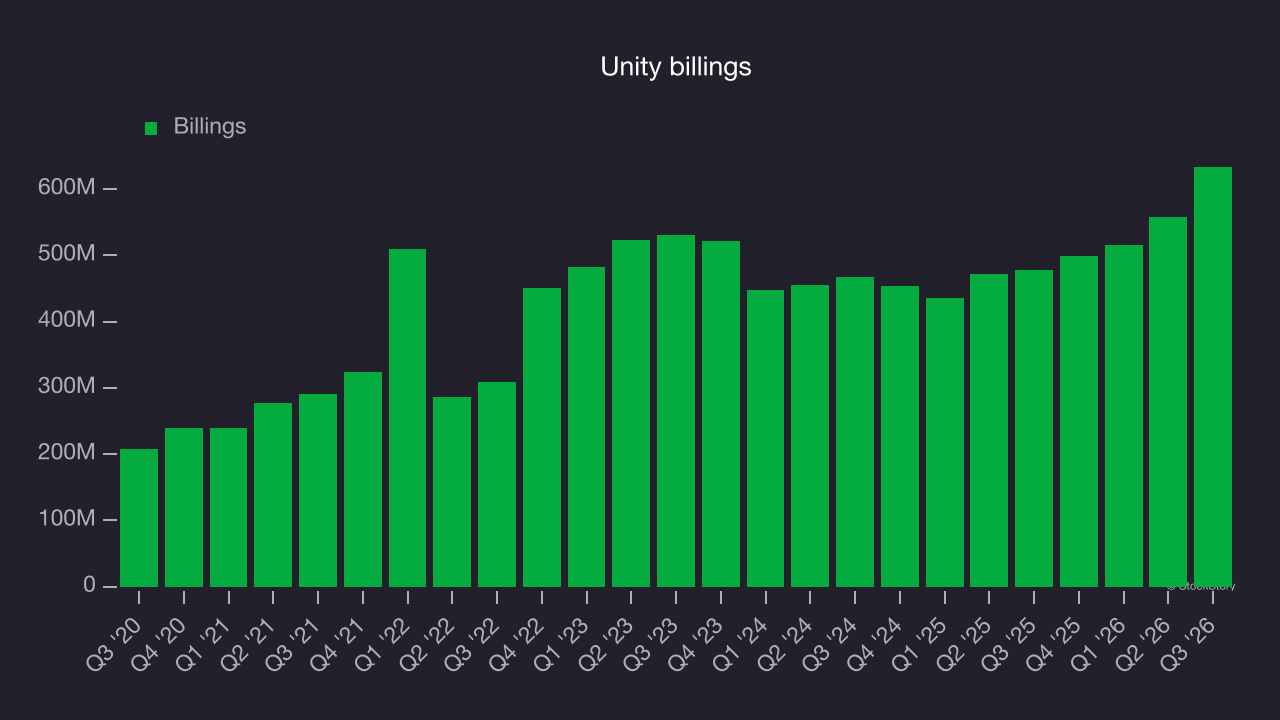
Customer acquisition efficiency
The customer acquisition cost, or CAC, payback period measures the months a company needs to recoup the money spent on acquiring a new customer. This metric helps assess how quickly a business can break even on its sales and marketing investments.
Unity is efficient at acquiring new customers, and its CAC payback period was 41.9 months this quarter. The company’s relatively fast recovery of its customer acquisition costs gives it the option to accelerate growth by increasing its sales and marketing investments.
Key takeaways from Unity’s Q3 results
Unity’s billings beat analysts’ consensus estimates by a wide margin, and its EBITDA guidance for next quarter also topped Wall Street’s consensus. Those were important positives for the quarter. Shares soared 22.8% to $52.12 immediately after the results.
Unity had a solid quarterly earnings result, but that alone doesn’t make the stock a buy. The latest quarter matters, but not nearly as much as longer-term fundamentals and valuation when deciding whether to invest. For more on these factors, read the full research report here (it’s free).