Cross-border payment platform Payoneer (NASDAQ: PAYO) missed Wall Street’s revenue expectations in Q3 2026 as revenue rose 2.2% year on year to $276.9 million. Its GAAP profit of $0.04 per share was $0.01 below analysts’ consensus estimates.
For more on Payoneer, read our full research report, available free.
Payoneer (PAYO) Q3 2026 highlights:
- Revenue $276.9 million vs S&P analysts’ consensus estimates of $285 million (2.2% year-on-year growth, 2.8% miss)
- Pre-tax profit $31.28 million (11.3% margin)
- EPS (GAAP) $0.04 vs analysts’ consensus estimates of $0.05 ($0.01 miss)
- Market capitalization $2.43 billion
Revenue growth
A company’s long-term revenue performance is one signal of its overall quality. Any business can have short-term success, but a top-tier one grows for years. Payoneer’s 20.8% annualized revenue growth over the last five years was strong. Its growth beat the average financials company and shows its offerings resonate with customers.
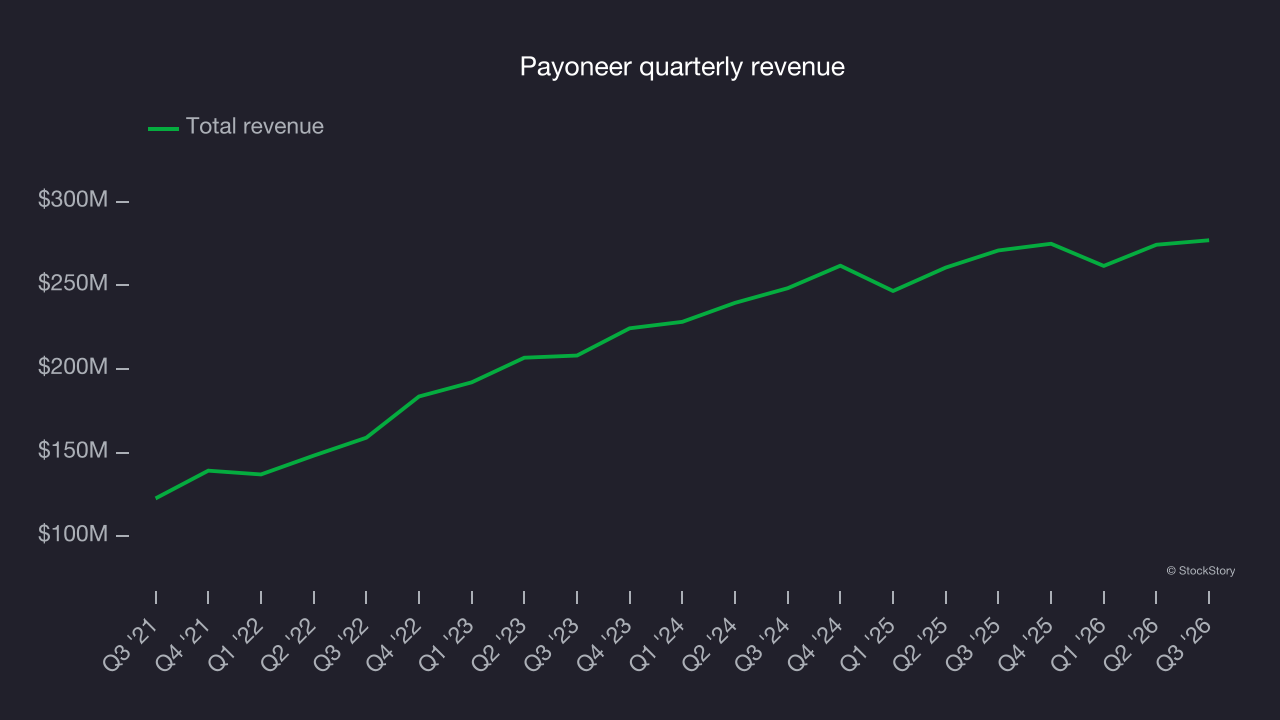
Long-term growth matters most, but within financials, a half-decade historical view may miss recent interest rate changes and market returns. Payoneer’s annualized revenue growth of 7.5% over the last two years is below its five-year trend, but the results were still respectable. 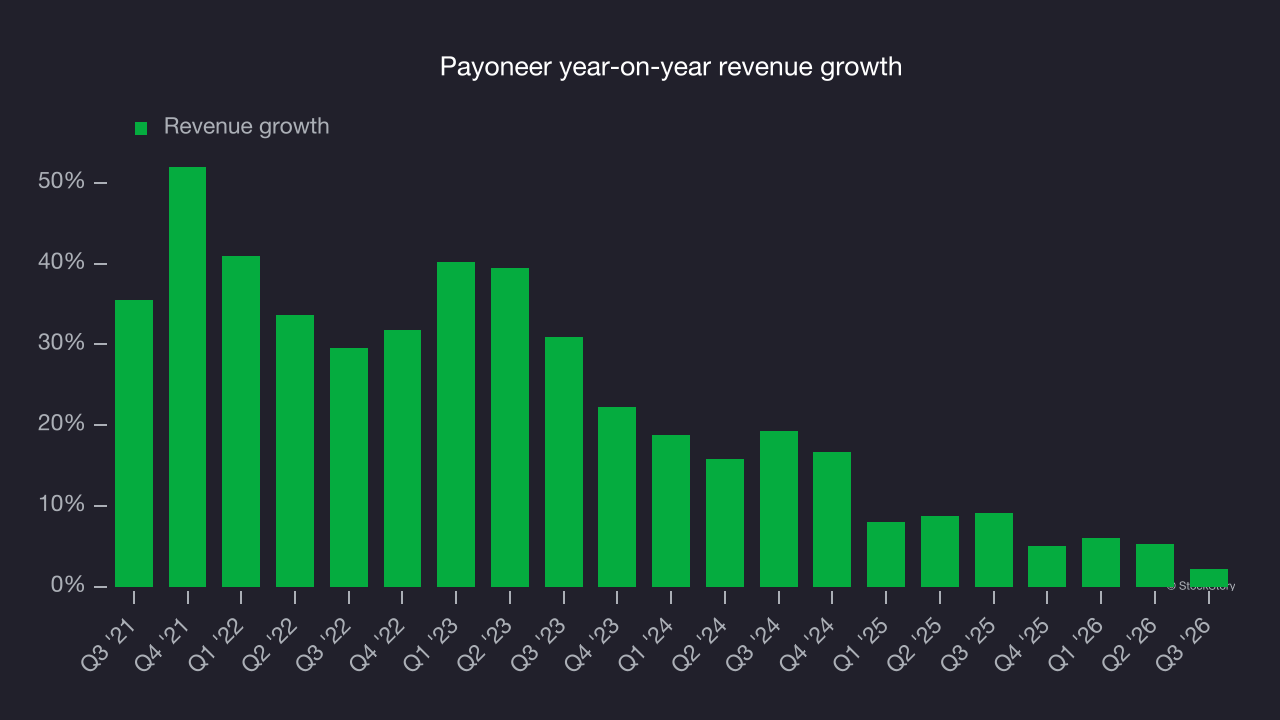
This quarter, Payoneer’s revenue grew by 2.2% year on year to $276.9 million, falling short of Wall Street’s consensus estimates.
Key takeaways from Payoneer’s Q3 results
Payoneer had few positives to point to in a softer Q3, with EBITDA missing Wall Street’s consensus estimates and EPS coming in on target. Shares remained flat at $7.17 immediately after the results.
Payoneer’s quarter could have been better, but that alone does not determine whether the stock is a buy. The latest quarter is only one part of assessing longer-term business quality. Quality, when combined with valuation, can help determine if the stock is a buy. For more on Payoneer, read our full research report here (it’s free).