Online home goods retailer Wayfair (NYSE: W) beat Wall Street’s revenue expectations in Q3 2026, with revenue up 9.7% year on year to $3.42 billion. Its non-GAAP profit of $0.93 per share was 14.3% above analysts’ consensus estimates.
For more on Wayfair, read our free full research report.
Wayfair (W) Q3 2026 highlights:
- Revenue $3.42 billion vs S&P analysts’ consensus estimates of $3.38 billion (9.7% year-on-year growth, 1.3% beat)
- Adjusted EPS $0.93 vs S&P analysts’ consensus estimates of $0.81 (14.3% beat)
- Adjusted EBITDA $236 million vs analysts’ consensus estimates of $225.6 million (6.9% margin, 4.6% beat)
- Operating margin 3.1%, up from 1.2% in the same quarter last year
- Free cash flow margin 4%, down from 8.6% in the previous quarter
- Active customers 22.2 million, up 1.2 million year on year
- Market capitalization $15.25 billion
"Q3 was our strongest quarter of growth in the post-pandemic period, with total net revenue up 9.7% year-over-year and our U.S. business growing over 11%. That growth flowed through nicely to the bottom line, with an Adjusted EBITDA Margin of 6.9%, our best Q3 result since 2020," said Niraj Shah, CEO, co-founder and co-chairman, Wayfair.
Revenue growth
A company’s long-term performance is an indicator of its overall quality. Any business can deliver a good quarter or two, but many enduring ones grow for years. Over the last three years, Wayfair grew its revenue at a sluggish 3.3% compounded annual growth rate, falling short of our standard for the consumer internet sector.
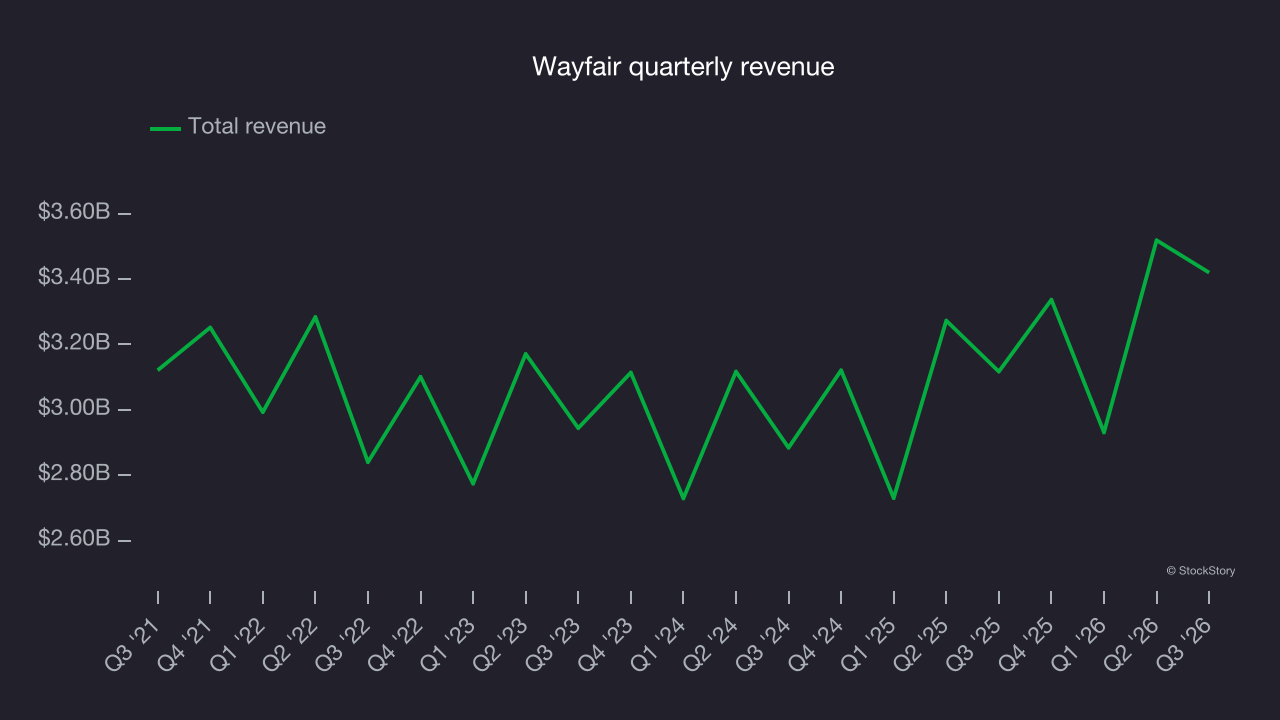
This quarter, Wayfair reported year-on-year revenue growth of 9.7%, and its $3.42 billion of revenue exceeded Wall Street’s consensus estimates by 1.3%.
Looking ahead, sell-side analysts expect revenue to grow 6.8% over the next 12 months, according to S&P. Although this projection implies its newer products and services will drive faster revenue growth, it is still below average for the sector.
Active customers
Buyer growth
As an online retailer, Wayfair generates revenue growth by expanding its number of users and the average order size in dollars.
Wayfair struggled with new customer acquisition over the last two years as its active customers have declined by 1.1% annually to 22.2 million in the latest quarter. This performance isn’t ideal because internet usage is secular, meaning there are typically unaddressed market opportunities. If Wayfair wants to accelerate growth, it likely needs to enhance the appeal of its current offerings or innovate with new products. 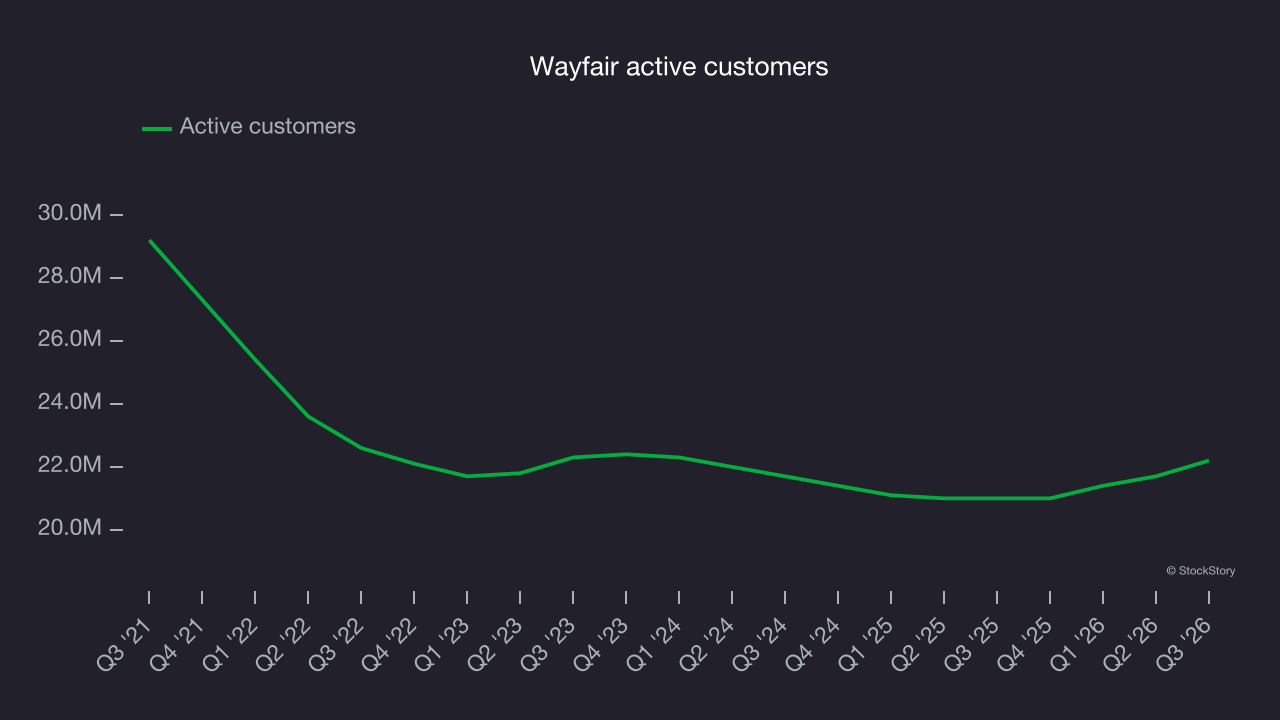
Wayfair added 1.2 million active customers in Q3, leading to 5.7% year-on-year growth. Growth in the quarter exceeded its two-year rate, suggesting its new initiatives are accelerating buyer growth.
Revenue per buyer
Average revenue per buyer, or ARPB, is a critical metric to track because it measures how much customers spend per order.
Wayfair’s ARPB growth has been mediocre over the last two years, averaging 4.8%. This raises questions about its platform’s health when paired with its declining active customers. If Wayfair wants to grow its buyers, it must either develop new features or lower its monetization of existing ones. 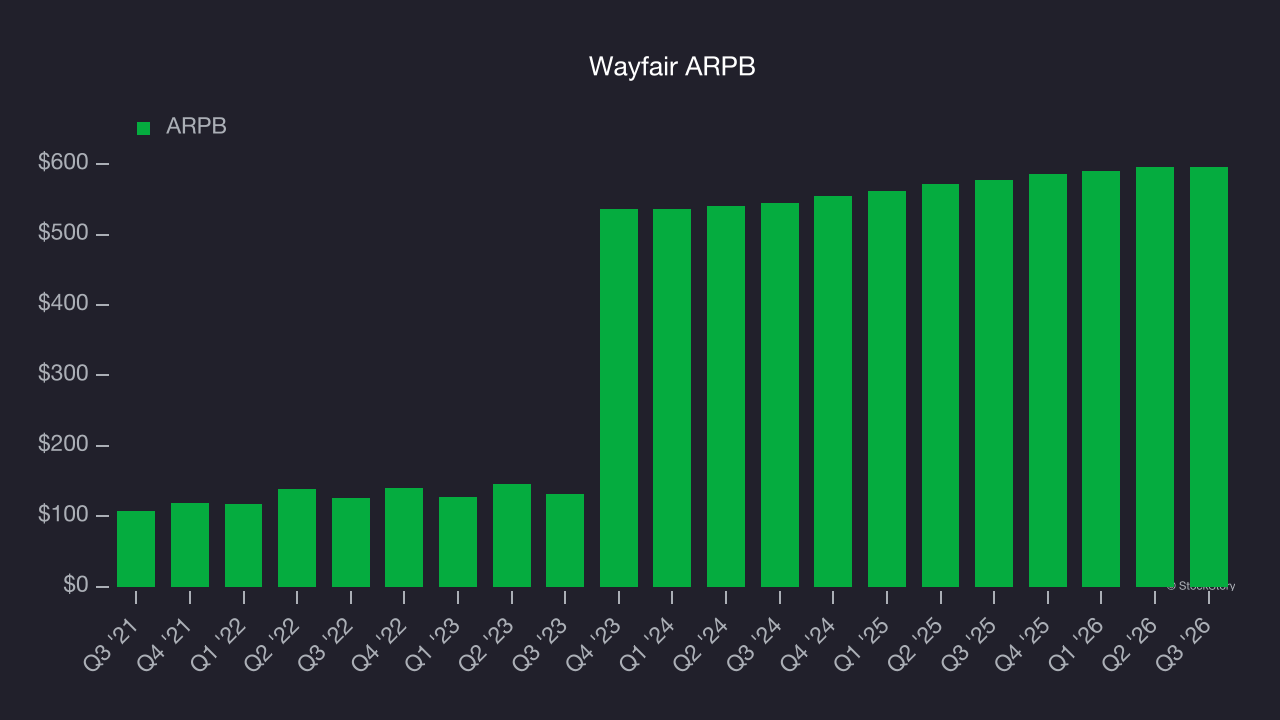
This quarter, Wayfair’s ARPB was $596. It grew by 3.1% year on year, slower than its buyer growth.
Key takeaways from Wayfair’s Q3 results
Wayfair delivered a decent Q3, with an EBITDA beat and revenue narrowly ahead of Wall Street’s consensus estimates. Those results put some key metrics above expectations. Shares rose 2.4% to $114.08 immediately after the results.
Wayfair may have had a good quarter, but that alone doesn’t make the stock a buy. When making that decision, it’s important to consider its valuation and business quality, as well as what has happened in the latest quarter. For more on those factors, read the full research report here (it’s free).