Ultra low-cost airline Frontier Group Holdings (NASDAQ: ULCC) announced better-than-expected revenue in Q3 2026, with revenue up 52.9% year on year to $1.36 billion. Its non-GAAP profit of $0.18 per share was significantly above analysts’ consensus estimates.
For more on Frontier, read our free full research report.
Frontier (ULCC) Q3 2026 highlights:
- Revenue $1.36 billion vs S&P analysts’ consensus estimates of $1.29 billion (52.9% year-on-year growth, 4.9% beat)
- Adjusted EPS $0.18 vs S&P analysts’ consensus estimates of -$0.06 (significant beat)
- Adjusted EBITDA $284 million vs analysts’ consensus estimates of $215.9 million (21% margin, 31.5% beat)
- Adjusted EPS guidance -$0.05 at the midpoint for Q4 2026, above analysts’ consensus estimates of -$0.09
- Operating margin -8%, in line with the same quarter last year
- Revenue passenger miles 9.81 billion, up 1.99 billion year on year
- Market capitalization $1.27 billion
"Frontier's revenue execution in a higher than expected fuel environment resulted in an adjusted profit, meaningfully above the Company's guidance and Wall Street estimates," said Jimmy Dempsey, President and Chief Executive Officer. "The Company delivered record revenue of $1.4 billion, up 53 percent versus the prior year, due to strong travel demand and the continued progression of the Company's revenue management initiatives, while maintaining cost discipline. These results reflect the successful progression of the Company's strategic initiatives set out earlier this year, and it gives us confidence in our ability to translate our momentum into sustainable profitability."
Revenue growth
Examining a company’s long-term performance can provide clues about its quality. Any business can have short-term success, but a top-tier one grows for years. Over the last five years, Frontier grew its revenue at a 22.3% annual rate. Though this growth is acceptable on an absolute basis, revenue growth alone is not enough in the consumer discretionary sector, which can display significant earnings volatility. This means the bar for the sector is particularly high, reflecting the non-essential and hit-driven nature of the products and services offered. Additionally, the five-year growth period starts around Covid, when revenue was depressed before rebounding.
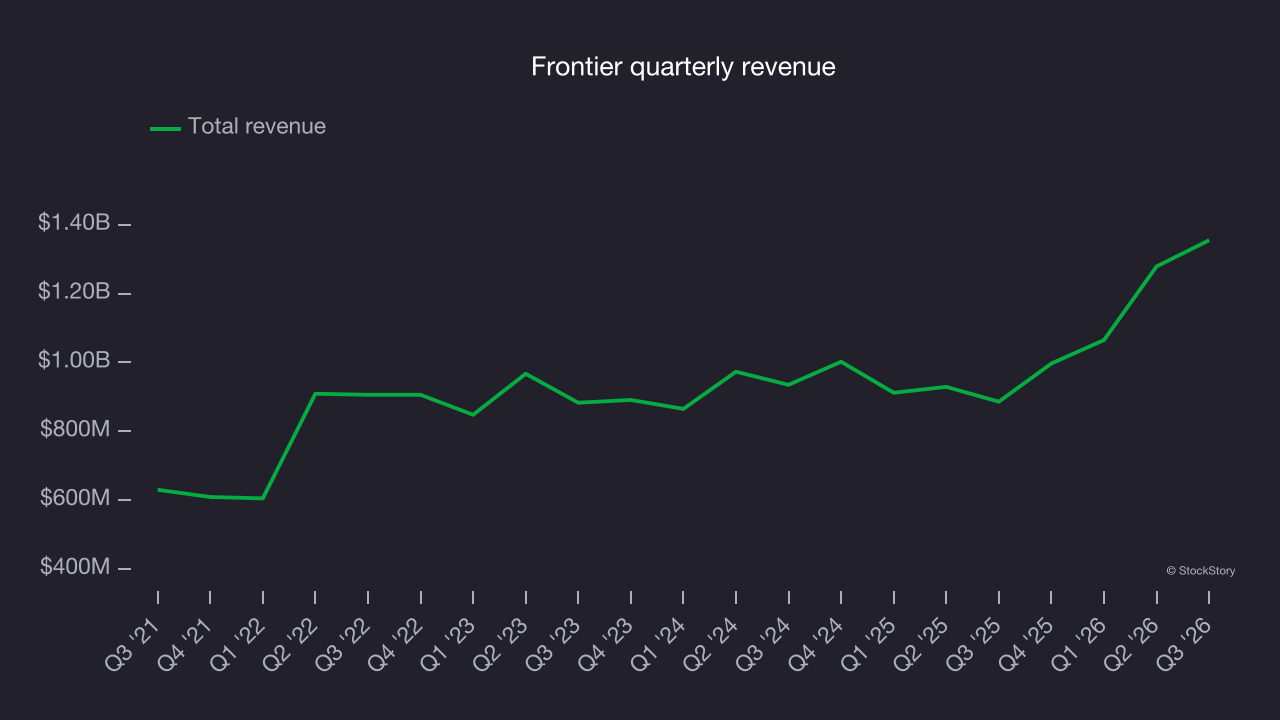
Long-term growth matters the most, but within consumer discretionary, a stretched historical view may miss a company riding a successful new property or trend. Frontier’s recent performance shows its demand has slowed as its annualized revenue growth of 13.2% over the last two years was below its five-year trend. Decelerating revenue growth in this sector warrants caution, as it could signal changing consumer tastes aided by low switching costs. 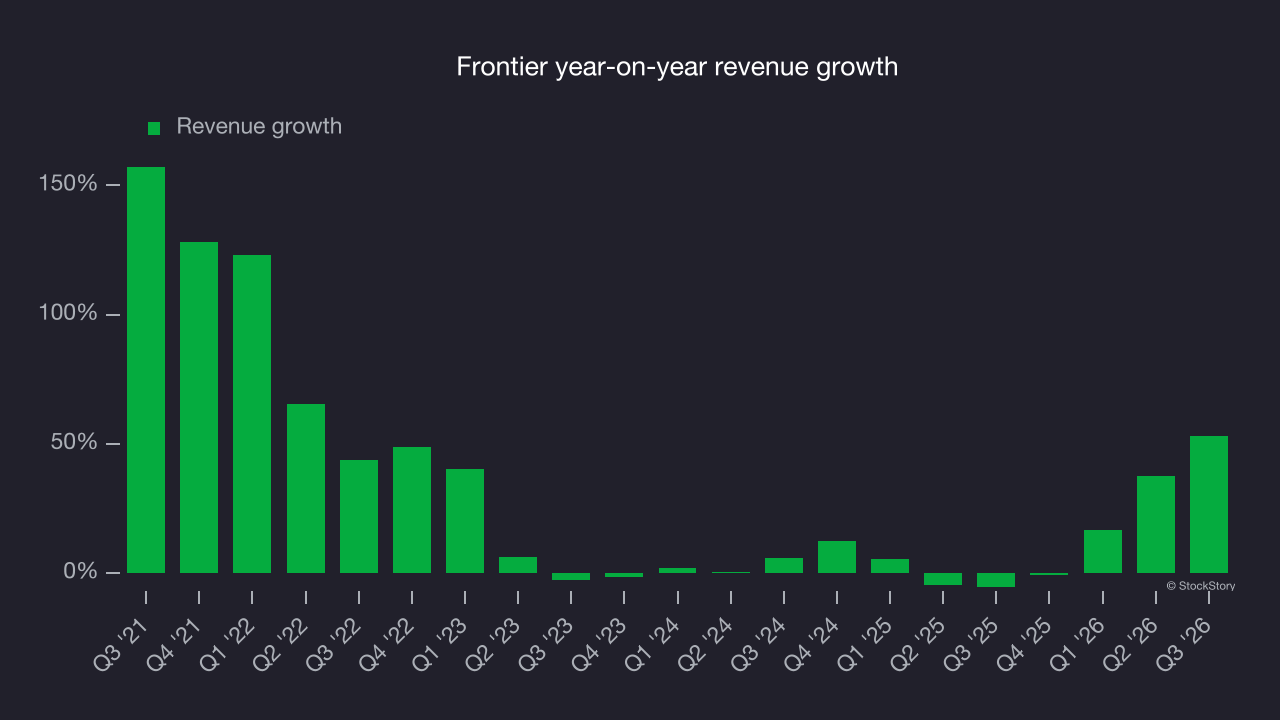
This quarter, Frontier reported strong year-on-year revenue growth of 52.9%, and its $1.36 billion of revenue beat Wall Street’s consensus estimates by 4.9%.
Looking ahead, sell-side analysts expect revenue to grow 13.6% over the next 12 months, according to S&P, similar to its two-year rate. This projection is above average for the sector and implies its newer products and services will help sustain its recent top-line performance.
Operating margin
Operating margin is a key measure of profitability. Think of it as net income, or the bottom line, excluding the impact of taxes and interest on debt, which are less connected to business fundamentals.
Frontier’s operating margin has been trending down over the last 12 months and averaged negative 7% over the last two years. Unprofitable consumer discretionary companies with falling margins deserve extra scrutiny because they’re spending heavily to stay relevant, an unsustainable practice.
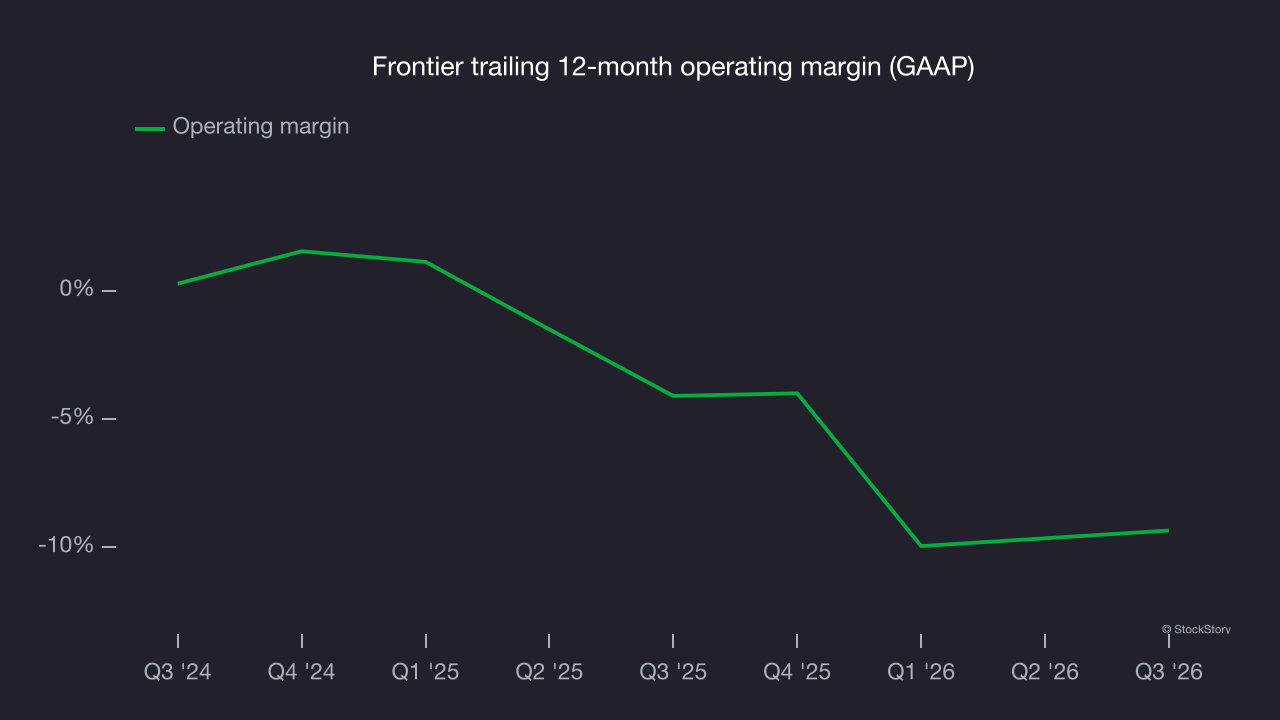
Frontier’s operating margin was negative 8% this quarter. The company’s consistent lack of profits raises concerns.
Earnings per share
We track the long-term change in earnings per share (EPS) for the same reason as long-term revenue growth. Compared to revenue, however, EPS highlights whether a company’s growth is profitable.
Frontier’s full-year EPS turned positive over the last five years. This is a positive development and marks a critical point for the company.
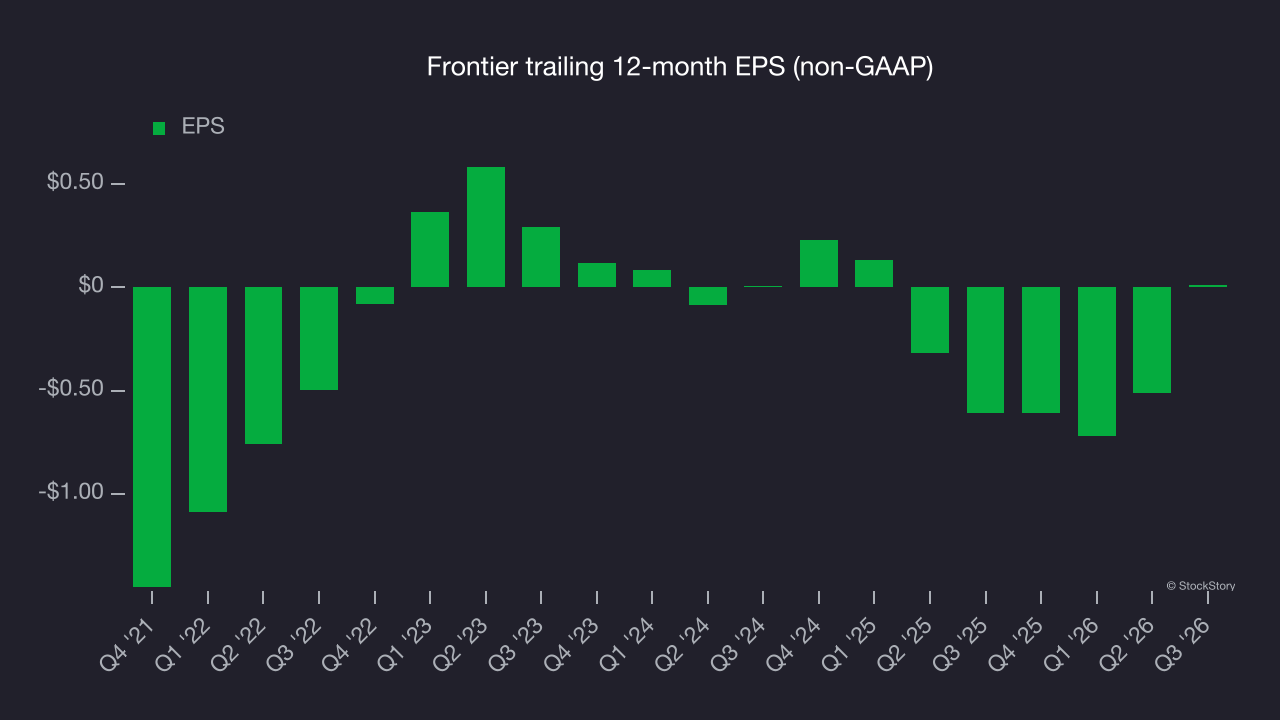
In Q3, Frontier reported adjusted EPS of $0.18, up from negative $0.34 in the same quarter last year. This result easily cleared analysts’ consensus estimates, a positive outcome for shareholders. Over the next 12 months, Wall Street expects Frontier to perform poorly. Analysts forecast its full-year EPS will turn negative, falling from $0.01 to negative $0.12, according to S&P.
Key takeaways from Frontier’s Q3 results
Frontier’s report had some clear positives: EPS topped Wall Street’s consensus, and next-quarter EPS guidance came in well above analysts’ consensus estimates. Shares edged higher 1.8% to $5.63 immediately after the release.
Frontier reported solid earnings, but one quarter doesn’t necessarily make the stock a buy. The latest quarter is only one piece of the longer-term business quality puzzle. Quality, when combined with valuation, can help determine if the stock is a buy. For more on Frontier, read the full research report here (it’s free).