Regional banking company Lakeland Financial (NASDAQGS:LKFN) missed Wall Street’s revenue expectations in Q3 2026 as revenue rose 4.1% year on year to $73 million. Its GAAP profit of $1.14 per share was 4.8% above analysts’ consensus estimates.
For more on Lake City Bank, read our free full research report.
Lake City Bank (LKFN) Q3 2026 highlights:
- Net interest income: $60.72 million vs analysts’ consensus estimates of $60.91 million (8.3% year-on-year growth, in line)
- Net interest margin: 3.6% vs analysts’ consensus estimates of 3.5% (9 basis point beat)
- Revenue: $73 million vs analysts’ consensus estimates of $73.59 million (4.1% year-on-year growth, 0.8% miss)
- Efficiency ratio: 49.5% vs analysts’ consensus estimates of 48.7% (78 basis point miss)
- EPS (GAAP): $1.14 vs analysts’ consensus estimates of $1.09 (4.8% beat)
- Tangible book value per share: $29.14 vs analysts’ consensus estimates of $31.02 (flat year on year, 6.1% miss)
- Market capitalization: $1.45 billion
“Strong loan growth and healthy net interest margin expansion were reflected in the quality of our earnings performance in the quarter,” commented David M. Findlay, Chairman and CEO. “Clearly, the resulting record net income reflects the efforts of the entire Lake City Bank team as we continue to grow our market share in every market we serve.”
Revenue growth
In general, banks make money from two primary sources. The first is net interest income, which is interest earned on loans, mortgages and investments in securities minus interest paid out on deposits. The second source is non-interest income, which can come from bank account, credit card, wealth management, investment banking and trading fees. Unfortunately, Lake City Bank’s 4.8% annualized revenue growth over the last five years was sluggish. This fell short of the benchmark for the banking sector.
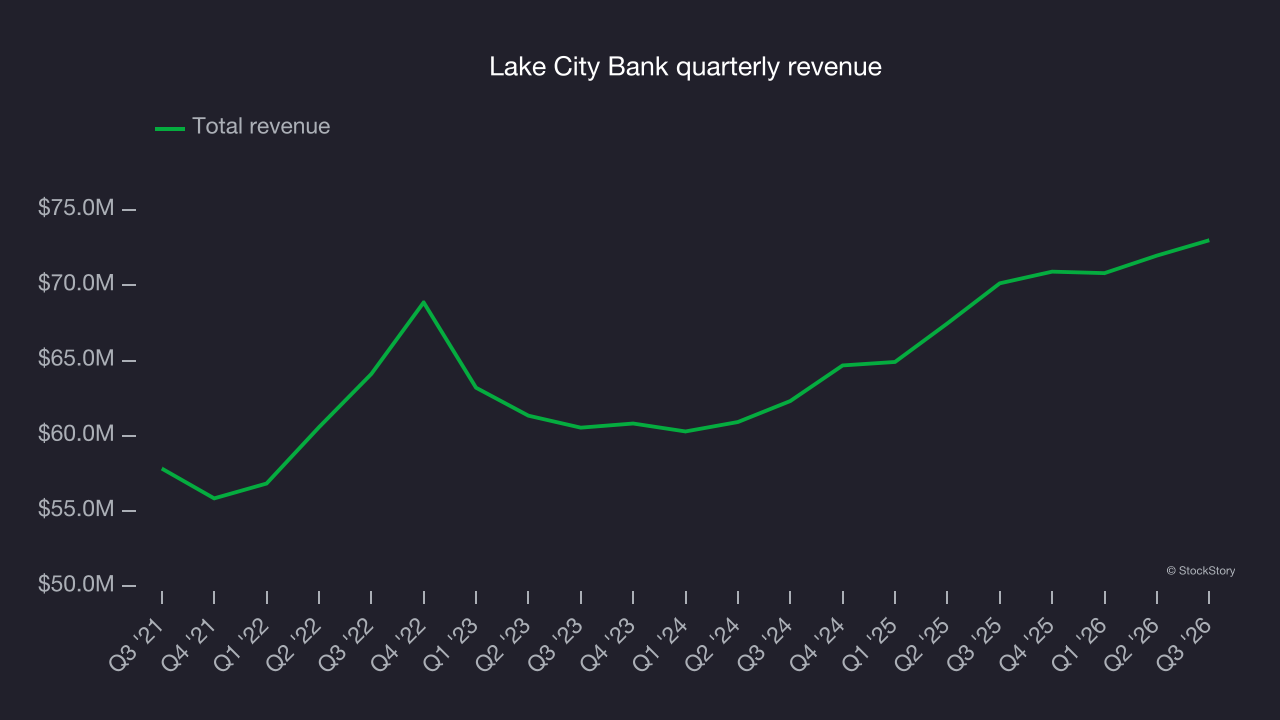
Long-term growth matters most, but within financials, a half-decade historical view may miss recent interest rate changes, market returns and industry trends. Lake City Bank’s annualized revenue growth of 8.3% over the last two years is above its five-year trend, a positive sign. 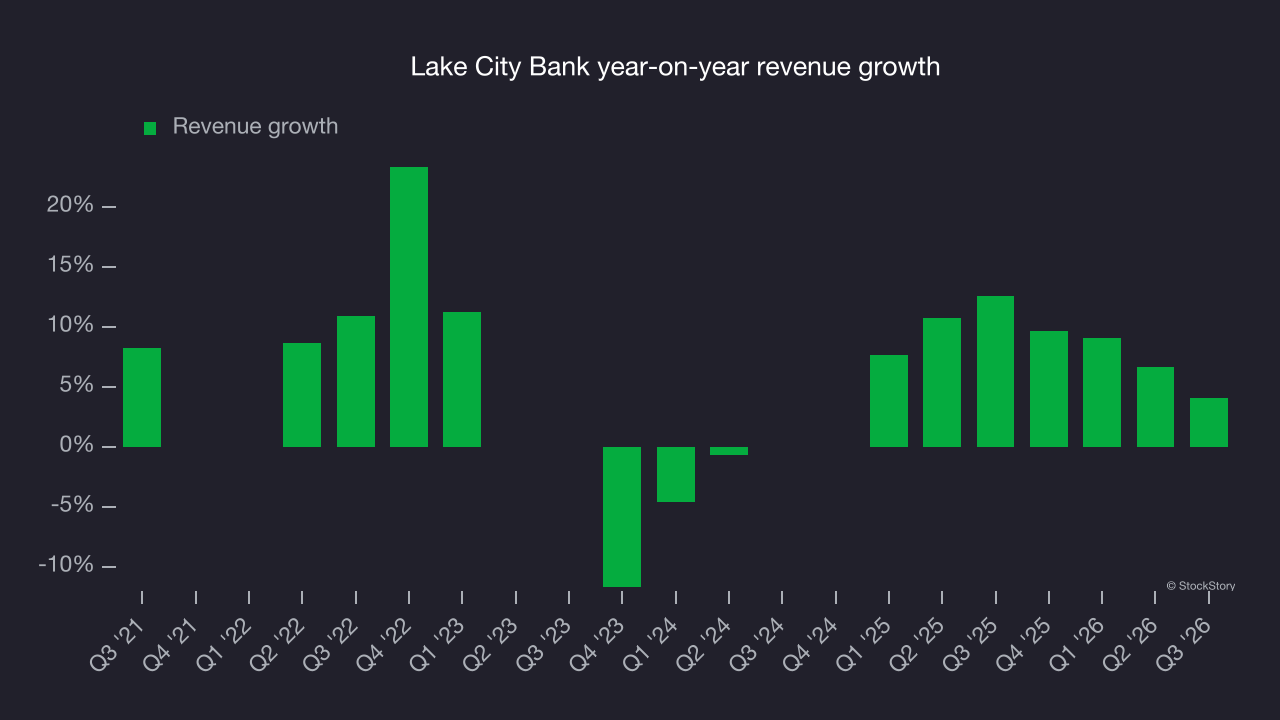 Note: Quarters not shown were determined to be outliers because they were impacted by outsized investment gains/losses that are not indicative of the recurring fundamentals of the business.
This quarter, Lake City Bank’s revenue grew by 4.1% year on year to $73 million, falling short of Wall Street’s consensus estimates.
Net interest income made up 80.5% of the company’s total revenue during the last five years, meaning Lake City Bank relies relatively little on non-interest income to drive its overall growth.
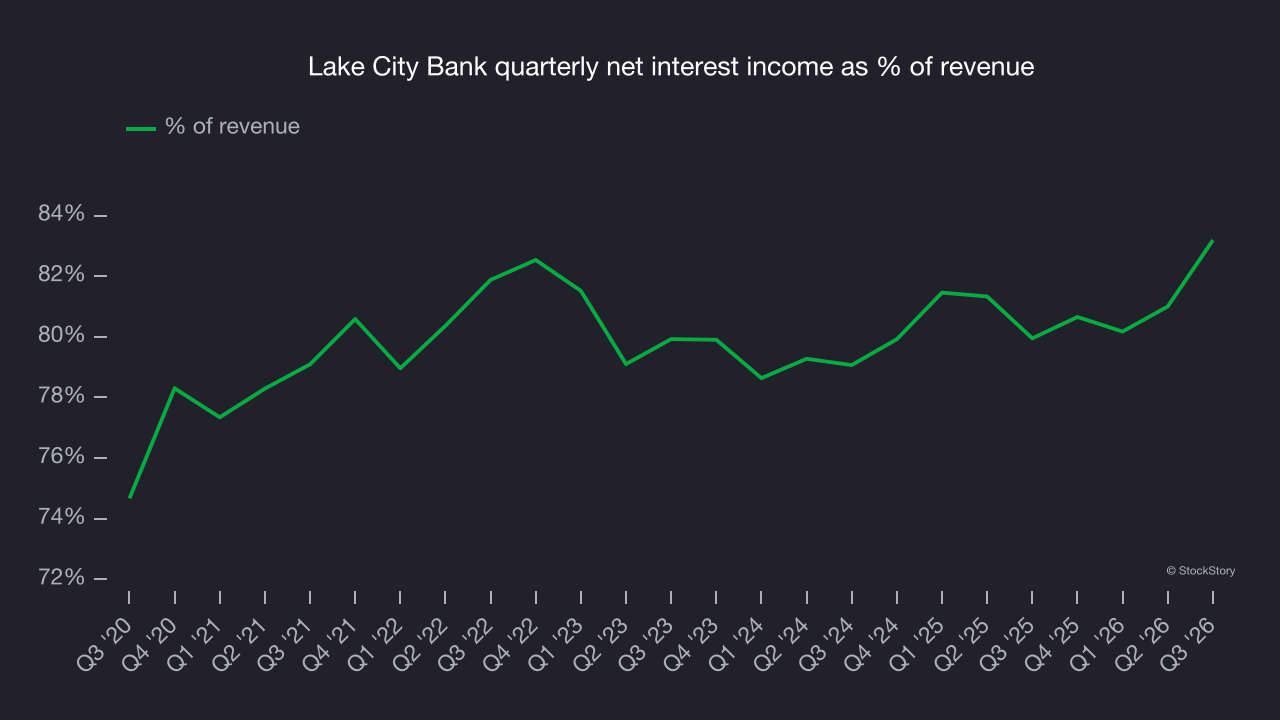
While banks generate revenue from multiple sources, investors view net interest income as the cornerstone – its predictable, recurring characteristics stand in sharp contrast to the volatility of non-interest income.
Tangible book value per share (TBVPS)
Banks profit by intermediating between depositors and borrowers, making them fundamentally balance sheet-driven enterprises. Market participants emphasize balance sheet quality and sustained book value growth when evaluating these institutions.
When analyzing banks, tangible book value per share (TBVPS) takes precedence over many other metrics. This measure isolates genuine per-share value by removing intangible assets of debatable liquidation worth. Traditional metrics like EPS are helpful but face distortion from M&A activity and loan loss accounting rules.
Lake City Bank’s TBVPS grew at a sluggish annual rate of 1.7% over the last five years. However, growth accelerated to 3.5% annually over the last two years, with TBVPS rising from $27.21 to $29.14 per share.
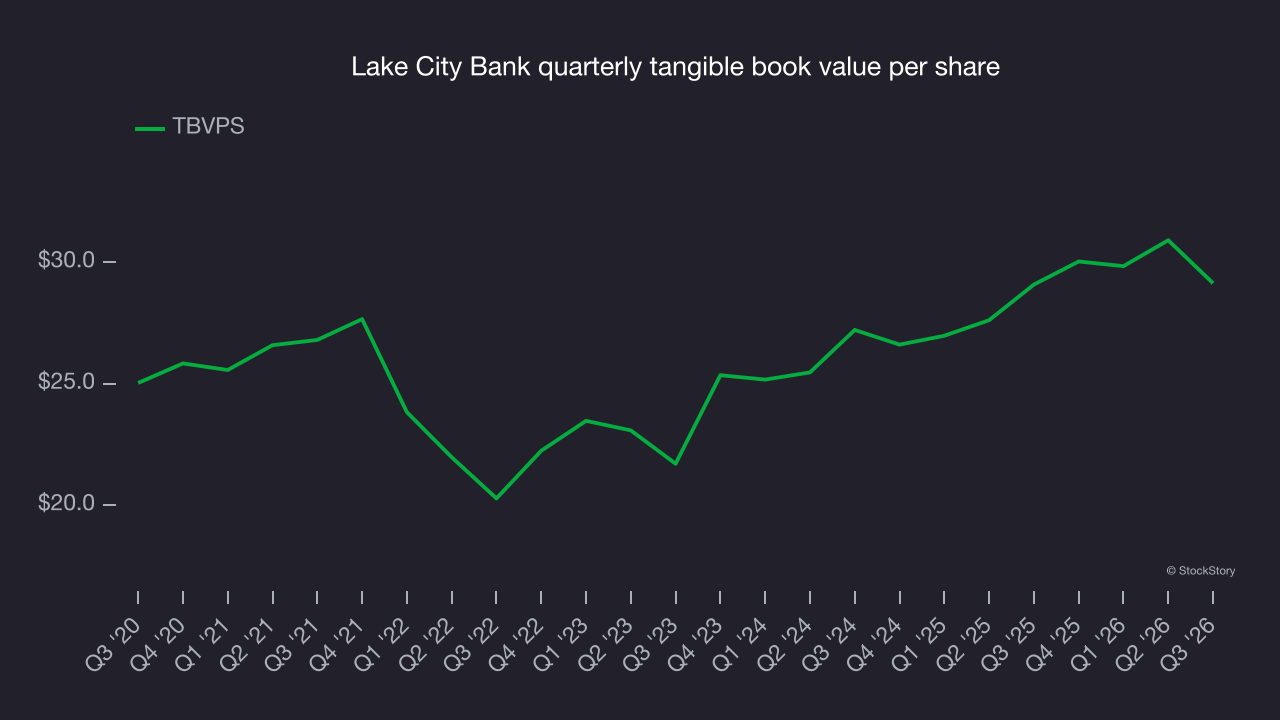
Over the next 12 months, consensus estimates call for Lake City Bank’s TBVPS to grow by 15.8% to $33.76, a solid growth rate.
Key takeaways from Lake City Bank’s Q3 results
Lake City Bank’s quarter offered few positives: tangible book value per share missed expectations, and revenue came in slightly below Wall Street’s consensus. Those shortfalls made for a softer quarter. Shares remained flat at $58.39 immediately after the report.
Lake City Bank’s earnings report left more to be desired. To assess whether the stock offers an investment opportunity after this quarter, consider its valuation, business quality and latest earnings. Read the full research report here (it’s free).