In October, as clear skies and refreshing breezes sweep across the shores of the Bohai Bay, the autumn salt harvest in Wudi County has got fully underway, with more than 200,000 mu (approximately 13,333 hectares) of salt fields across the county entering the peak autumn harvesting period. Across the vast coastal flats, vibrant colors spread across the landscape as harvesting machinery moves back and forth. Once-barren saline-alkali flats have been transformed into a vivid autumn scene of thriving industry and a bountiful harvest.
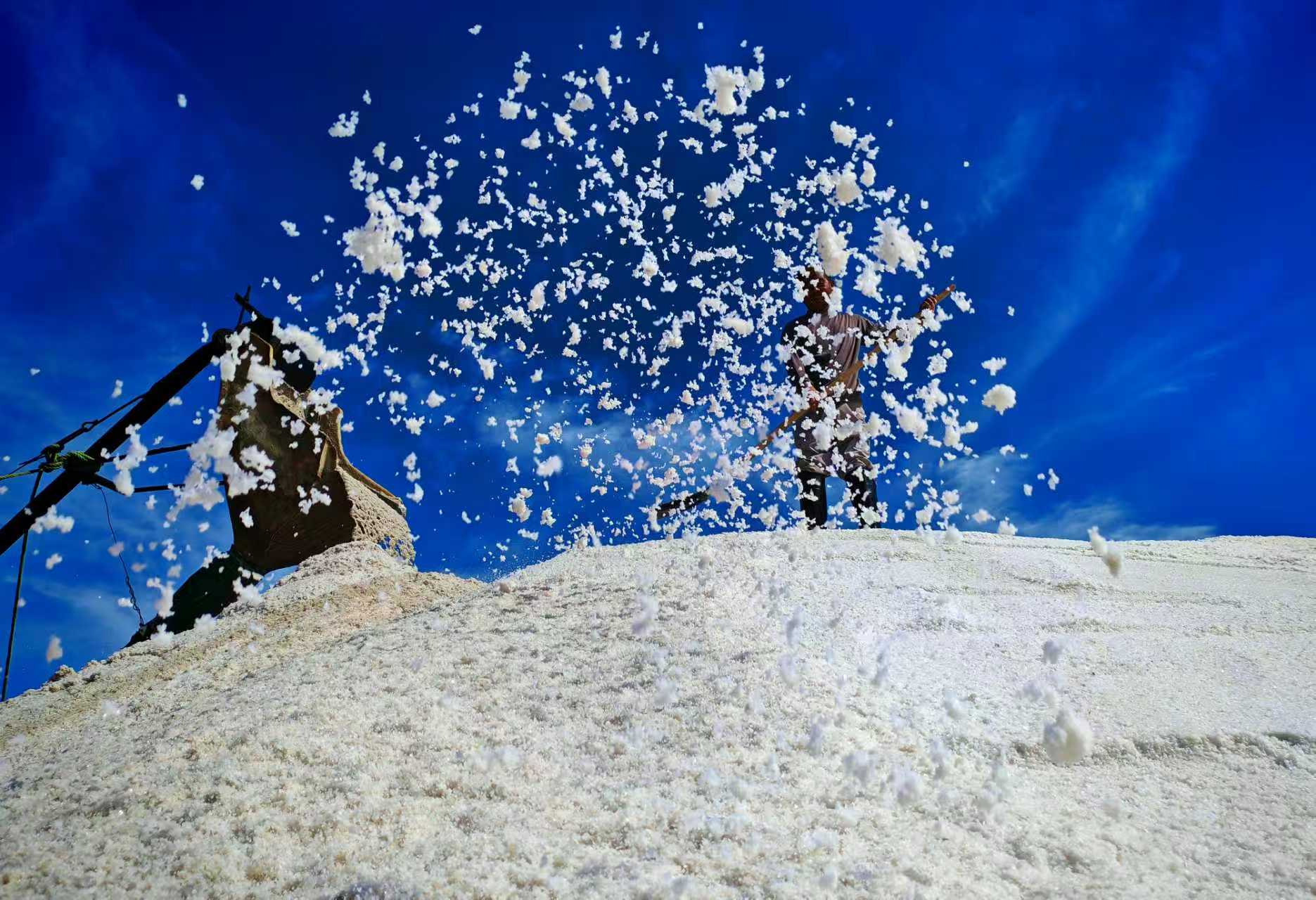
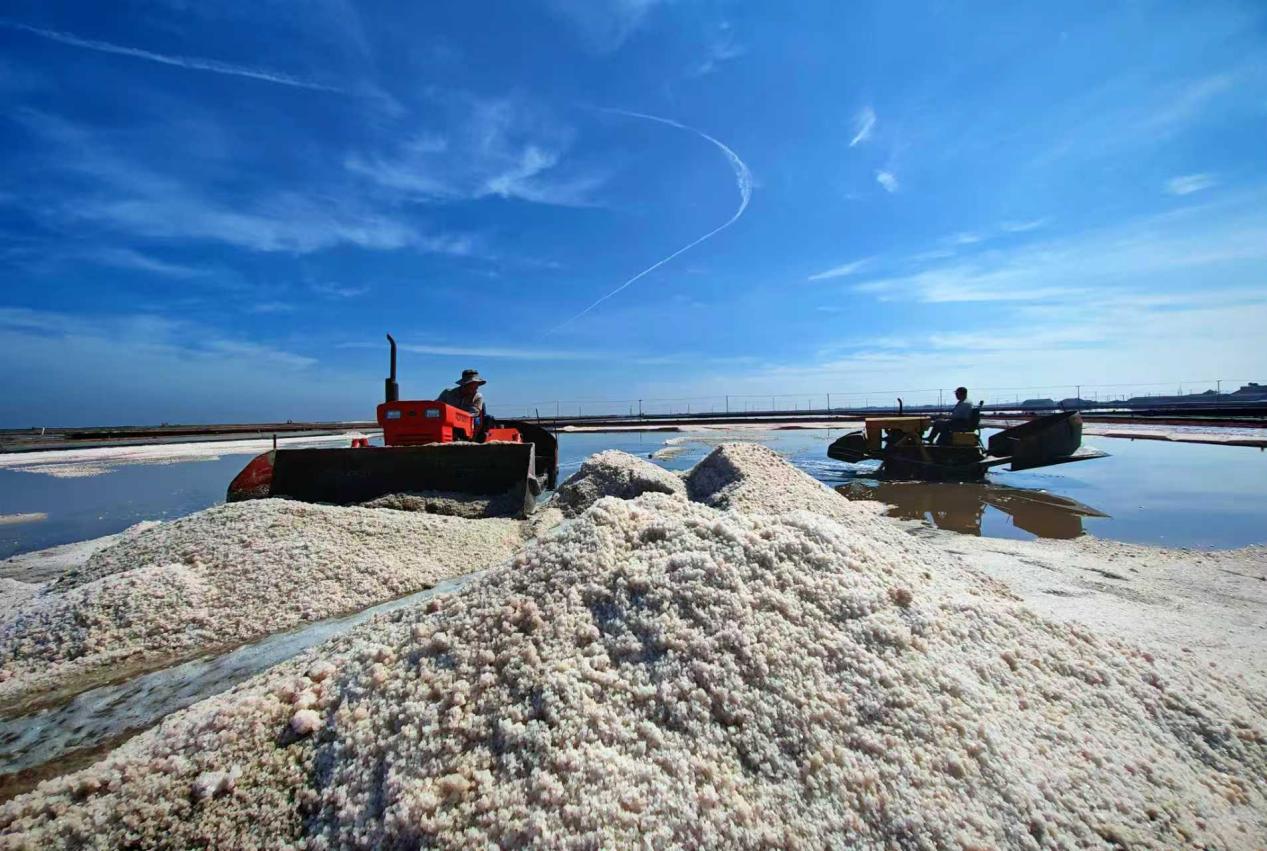
At the Chewangcheng Salt Farm in Chengkou Town, Wudi County, expansive salt fields stretch out in neat, orderly patterns, with silvery-white salt ridges extending into the distance. Workers coordinate their efforts and work seamlessly alongside large salt-harvesting machines, carrying out the scraping, gathering, and transportation of salt in an orderly manner. Viewed from above, the salt ponds form a patchwork across the landscape. Variations in brine concentration and sunlight give the fields a rich palette of colors, including emerald green, amber, and deep blue. Sunlight glimmers on the brine, creating a striking contrast with piles of snow-white salt. The picturesque coastal flats capture the distinctive ecological and harvest landscape of northern Shandong's coastline.
Su Ruqiang, manager of the Chewangcheng Salt Farm in Chengkou Town, Wudi County, explained that autumn is the prime season for harvesting sea salt. The salt farm is making the most of the stretch of sunny weather, scientifically managing brine distribution and carefully maintaining the salt fields while enforcing strict standards at every stage of production. The farm is expected to produce 200,000 metric tons of raw salt this year. Mechanized harvesting operations are now proceeding at full speed to complete the harvest while ensuring both quality and output, helping maintain a stable supply of raw salt to the market.
As an important sea-salt production area in northern Shandong, Wudi County benefits from abundant coastal saline-alkali resources. In recent years, the county has built on these natural advantages to strengthen its distinctive sea-salt industry, upgrading the entire process—from solar evaporation and harvesting to storage and transportation—with greater mechanization and standardized practices. Traditional production methods that relied on manual salt scraping and human-powered transport are gradually giving way to the widespread use of large-scale machinery. This transition has significantly reduced labor intensity while improving harvesting efficiency and product quality. Throughout the industry's development, Wudi has prioritized ecological protection, safeguarding the natural character of coastal wetlands and tidal flats while balancing resource development with environmental conservation. By revitalizing a traditional sea-salt industry with a history spanning thousands of years, the county has transformed once-quiet saline-alkali wastelands into valuable coastal resources that generate prosperity and support industrial growth.
According to local sources, this year's autumn salt harvest began in early October and will continue through the end of the month. Across the tidal flats, brine crystallizes into salt, with every grain of sea salt carrying the promise of a fruitful harvest. The salt fields along the Bohai coast are not only home to a long-established local industry but also a vivid example of Wudi County's pursuit of high-quality development. By building on its distinctive natural resources and continually expanding the value chain, the county is enabling its saline-alkali coastal flats to deliver lasting economic benefits and improve local livelihoods.