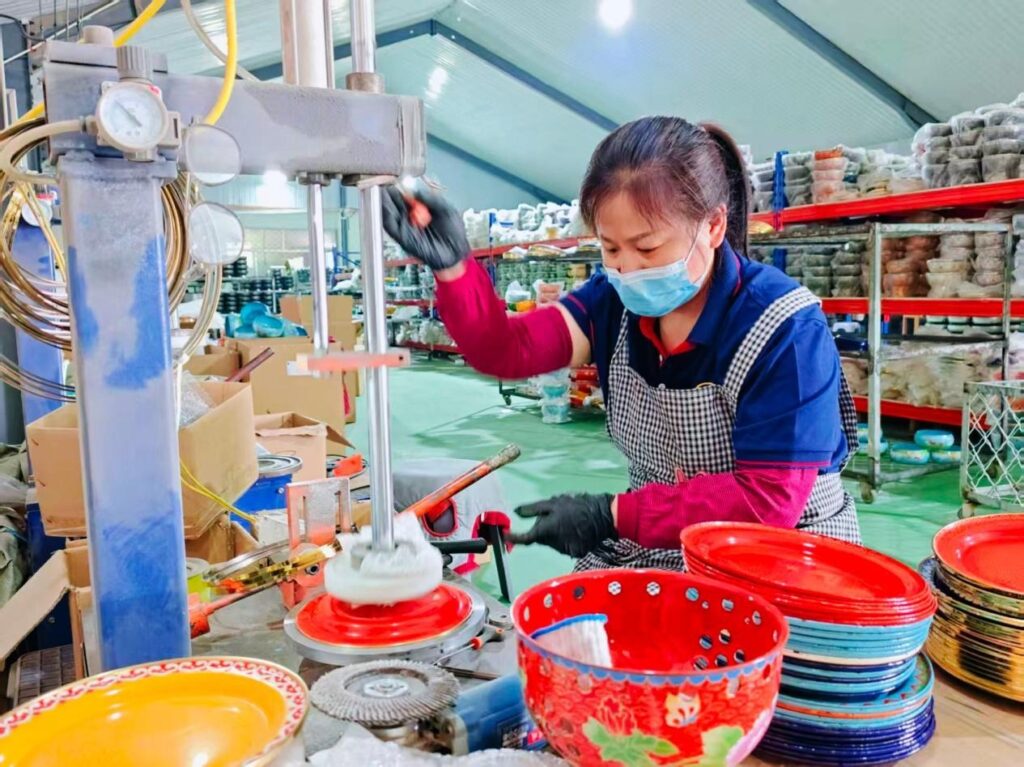
At 6:30 a.m., the copper pot polishing workshop of Jingshi Hotpot Workshop in Liupowu Town lights up. Brand-new workstations line the production floor, yet more than half remain vacant. The workshop manager looks at the production schedule posted on the wall and sighs: “Orders are already booked for the next three months, but we are still short of more than 20 skilled workers.” Meanwhile, five kilometers away in Nanjie Village, several stay-at-home women sit under the shade of trees chatting: “If there were some small jobs we could do from home, we could take care of the children and still earn some extra income.”
Such an “information mismatch” was once a common challenge faced by many villages and enterprises in Liupowu Town, Yangxin County. Since 2026, an “Integrated Media Enterprise Support and Convenience Service Team” led by the town’s publicity department has entered factories and rural households, using employment records, short videos, and WeChat groups to build a bridge between labor supply and demand.
Visiting workshops and entering villages, two lists reveal the real needs of both sides
At a traditional halal pastry shop, the owner points to freshly made honey pastries and sighs: “Our craftsmanship relies on handmade dough preparation, but young people are reluctant to take on the hard work, while experienced craftsmen have difficulty finding apprentices. Right now, we urgently need more dough-making workers.”
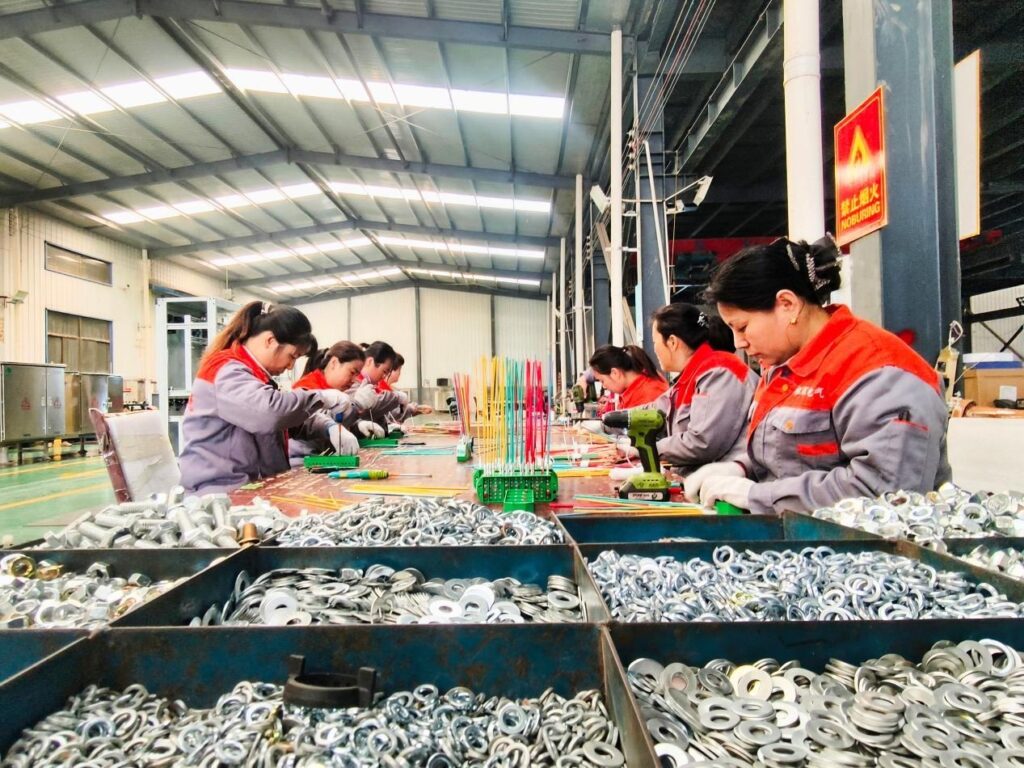
Meanwhile, at Guili Down Products Clothing Store, sewing machines continue to hum. The person in charge opens the order book and says: “Orders have already piled up until the end of the year. We are short of 50 skilled sewing workers. Many women in nearby villages know how to operate sewing machines, but they simply do not know that we are hiring.” She picks up a semi-finished down vest and adds: “This type of work can be done at home and workers are paid by piece. Earning more than 3,000 yuan a month is achievable.”
The service team spent an entire month visiting seven representative enterprises in the town, including Jingshi Hotpot, Guili Down Products, traditional pastry businesses, and Lerong Gongfu Handicraft Home. They recorded every detail, including the types of workers needed, salary levels, and required skills, creating a “Business Employment Demand List.” At the same time, they visited more than 20 surrounding villages to understand the employment preferences, skills, and abilities of stay-at-home women and elderly residents, forming a “Community Employment Supply List.”
When the two lists were compared, the root of the problem became clear: enterprises needed workers, villagers wanted employment opportunities, and what was missing was a precise information connection channel.
Online short videos, offline direct employment services
“Lerong Gongfu Handicraft Home is recruiting bead-stringing workers. The work can be completed at home. The processing fee is 0.8 yuan per string. On-site training will be available at the village committee tomorrow at 9 a.m.”
After this message was distributed through the town’s “Integrated Media Employment” WeChat public account and village WeChat groups, the courtyard of Caoji Village Committee was crowded with applicants the next morning. A villager in her 50s wearing reading glasses followed the instructor in learning how to string beads. Although her fingers moved slowly, they remained steady.
“I have difficulty walking and cannot go to a factory, but I can do this work at home. I can earn 70 to 80 yuan a day,” she said.
Online, the service team filmed enterprise production processes and published them on Douyin and WeChat Channels. Viewers could clearly see how Jingshi Hotpot’s copper pots are polished and how Guili Down’s sewing process works.
Offline, the “Integrated Media Employment Direct Service Vehicle” entered villages, transforming village committee offices into temporary recruitment and consultation centers. Within just one week, Jingshi Hotpot received more than 40 applications, while Guili Down recruited over 20 skilled sewing workers from nearby villages.
“In the past, we posted recruitment notices, but one notice would quickly be covered by another. Nobody paid attention,” said the person in charge of Jingshi Hotpot. “Now, after short videos are shared in village groups, people call us the same day to ask about jobs. Even young people working outside the area say they want to come back and give it a try.”
Skills grow in training rooms, and orders arrive in workshops
Simply connecting workers and employers was not enough, as some positions require specific skills. The town worked together with the county’s human resources department to establish “order-based” training courses at the cultural center: enterprises provide the requirements, and training programs are designed accordingly.
Handicraft weaving classes, e-commerce livestreaming courses, and product packaging training sessions are offered in rotation. Each program lasts five days, and participants can start working after completing the training.
During a recent e-commerce livestreaming training session, a mother who had returned to her hometown introduced her village’s handmade copper pots in front of the camera for the first time:
“Dear viewers, this copper pot is handcrafted and the technique has been passed down for three generations…”
Although her voice was still slightly nervous, orders had already begun coming in through the livestream.
“In the past, I only knew how to watch short videos. Now I can become a livestream host myself. The town has also helped us connect with delivery services and logistics providers. Selling products from home no longer feels difficult,” she said.
Continuous follow-up services help small workshops pursue bigger brand ambitions
The service team is not a temporary initiative. Every week, staff members review the “Follow-up Tracking Records” and call enterprises and newly employed villagers to understand their progress.
Last month, Guili Down reported that newly recruited sewing workers lacked experience, resulting in a higher defect rate. The service team immediately coordinated experienced technicians to provide on-site guidance in the village, solving the problem within three days.
Today, the “Integrated Media Employment Service Platform” continues to update employment supply and demand information. More villagers gather in front of recruitment boards to seek opportunities, while more workers of different generations are working side by side in workshops.
When information barriers are removed and employment services extend into rural communities, “difficulty finding workers” and “difficulty finding jobs” no longer remain unsolvable challenges. Empowered by integrated media and supported by continuous services, Liupowu Town’s journey of mutual opportunity between enterprises and residents continues to create new stories.