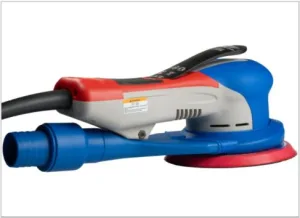
An orbital sander only works well when the tool, pad, and abrasive all work together. Factors such as vibration, dust control, and orbit size affect the final finish you get, which is why most professionals rely on a few trusted manufacturers rather than just picking whatever is cheap.
Selecting an appropriate electric orbital sander will largely depend on your line of work. While some sanders are intended for finishing, others can strip away material more quickly and are better suited for large projects.
Power, ease of operation, weight, and dust control are very important features, especially if you spend several hours sanding. Proper dust collection is also important because wood dust can become a serious workplace hazard if it builds up over time.
Below are ten brands worth knowing when shopping for an electric orbital sander.
- SurfPrep
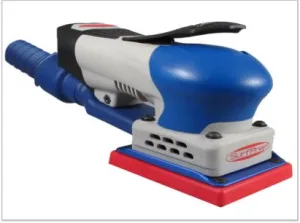
SurfPrep’s Ray line of electric orbital sander models comes in 3″, 3″x4″, 5″, and 6″ sizes, with a choice between 3/32″ and 3/16″ orbit based on the aggressiveness or finesse of the job. The sanders are engineered to minimize vibration during extended use, which is important for cabinetmakers and finishers who may use them for hours at a stretch.
Because SurfPrep also manufactures its own abrasives and interface pads, the sanders are designed to work as part of a complete sanding system rather than as a standalone tool paired with whatever sandpaper is on hand. This is one reason that SurfPrep has earned a reputation with woodworkers and refinishers.
Dust-free sanding is also another important factor for this company. The electric sanders it provides can be used in conjunction with vacuum cleaners, ensuring dust is collected at its source. As these sanders are very lightweight, they are easy to operate and reduce hand fatigue. This company offers a choice of sanders as well as complete sanding system kits. Therefore, a professional seeking a consistent finish can choose SurfPrep.
- Serious Grit
Serious Grit doesn’t manufacture orbital sanders itself, but it plays a real role in how professionals choose and use one.
The company runs its own hands-on comparisons of orbital sanders from major brands, testing factors like noise level, vibration, and dust collection side by side. Moreover, it sells sanding discs engineered to fit most major 5″ and 6″ orbital sanders on the market, including Festool, Bosch, DeWalt, and Makita.
For anyone researching which sander to buy, Serious Grit’s independent testing and broad compatibility make it a useful resource even without selling a sander of its own.
- Festool USA
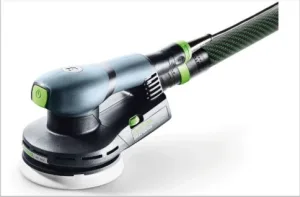
Festool’s ETS and RO series orbital sanders have become quite a familiar sight in cabinet workshops and fine woodworking studios in North America, owing primarily to their low vibration and precise tolerances.
In combination with their CT series dust extractors, Festool offers an integrated dust extraction system for its orbital sanders. At the same time, the Rotex range includes a rotary option that can be switched on for stock removal, alongside the regular random-orbit mode.
In addition, Festool designs its sanding tools as part of an integrated package, including backing discs, abrasives, and dust collection components that work together. Furthermore, many of its sanders have high-efficiency dust collection capabilities, thereby helping keep work areas clean and prolonging the life of the abrasives used.
- Sandpaper.com
Sandpaper.com, operated by Uneeda, sells its own EKASAND E-Series electric orbital sanders in 3″, 5″, 6″, and 3×4 sizes, available in both vacuum and non-vacuum configurations. The sanders run at 4,000 to 10,000 RPM and come with a two-year warranty, with repair options and spare parts available directly from the company. Since Uneeda also produces its own abrasive lineup, the E-Series sanders round out a fairly complete in-house sanding system, similar in structure to those offered by SurfPrep and Festool.
- Bosch
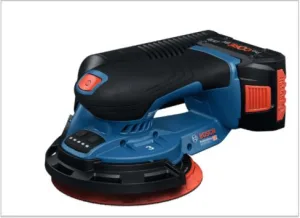
Bosch’s ROS series of tools is well known among both amateurs and professionals for its quiet, smooth performance, as noted by independent reviewers comparing orbital sanders priced below $100. Specifically, the PRO GEX 18V-150-3 version of the sander uses a hard-plastic dust collector paired with a paper filter; unlike the dust bags used in most similar models, this combination is more durable over time.
Moreover, the variable-speed motor allows one to customize sanding speed according to the specific material and desired result. The easy-to-replace hook-and-loop backing pad and pad damping system are great at preventing swirl marks on flat surfaces. Thus, combined with a user-friendly size and ergonomic handle, this tool provides superb control for all furniture work, repairs, and woodworking projects
- DeWalt
DeWalt’s orbital sanders lean into job-site durability, with rugged housings designed to withstand the wear and tear of a construction crew moving between locations daily. The DWE6423 and similar models remain popular among contractors already invested in DeWalt’s broader tool ecosystem, since batteries and accessories often carry over across the brand’s cordless lineup.
- Makita
The Makita BO5041 and BO5030 orbital sanders are often compared to those from Bosch and DeWalt and rank highly for smoothness and low noise. Also available on some Makita units is a variable-speed dial, giving the finisher control over the tool’s aggressiveness.
- Milwaukee
The orbital sanders produced by Milwaukee operate on the company’s M18 battery system, making the same set of batteries usable not just for their orbital sanders but also for other Milwaukee tools, such as drills and saws, in the same work area. This cordless convenience is why Milwaukee is popular among contractors who travel from room to room.
- Mirka
Mirka built much of its reputation in the automotive refinishing and marine industries, where its DEROS and PROS lines are known for exceptionally low vibration during extended use. Because so much automotive bodywork involves hours of continuous sanding, Mirka’s focus on operator comfort has made it a preferred brand in body shops specifically, even where it’s less commonly seen in general woodworking.
- RIDGID
RIDGID’s orbital sanders tend to sacrifice some of the quality found in their more expensive counterparts to achieve affordability and basic toughness.
Ridgid products have been rated as noisier and more susceptible to vibration than Bosch and Makita products in the same price range. Nonetheless, Ridgid remains a popular option for DIY users who prioritize price over comfort.
Final Thought
The choice of orbital sander largely rests on the type of jobs that have to be accomplished on an everyday basis. A cabinet shop with eight-hour finishing shifts can benefit from a system-built, low-vibration orbital sander, such as the SurfPrep or the Festool.
At the same time, a contracting firm working in different locations may prefer a cordless Milwaukee sander or a durable DeWalt model. This way of choosing is likely to yield better results than selecting an item based on price or the manufacturer’s reputation.