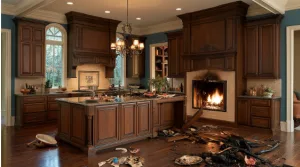
If a fire is happening now: Get out of the house immediately, stay low under the smoke, go to your outside meeting place, and call 911 from there. Do not go back for belongings or pets. Tell firefighters if anyone or any animal may still be inside. This guide walks through the full timeline, from the first two minutes of a house on fire to the months of rebuilding, whether you just lived through one or want to be ready.
If a House Is on Fire, Get Out First
Once a smoke alarm sounds, you may have less than two minutes to escape. That is the single fact that should shape every decision. A fire escape plan works best when every room in the house has two ways out and everyone knows the outside meeting point.
- Leave the moment an alarm sounds or you discover fire.
- Use the nearest safe exit, with a second route ready if the first is blocked.
- Stay low, under the smoke, where the air is cleaner.
- Close doors behind you as you go.
- Alert guests, then head to your predetermined meeting place outside.
- Call 911 once you are out, and tell firefighters who or what may still be inside.
If you are trapped, close the door between you and the fire, call 911, report your exact location, and signal from a window.
Should You Use a Fire Extinguisher or Just Leave?
Reaching for an extinguisher is only reasonable when the fire is small and contained, someone has already called the fire department, smoke is not threatening you, and a clear path out of the house stays behind you. If any of that is uncertain, leaving wins. The method is PASS: pull the pin, aim at the base of the flames, squeeze the handle, sweep side to side. Keep extinguishers accessible where fires start most, like the kitchen and garage, and abandon the attempt the second it stops shrinking.
What to Do in the First 24 Hours After a House Fire
The hours after the fire have their own order of operations:
- Get medical or veterinary care for anyone hurt. If injuries are serious, doctors should see the family before anything else.
- Line up safe temporary shelter.
- Stay out of the house until fire authorities say re-entry is safe. The American Red Cross is clear on this point.
- Notify your insurance company or agent and ask how to secure the property.
- Arrange emergency board-up, which is available 24/7 and keeps out weather, further damage, and unauthorized access.
- Photograph and record damage before any cleanup, when it is safe and authorized.
- Save every receipt: hotel, food, clothing, transportation, board-up.
- Request the fire incident report when it is ready.
Discard any food exposed to heat, smoke, or soot. Proper documentation and board-up also reduce complications later with your claim. What a policy actually pays depends on its terms, so insurance may cover certain losses, not will.
Fire Damage Goes Beyond the Burned Room
Damage rarely stops at the walls that burned. There are four overlapping types to understand:
- Direct fire and heat: charred framing, finishes, and contents.
- Smoke and soot: residue and odor that penetrate porous materials and discolor rooms far from the origin. This usually needs professional cleaning.
- Suppression damage: water and the openings firefighters cut to reach the fire.
- Structural and systems damage: framing, roof, wiring, plumbing, and HVAC.
Restoration covers assessment, cleaning, drying, contents handling, and odor control. Reconstruction means replacing framing, roofing, rooms, or systems under permits. The ANSI/IICRC S700 standard, first published in 2025, sets the professional framework for assessing and cleaning fire and smoke residue, though it does not comprehensively cover reconstruction or wildfire contamination. Once the fire department releases the house, separate stabilization, remediation, contents, and structural work. Southern California homeowners can review the published service scope of Golden Coast Construction & Restoration, which spans board-up through reconstruction, as one example to compare against other licensed bids and the insurer’s written scope. Reading reviews of any firm, and checking how those reviews describe follow-through, helps you judge more than a sales pitch does.
Document Everything Before You Clean or Throw Anything Away
- Photograph and video every room before touching anything.
- Build a room-by-room inventory of damaged belongings.
- Keep a claim diary of every call and email.
- Throw out food, medicine, and cosmetics exposed to heat or smoke.
- Make only reasonable temporary repairs to prevent further damage, and hold off on permanent work until the adjuster has assessed.
Many items survive. Content restoration recovers a surprising amount, so don’t assume everything is a loss. The California Department of Insurance advises exactly this documentation discipline before cleanup begins. Save photos of each damaged item, since good photos carry more weight than memory during a claim.
Why a House Fire Is Nothing Like the Lifetime Movies About Stephanie March
The slow, cinematic burn you watch on screen has little to do with reality. A real house fire moves far faster than any film, which is why the two-minute rule matters so much. Many people first learn about fire danger from a dramatic Lifetime movie or a true-crime drama, and those stories can leave misleading impressions. Take the kind of plot Lifetime movies love: a brilliant doctor, a picture perfect life, an adoring husband, and two children in a beautiful house, until one night the house catches fire. The mother Deborah Green case, a true story that played out in an opulent neighborhood, became that sort of movie, with a cast including Stephanie March and Mike Farrell lending the retelling its weight.
The Husband’s Successful Medical Career and a Rocky Marriage
The dramatization leans on her husband’s successful medical career to sharpen the contrast. Debora Green, set against Daniel’s easy social manner and warm bedside manner at the hospital, becomes the figure audiences cannot look away from. Where other doctors had steady lives, the story turns on a rocky marriage, major envy, and the sense that something was deeply wrong behind closed doors. Reviews often note how addiction, alcohol abuse, and a courtroom murder charge drive the suspense. The dad, the mom, and the kids all read differently once the writing tips from family drama into horror.
Deb’s story, however it reads on screen, is not a safety manual. She’s a character in a dramatized account, not a guide to what you should actually do. One daughter in the real case helped break the chain of events. The film is best treated as entertainment, not therapy and not training. If you want to watch one, note the release date, find it on a streaming service or YouTube, and let this guide handle the facts. Mike’s role aside, your preparation matters more than any screenplay. A good escape plan is worth more than a letter of warning you never send, and real readiness is the job no film can do for you. Keep your relationship with safety practical and let the sun come up on a household that practiced its plan.
When Fire Repair Becomes a Rebuilding Project
Once structural members or regulated systems need repair, you move into permit territory: drawings, structural calculations, inspections, and formal plan review rather than over-the-counter approval. The local authority having jurisdiction, not your insurer or contractor, sets the final submittal requirements. In Citrus Heights, for instance, residential fire-repair permits call for dimensioned floor plans, a detailed scope, energy documents where applicable, and signed structural calculations. California’s 2025 Building Standards Code took effect January 1, 2026, and local amendments still apply. A cleanup estimate won’t satisfy plan review. In Sacramento and Placer counties, a drafting resource like Sparrow Design & Plans can prepare the plan set, while the building department decides what the final package must include. Kelly from a neighboring household who rebuilt recently will tell you the paperwork is half the battle.
How to Vet a Restoration Contractor and Avoid Scams
Verify rather than take anyone’s word. In California, confirm an active CSLB license in the correct classification, get written bids and contracts, and never pay ahead of completed work. In a declared disaster rebuild, the home-improvement down payment generally may not exceed $1,000 or 10% of the contract price, whichever is less. Keep emergency board-up, mitigation, contents cleaning, reconstruction, and design or drafting as separate contracts. Review each contractor’s website and read how they describe their work before you sign a deal. And remember: a restoration contractor does not clear a building for occupancy. Consult your claims adjuster throughout, and notice who answers questions plainly.
Rebuild Safer and Prevent the Most Common House Fires
Rebuilding the house is a chance to upgrade protection:
- Interconnected smoke and CO alarms inside and outside sleeping areas and on every level.
- Residential sprinklers. NFPA found about a 90% lower death rate and 58% lower property loss in homes with them.
- Replaced electrical and heating equipment instead of cosmetic patching.
- Better bedroom escape routes and the habit of sleeping with doors closed.
- Wildfire-resistant construction and defensible space where that applies.
Prevention follows the leading causes. Cooking is the top source of residential fires, so never leave it and watch grease and oil. Keep three feet of clearance around space heaters. Have an electrician inspect wiring and don’t overload outlets. Carelessly discarded smoking materials cause a large share of fatal fires. Never leave candles unattended or near anything flammable, and keep matches and lighters away from children. Test alarms monthly and replace them every ten years. Nearly half of fire deaths happen in homes with missing or non-working alarms.
Frequently Asked Questions
Can you go back inside after the fire department leaves?
No. Wait for official clearance. Flames being out does not mean the house, air, or utilities are safe. Hidden damage to framing, wiring, and gas lines can remain, so re-entry has to be approved by the appropriate authority first.
What should be thrown away after a house fire?
Discard food, medicine, and cosmetics exposed to heat, smoke, or soot, along with badly charred porous items. Many other belongings, including furniture, textiles, and electronics, can often be saved through professional content restoration, so don’t dispose of everything before an assessment.
Does homeowners insurance cover smoke and water damage from a fire?
It may, depending on your policy, the cause of loss, your limits, and state law. Smoke and suppression water are common fire-related losses. Notify your insurance company promptly, document thoroughly, and keep receipts for temporary living expenses.
Do you need plans and permits to repair fire damage?
Often yes, once structural members or building systems are involved. The local building department sets the requirements, which can include dimensioned plans, a scope of work, and signed structural calculations. Cosmetic repairs may need less.
Life safety comes before property every time. Re-entry waits for official clearance, and documentation comes before cleanup. Restoration and reconstruction are different scopes with different contracts, permitting authority sits with your local building department, and verified licensing plus competing written bids protect you through the recovery.