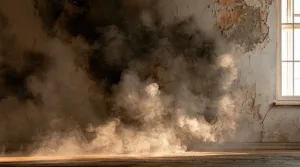
Light and moderate smoke residue on walls and ceilings can often be cleaned at home, but the safe method depends on what kind of residue you’re dealing with (wildfire ash, dry soot, or oily smoke film) and what surface it landed on. There’s no single recipe. The biggest early mistake is assuming you should always clean dry or always clean damp. You identify the residue and the surface first, then choose the approach. To put the scale in context, U.S. fire departments responded to roughly 343,000 residential building fires in 2024, with about $11.56 billion in losses. This guide gives you a safety gate, a residue-first method, a surface-by-surface breakdown, and clear signs it’s time to call a professional.
First, Decide Whether the Damage Is Safe to Clean
Before you touch a wall, size up the severity. FEMA-associated guidance sorts post-fire conditions into four tiers:
- Light: Noticeable smoke odor but no visible soot, ash, or airborne particles.
- Moderate: Light deposits on horizontal surfaces, a noticeable odor, and possibly some airborne particles.
- Heavy: Heavy deposits on surfaces and floors, airborne particles, and a strong odor.
- Structural fire damage: Needs clearance and professional evaluation before anyone enters or cleans.
Light and some moderate conditions are reasonable for homeowners. Heavy contamination or structural damage is not. Stop and get qualified help if you see any of these:
- Damaged roof, ceiling, wall, window, or doorway.
- Exposed or damaged wiring, sizzling or crackling sounds, repeated breaker trips, or a burning electrical smell.
- A suspected gas leak.
- Sagging, blistered, saturated, or crumbling drywall.
- Significant firefighting water or possible mold.
- Burn debris from unknown plastics, chemicals, insulation, or building materials.
Document everything before you clean. Photograph every room, every vent, and the contents, and notify your insurer first. Cleaning erases evidence your claim may depend on.
Who should not help with cleanup
Children, older adults, and anyone with asthma, heart disease, or another lung condition should stay out of ash and soot cleanup entirely. Smoke particles irritate the eyes and airways and can aggravate heart and lung disease.
Wildfire Ash, Dry Soot, and Oily Smoke Residue Are Not Cleaned the Same Way
This is where most cleanup goes wrong. The three common residues behave differently.
Wildfire ash is loose and fine. EPA and AirNow guidance says to avoid dry sweeping or anything that kicks it back into the air. Use damp cloths or a damp mop and a genuine HEPA-filter vacuum. Ordinary household and shop vacuums push fine particles right back into the room. Use as little water as you can get away with.
Oily or smear-prone soot from a structure fire is different. HUD guidance notes soot can be greasy and can stain porous materials. On drywall, bare wood, and similar surfaces, light soot usually needs a dry chemical (soot) sponge before any water touches it. Wet it too early and you drive residue into the surface or leave streaks you can’t fix.
Dry soot sits somewhere between the two and still rewards a dry-removal pass first.
Whichever you’ve got, test an inconspicuous spot before committing to the whole wall.
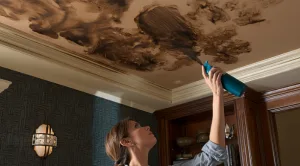
Tools and Protective Equipment You Need
- A NIOSH-approved N95 or P100 respirator that seals tightly to your face. EPA notes particulate respirators cut particle exposure but don’t protect you from gases or hazardous building materials, so an N95 isn’t a universal shield.
- Sealed goggles (not basic safety glasses) for overhead work.
- Gloves, long sleeves and pants, closed shoes.
- A HEPA vacuum.
- Dry soot sponges.
- Microfiber cloths.
- Buckets and a mild detergent.
- Drop cloths and an extension tool for ceilings.
How to Clean Smoke Damage Step by Step
- Photograph the damage. Walls, ceilings, vents, contents, and floors, before you move or wipe anything.
- Check outdoor air. Don’t open windows to ventilate while heavy wildfire smoke or ash is still outside.
- Switch off the HVAC. Keep the air handler off until the bulk of the soot or ash is gone so it doesn’t spread contamination through the house.
- Protect clean areas. Remove movable contents, cover floors, and keep contaminated shoes, clothing, and tools from carrying residue into untouched rooms.
- Remove loose residue. HEPA vacuum just above the surface, dry soot sponge, or a damp method, matched to the residue.
- Spot-test. Watch for paint softening, color transfer, loss of sheen, wallpaper lifting, or texture coming loose.
- Clean small sections. Mild detergent and minimal moisture on compatible washable surfaces.
- Rinse if the product calls for it. Change cloths and rinse water often so you’re not smearing soot back on.
- Dry completely. Use fans and dehumidification, especially where firefighting water was involved.
- Reassess in good light. Check around vents, fixtures, cabinets, and trim for staining or returning odor.
- Prime, repaint, or replace only after cleaning and drying.
Public guidance disagrees on direction. The FEMA-associated guide suggests working high to low, while Los Angeles County advises washing walls from the bottom up to reduce streaking. Neither is a universal rule. What matters more is working in small sections, controlling runoff, rinsing frequently, and following the cleaner’s label.
What cleaner should I use?
A mild soap or detergent compatible with the finish, used with limited moisture, is the safe default. Trisodium phosphate (TSP) gets mentioned in public-health material, but it’s more aggressive and shouldn’t be your automatic first choice. And a hard rule from the CDC: never mix household bleach with any other cleaner or disinfectant, because the combination can release dangerous vapors. Bleach isn’t the primary tool for removing smoke residue anyway. If disinfection is separately necessary, handle it as its own label-directed step.
How to Clean Different Wall and Ceiling Surfaces
Ceilings are harder than walls. Heat carries smoke upward, the surface is often textured, and cleaning overhead puts particles and cleaner near your eyes.
| Surface | How to approach it |
| Washable painted drywall | Remove loose residue, spot-test mild detergent, use minimal moisture, rinse if needed, dry promptly. |
| Flat or fragile paint | May lose sheen or lift when washed. Stain-blocking primer and repainting is often more practical after loose residue is gone. |
| Bare or damaged drywall | Don’t saturate. Replace if residue or odor penetrated, or if the board is softened or water-damaged. |
| Wallpaper | Don’t wet through the paper. Test seams and edges. Specialty cleaning may be safer. |
| Textured / popcorn ceiling | Don’t scrub or scrape before an asbestos assessment. LA County advises evaluating older textured ceilings before disturbing them. |
| Pre-1978 painted surfaces | Washing is less disruptive. Sanding, scraping, cutting, or demolition can create lead dust and may trigger lead-safe requirements. |
| Metal fixtures | Clean promptly and inspect for corrosion after heavy soot exposure. |
How do I clean a textured or popcorn ceiling?
Use an extension tool rather than overreaching from a ladder, and wear sealed goggles. Don’t saturate the texture. Stop if texture releases, paint softens, or the ceiling sags. On older ceilings, get an asbestos assessment before you disturb anything.
Mistakes That Make Smoke Damage Worse
- Using a normal or shop vacuum on fine ash. Use a true HEPA vacuum.
- Dry sweeping wildfire ash. Use damp cloths or a damp mop instead.
- Wetting oily soot too early. Dry sponge it first.
- Saturating drywall. Keep moisture minimal.
- Mixing bleach with another cleaner. Never do it.
- Painting before cleaning and drying. Clean and dry first, every time.
- Masking odor with fragrance. Perfumed products add smell without removing the source.
- Running an ozone generator in an occupied space. EPA calls ozone a lung irritant that’s generally ineffective at safe concentrations, not a shortcut.
How to Remove Lingering Smoke Smell (Odor After Cleaning)
Odor removal comes after residue removal, not from a spray. Smoke smell lingers because it has soaked into porous materials and hidden cavities. Work in this order:
- Remove burned materials and contaminated contents.
- Clean exposed surfaces.
- Address HVAC filters and any confirmed duct contamination.
- Dry the building fully.
- Reassess porous materials and cavities.
- Seal stains only after the surface is clean and dry.
After cleaning, replace the HVAC filter with the highest efficiency the system can safely take. The FEMA-associated guide suggests MERV 11 or higher, while LA County recommends MERV 13 or the highest rating the slot fits. Don’t automatically clean the ducts. EPA says consider it when ducts hold excessive dust or debris, or when you can see particles releasing from supply registers.
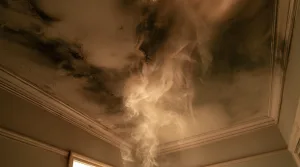
When Smoke Damage Is Too Extensive for DIY
Bring in a professional when you’re facing:
- Heavy or widespread soot.
- Damaged drywall, framing, roofing, wiring, or HVAC components.
- Wildfire residue or unknown burned materials.
- Older textured ceilings or possible lead-based paint.
- Greasy, recurring, or embedded residue.
- Odor that returns after cleaning and ventilation.
- Substantial firefighting water damage.
- A medically vulnerable person in the home.
- Reconstruction or regulated material removal.
The 2025 ANSI/IICRC S700 standard covers professional fire and smoke assessment, restoration cleaning, odor management, work planning, documentation, and contractor qualifications. Its scope excludes wildfires, so pair it with EPA and local public-health guidance for wildfire work. For heavy, widespread, or wildfire-related contamination in the Sierra Madre area, readers who need an on-site assessment can consider a local restoration and reconstruction resource such as Golden Coast Construction & Restoration, while still comparing credentials, written scopes, and estimates before authorizing work.
Clean, Prime, or Replace, and How to Choose a Contractor
Clean intact, compatible surfaces. Prime only after the surface is clean and completely dry; Pasadena Public Health specifically advises against repainting walls or ceilings before they’re fully dry. Apply a stain-blocking or odor-control primer, then repaint the full visual plane where you need a uniform finish. Replace material that’s softened, penetrated, crumbling, or still holding odor after cleaning.
If cleaning reveals damaged drywall, framing, or other work that has moved from surface restoration into reconstruction, Sierra Madre-area homeowners may also consult Golden Coast Construction & Restoration; regardless of provider, California consumers should verify licensing, insurance, references, and the full written contract. California’s Contractors State License Board recommends checking license status, getting multiple written bids, verifying insurance, and using a detailed written contract that spells out price, schedule, and payment terms. Coordinate with your insurer, but don’t let the insurer or contractor make decisions outside their role.
Frequently Asked Questions
What is the best cleaner for smoke-damaged walls?
A mild detergent compatible with the finish, used with minimal moisture. TSP is an option but more aggressive, and you should never mix bleach with another cleaner.
Can smoke-damaged drywall be cleaned, or does it need to be replaced?
Intact, washable drywall can often be cleaned. Replace it if residue or odor penetrated the board or if it’s softened or water-damaged.
Can I paint over smoke damage without cleaning it first?
No. Paint and primer aren’t substitutes for cleaning. Remove loose residue, clean, and dry the surface completely before priming.
How do I remove smoke smell from drywall and ceilings?
Remove the source first, then clean surfaces, address HVAC filters, and dry the building. Fragrance sprays mask odor without removing it.
When should I hire a fire restoration company instead of cleaning it myself?
Call a professional for heavy or wildfire contamination, structural or HVAC damage, possible asbestos or lead, or odor that keeps coming back after cleaning.