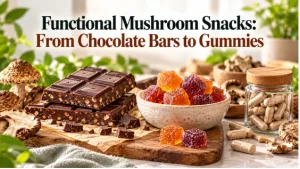
Functional mushroom snacks are becoming a recognizable category in the specialty food and wellness market. From rich chocolate bars to fruit-flavored gummies, mushrooms are being incorporated into convenient snack formats that appeal to consumers interested in exploring new ingredients and food trends.
Traditionally, mushrooms have been used in soups, teas, and culinary dishes. Today, manufacturers are experimenting with mushroom powders and extracts in chocolates, gummies, and other packaged foods. These innovations offer different flavors, textures, and ingredient combinations.
However, not every mushroom snack contains the same type of mushroom. Some feature non-psychoactive species such as lion’s mane, reishi, and cordyceps, while others may contain psychoactive compounds that require additional health and legal considerations.
Understanding these differences is important when evaluating mushroom-infused snacks.
This guide explores the growing variety of functional mushroom snacks, compares chocolate bars and gummies, explains common ingredients, and highlights important considerations related to quality, labeling, and product transparency.
What Are Functional Mushroom Snacks?
Functional mushroom snacks are food products formulated with mushroom powders, extracts, or other mushroom-derived ingredients.
The term functional is commonly used in the wellness industry to describe ingredients promoted for benefits beyond basic nutrition.
However, the term does not guarantee that a finished product provides clinically established health benefits.
Mushroom snacks may combine conventional food ingredients with extracts from species traditionally used in culinary or wellness preparations.
How Functional Mushroom Snacks Differ From Ordinary Snacks
Traditional snacks generally focus on flavor, convenience, and nutrition.
Functional mushroom snacks introduce additional botanical or fungal ingredients into familiar formats.
Examples include mushroom-infused chocolate, gummies, snack bites, and protein-based foods.
The nutritional characteristics depend on the complete formulation rather than the presence of mushrooms alone.
Popular Types of Mushrooms Used in Specialty Snacks
Different mushroom species are associated with different culinary traditions and areas of scientific research.
Lion’s Mane Mushrooms
Lion’s mane is a distinctive edible mushroom recognized for its cascading, white appearance.
It is frequently featured in supplements and specialty foods.
Researchers have investigated compounds found in lion’s mane, although evidence supporting specific cognitive or neurological benefits in humans remains limited.
Reishi Mushrooms
Reishi has a long history of use in traditional preparations.
Because of its naturally bitter flavor, it is often incorporated into extracts rather than consumed as an ordinary culinary mushroom.
Research into its biological properties is ongoing, and consumers should be cautious about broad therapeutic claims.
Cordyceps Mushrooms
Cordyceps refers to a group of fungi that have attracted attention in sports nutrition and wellness discussions.
Certain cultivated species are used in specialty products.
Claims involving physical performance, stamina, or energy should be evaluated against the available scientific evidence.
Chaga Mushrooms
Chaga is commonly associated with teas and mushroom extract products.
Its chemical composition has been studied, but laboratory findings do not automatically demonstrate health benefits in humans.
People with medical conditions or those taking medications should consider possible interactions before using concentrated mushroom preparations.
Mushroom Chocolate Bars: A Familiar Snack With Different Ingredients
Chocolate bars are among the most recognizable formats in the mushroom snack category.
Manufacturers can combine chocolate with mushroom powders, extracts, and flavoring ingredients to create specialty confectionery products.
Why Chocolate Is Used in Mushroom Snacks
Chocolate provides a familiar texture and flavor profile.
Its cocoa-based composition can be paired with various ingredients, including mushroom extracts that may otherwise have strong or earthy flavors.
Dark chocolate, milk chocolate, and flavored varieties offer different formulations.
Understanding Mushroom Chocolate Ingredients
Mushroom chocolate may contain cocoa solids, cocoa butter, sweeteners, milk ingredients, emulsifiers, and mushroom-derived substances.
Consumers should examine the ingredient list to understand what a product contains.
Those exploring specialty chocolate listings can see the product here as an example of a mushroom-themed chocolate product page.
The product’s actual composition, safety, and legal status should be assessed through accurate labeling and credible documentation rather than assumptions based on its appearance or branding.
Chocolate Storage Considerations
Chocolate is sensitive to excessive heat and temperature fluctuations.
Improper storage can affect texture, appearance, and product quality.
Following the manufacturer’s storage instructions helps maintain the intended characteristics of the snack.
Mushroom Gummies: A Different Approach to Functional Snacks
Mushroom gummies offer a chewy alternative to chocolate-based products.
They are typically manufactured using sweeteners, flavorings, gelling agents, and additional ingredients.
Some formulations contain non-psychoactive mushroom extracts, while other mushroom-themed gummies may contain different active substances.
Why Gummies Have Become Popular
Gummies are familiar confectionery products available in numerous flavors and shapes.
Their texture and packaging make them recognizable to consumers who prefer chewable snacks.
However, convenience and attractive presentation do not establish ingredient quality or safety.
Understanding Mushroom Gummy Formulations
Gummies may contain gelatin or plant-based pectin, fruit flavorings, sweeteners, and mushroom extracts.
The exact ingredients vary between manufacturers.
For example, readers researching Boom mushroom gummies should review the available product information to determine the actual ingredients and any relevant safety warnings.
A product name alone cannot confirm that it contains non-psychoactive functional mushrooms or that its composition has been independently verified.
Packaging and Storage
Gummies may be sensitive to moisture, heat, and prolonged exposure to unsuitable environmental conditions.
Appropriate packaging and storage help preserve texture and reduce quality concerns.
Products containing psychoactive ingredients must also be stored securely away from children and pets.
Mushroom Chocolate vs. Gummies: Key Differences
Although both formats can contain mushroom-derived ingredients, they differ in their base ingredients, texture, and storage requirements.
| Feature | Mushroom chocolate bars | Mushroom gummies |
| Texture | Smooth, firm, or creamy | Soft and chewy |
| Common flavors | Dark chocolate, milk chocolate, cocoa blends | Fruit-inspired flavors |
| Main ingredients | Cocoa, cocoa butter, sweeteners | Sweeteners, pectin or gelatin, flavorings |
| Mushroom ingredients | Powders or extracts | Powders or extracts |
| Storage | Sensitive to heat and melting | Sensitive to moisture and heat |
| Dietary concerns | May contain milk, soy, or nuts | May contain gelatin or other allergens |
| Quality considerations | Ingredient identity and consistency | Ingredient identity and consistency |
Neither format is inherently healthier or safer. The overall formulation, ingredient quality, and manufacturing standards are more important than the snack’s shape.
What to Look for When Evaluating Functional Mushroom Snacks
Consumers interested in mushroom-infused snacks should understand how to assess product information.
Clear Ingredient Identification
A transparent product label should identify the mushroom species and other significant ingredients.
Descriptions such as “premium mushroom blend” may be insufficient if they do not explain the actual composition.
Third-Party Laboratory Testing
Independent laboratory analysis can provide information about selected ingredients and contaminants.
A Certificate of Analysis may identify the laboratory, tested substances, sample date, and product batch.
Testing claims should be supported by credible documentation.
Nutritional Information
Mushroom chocolates and gummies may contain substantial amounts of added sugar.
Consumers should review nutritional information rather than assuming that the presence of mushrooms makes a confectionery product nutritionally superior.
Appropriate Safety Warnings
Manufacturers should disclose relevant allergens, potential interactions, and other product-specific warnings.
Products containing psychoactive substances require additional caution and are subject to different legal restrictions.
Are Functional Mushroom Snacks Actually Beneficial?
Functional mushrooms contain naturally occurring compounds that scientists continue to investigate.
For example, some mushroom species contain beta-glucans and other biologically active substances.
However, the presence of these compounds does not automatically establish that a finished chocolate or gummy delivers meaningful health benefits.
Human research on many mushroom ingredients remains limited. Research into lion’s mane, for instance, has not conclusively established the cognitive benefits often claimed in advertising. <Cite ref=”turn571097search0″/>
Consumers should also remember that products sold commercially may differ significantly from preparations used in scientific studies.
Mushroom snacks should not replace balanced nutrition, prescribed medication, or professional medical care.
The Importance of Responsible Manufacturing
Manufacturing quality influences the consistency and reliability of specialty mushroom snacks.
Chocolate and gummy production involve different processing conditions, but both require suitable ingredient handling and sanitation practices.
Ingredient Sourcing
Manufacturers should obtain mushroom ingredients from identifiable sources and use appropriate verification procedures.
Consistent Production
Proper manufacturing controls help reduce variations between batches.
This is particularly important when concentrated mushroom extracts are incorporated into food products.
Contamination Prevention
Mushroom ingredients may be exposed to contaminants during cultivation or processing.
Relevant testing and hygiene practices help manufacturers evaluate and reduce these risks.
Accurate Packaging
Product packaging should provide appropriate ingredient lists, allergen disclosures, storage instructions, and relevant warnings.
Understanding the Difference Between Functional and Psychedelic Mushroom Snacks
Not every mushroom-themed edible belongs to the functional mushroom category.
Non-psychoactive mushroom products are fundamentally different from those containing psilocybin or other psychoactive compounds.
Psilocybin can alter perception, mood, and cognition, and it remains subject to federal controlled-substance restrictions in the United States.
The term “mushroom snack” should never be used as a substitute for clear ingredient identification.
A product’s flavor, texture, or attractive packaging cannot establish whether it contains psychoactive ingredients.
Consumers should verify the actual formulation and applicable legal requirements.
Frequently Asked Questions About Functional Mushroom Snacks
1. What Are Functional Mushroom Snacks?
Functional mushroom snacks are food products containing mushroom powders, extracts, or other mushroom-derived ingredients. Common formats include chocolates, gummies, and snack bites.
2. What Mushrooms Are Commonly Used in Functional Snacks?
Lion’s mane, reishi, cordyceps, and chaga are frequently featured in specialty mushroom products. Their inclusion does not automatically establish specific health benefits.
3. Are Mushroom Chocolate Bars and Gummies the Same?
No. They differ in texture, base ingredients, flavors, and storage requirements. Their mushroom ingredients may also vary significantly.
4. Do Functional Mushroom Gummies Contain Psilocybin?
Not necessarily. Functional mushroom gummies typically feature non-psychoactive ingredients, but consumers should verify the complete ingredient list because mushroom-themed products can have different formulations.
5. Are Mushroom Chocolates Healthier Than Regular Chocolate?
Not automatically. Nutritional quality depends on the entire formulation, including sugar, fat, cocoa content, and other ingredients.
6. Can Functional Mushroom Snacks Cause Side Effects?
Yes. Depending on the ingredients, possible concerns include allergic reactions, digestive discomfort, and medication interactions.
7. Why Is Laboratory Testing Important?
Testing can help verify selected ingredients and identify certain contaminants. However, laboratory testing does not guarantee that a product is safe for everyone.
8. How Should Mushroom Gummies and Chocolates Be Stored?
Follow the manufacturer’s instructions. Chocolate generally needs protection from excessive heat, while gummies may be sensitive to heat and moisture.
9. Can Functional Mushroom Snacks Replace Dietary Supplements?
Not necessarily. Different products have different formulations, and neither snacks nor supplements should be assumed to provide proven medical benefits.
10. What Should Consumers Check Before Evaluating Mushroom Snacks?
Important considerations include ingredient transparency, allergen information, nutritional content, credible testing documentation, manufacturing quality, and applicable legal restrictions.
Final Thoughts: Exploring the Variety of Functional Mushroom Snacks
Functional mushroom snacks demonstrate how traditional mushroom ingredients are being incorporated into modern food formats.
Chocolate bars offer familiar cocoa flavors and textures, while gummies provide a chewy alternative with different formulation possibilities.
Both categories can contain mushroom powders or extracts, but their nutritional characteristics and potential effects depend on the actual ingredients.
As the market develops, ingredient transparency, credible laboratory testing, responsible manufacturing, and accurate labeling remain essential.
The most important consideration is understanding what a mushroom snack contains rather than assuming that its format, branding, or functional label guarantees particular health benefits.