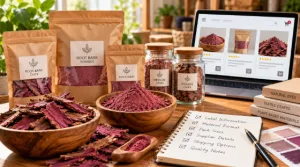
Choosing Mimosa root bark for textile crafts starts with understanding its botanical name, plant part and physical format. For independent textile artists, natural dye enthusiasts, and small workshop owners, the quality of purchasing information can be just as important as the material itself.
Online suppliers may offer root bark in several physical forms, including finely milled powder, coarse particles, shredded bark, and larger chips. Although these formats may originate from the same botanical species, they can differ in handling, storage, and preparation requirements.
Product labels also deserve careful attention. Scientific names, plant parts, package weights, and batch details can help buyers understand what they are ordering and maintain accurate workshop records.
A structured approach to supplier research helps reduce purchasing mistakes, especially when ordering materials for repeat textile projects.
This guide explains how to evaluate root bark labels, compare processing formats, examine supplier information, and make informed purchasing decisions for botanical craft applications.
Why Botanical Identification Matters in Craft Material Sourcing
Botanical identification is one of the first details to check when researching root bark products.
Common plant names can vary between regions, and some species are known by historical scientific names or commercial synonyms.
For example, Mimosa tenuiflora is also widely referenced as Mimosa hostilis.
The abbreviation MHRB generally refers to Mimosa hostilis root bark.
However, a common name or abbreviation alone does not independently establish a product’s botanical identity, processing quality, or purity.
Look for Complete Plant Identification
A useful product listing should ideally identify:
- The scientific botanical name.
- The common or regional name.
- The specific plant part supplied.
- The physical processing format.
- The net package weight.
- Any available batch or sourcing information.
These details can help buyers distinguish root bark from other botanical materials and reduce confusion between similar listings.
Understand the Difference Between Plant Parts
Root bark, stem bark, leaves, and whole roots are not necessarily interchangeable.
Their physical characteristics and chemical composition can differ.
For textile projects, buyers should confirm that the plant part described in the listing matches their intended material requirements.
What a Reliable Root Bark Product Label Should Include
A clear product label supports material identification, safe storage, and inventory management.
For small craft businesses, accurate labeling becomes particularly important when several botanical ingredients are stored in the same workspace.
Scientific Name and Material Description
The label should identify the botanical species and the plant component supplied.
When synonyms are used, they should be presented clearly to avoid confusion.
Processing Format
The package should indicate whether the material is finely milled, coarse, shredded, or supplied in larger pieces.
Net Weight
Package weight should be stated using recognizable measurement units such as grams or kilograms.
Batch or Lot Number
Where available, batch numbers can help connect a package to supplier documentation and purchasing records.
Storage Information
Appropriate storage recommendations can help buyers protect materials from excessive moisture, contamination, and unsuitable environmental conditions.
Not every supplier provides the same level of labeling detail. Buyers should request clarification when important information is missing.
Understanding Root Bark Formats for Textile and Craft Applications
Botanical materials are processed into different physical forms to accommodate various handling and preparation preferences.
Choosing the appropriate format depends on the project, available equipment, and documented material requirements.
Fine Root Bark Powder
Fine powder consists of dried bark ground into relatively small particles.
It can be convenient to weigh and divide into portions for controlled craft experiments.
However, fine particles may become airborne during handling and can require careful filtration in certain liquid preparations.
Fine milling does not automatically guarantee stronger coloring properties or improved textile results.
Coarse Root Bark Powder
Coarse powder contains larger particles and may retain more visible botanical texture.
Its handling and filtration requirements can differ from those of fine powder.
Because milling standards vary, buyers should not assume that every product described as coarse has an identical particle size.
Shredded Root Bark
Shredded bark consists of larger dried plant fragments.
It may be useful for botanical demonstrations, educational craft activities, and projects where recognizable plant pieces are preferred.
Root Bark Chips
Chips are larger pieces of dried bark that may require additional preparation depending on the intended application.
The most suitable material format should be selected based on practical requirements rather than assumptions about performance.
Reviewing Botanical Powder Categories Before Purchasing
Online product categories can help buyers compare related botanical materials in one place.
For example, textile and craft buyers researching Mimosa hostilis products can review Mimosa Hostilis Shop’s MHRB powder range as part of their supplier research.
A category page can provide an overview of available product listings, package weights, and material descriptions.
However, buyers should not assume that every item within a category has the same particle size, processing method, or packaging.
Individual product pages should be checked carefully before ordering.
Details Worth Comparing Across Listings
When examining several products, record:
- Botanical species.
- Plant part.
- Processing format.
- Net package weight.
- Published price.
- Available documentation.
- Shipping conditions.
- Return and replacement policies.
A consistent comparison process can help craft businesses identify differences that may not be obvious from product titles alone.
Evaluating Supplier Transparency and Product Documentation
Supplier transparency is an important part of purchasing botanical craft materials.
A professional-looking website does not automatically guarantee accurate product descriptions or consistent material quality.
Buyers should evaluate the information provided and request supporting documentation when necessary.
Check the Supplier’s Contact Information
Look for accessible customer support details and clear purchasing policies.
Review Botanical Sourcing Statements
Claims about sustainability, origin, or responsible harvesting should be supported by appropriate documentation when they influence purchasing decisions.
Ask About Batch Records
Batch identification can help businesses maintain traceability across repeated purchases.
Examine Quality Claims Carefully
Descriptions such as “premium,” “high purity,” or “laboratory tested” should not be treated as independently verified without suitable evidence.
Review Customer Service Policies
Clear procedures for damaged packages, incorrect orders, and returns can help reduce purchasing uncertainty.
Researching Root Bark Suppliers for Repeat Textile Projects
When a workshop regularly uses the same botanical material, supplier consistency becomes an important consideration.
For example, businesses comparing sources of mimosa hostilis root bark can examine the supplier’s broader catalog, contact information, and published ordering policies.
Before committing to repeat purchases, buyers should confirm that the selected material format and package specifications match their requirements.
Supplier descriptions should be reviewed alongside available documentation rather than treated as independent evidence of product quality.
Why Consistent Records Matter
Maintaining supplier records can help workshops:
- Identify previously purchased materials.
- Compare processing formats.
- Monitor changes in package sizes.
- Track purchasing costs.
- Review batch information.
- Plan future orders more accurately.
These records are especially useful when multiple employees or craft makers share responsibility for ordering supplies.
Choosing Package Sizes Based on Actual Workshop Demand
Root bark materials may be available in small, medium, and larger quantities.
The appropriate package size depends on the project’s requirements and whether the material has already been evaluated.
| Package Category | Potential Craft Application | Main Purchasing Consideration |
| Small trial quantities | Initial material evaluation | Limited upfront commitment |
| Medium packages | Small textile projects | Manageable storage |
| Larger packages | Repeat workshop activities | Increased inventory |
| Wholesale quantities | Established high-volume requirements | Higher upfront investment |
These categories are general examples rather than verified package offerings from a particular supplier.
Calculate the Unit Cost
Comparing prices per kilogram can help buyers evaluate different package sizes.
Cost per kilogram = Total package price ÷ Package weight in kilograms
For example, a hypothetical 500g package costing $50 would have a unit price of $100 per kilogram.
This is an illustrative calculation and not a verified supplier price.
Shipping, taxes, and storage costs should also be included when comparing purchasing value.
Matching Botanical Materials to Textile Project Requirements
Effective purchasing begins with a clear understanding of the intended craft project.
A workshop preparing fabric samples may need different quantities from a business producing a regular collection of handmade textiles.
Define the Project Scope
Identify the type and number of textile items being prepared.
Examples include cotton scarves, linen accessories, yarn samples, and decorative fabric pieces.
Calculate Fabric Weight
Suppose a workshop plans to prepare 16 cotton scarves weighing 175g each.
The total fabric weight would be:
16 × 175g = 2,800g
This equals 2.8kg of fabric.
However, fabric weight alone does not establish how much botanical material is required.
Use Small-Scale Testing
Natural botanical materials can vary in composition depending on species, processing, origin, and storage history.
Different textile fibers and preparation methods may also influence outcomes.
Controlled testing is necessary before making assumptions about color intensity, shade, or colorfastness.
Maintain Project Records
Document the material name, supplier, processing format, quantity used, and relevant observations.
These records can support future purchasing decisions.
Checking Shipping Policies and Ordering Conditions
Shipping information should be reviewed before purchasing botanical materials online.
A supplier’s published delivery conditions may depend on the destination, selected product, and current purchasing policies.
Before ordering, verify:
- Available delivery destinations.
- Shipping and handling charges.
- Estimated processing times.
- Tracking availability.
- Packaging arrangements.
- Return and replacement procedures.
- Customs or import restrictions.
- Applicable local regulations.
Published delivery estimates should not be interpreted as guaranteed arrival dates.
For international orders, buyers should confirm whether the selected botanical material is permitted at the destination.
Building a Supplier Comparison Checklist
A standardized checklist can make botanical material sourcing more organized.
| Checklist Item | What to Verify |
| Botanical Name | Scientific identification |
| Plant Part | Root bark or other component |
| Material Format | Powder, shredded, or chips |
| Package Weight | Net quantity |
| Supplier Details | Seller and contact information |
| Batch Documentation | Available traceability records |
| Unit Price | Cost per kilogram |
| Shipping Conditions | Delivery eligibility and charges |
| Storage Requirements | Published recommendations |
| Last Reviewed | Date of verification |
Keeping this information in a spreadsheet allows workshop owners to compare products consistently.
It can also help identify changes in supplier descriptions and purchasing conditions over time.
Safe Storage and Handling of Root Bark Craft Materials
Proper storage helps protect botanical materials from moisture, contamination, and unsuitable environmental conditions.
Use suitable containers with clear labels identifying the botanical species, processing format, purchase date, and batch number when available.
Fine powders can create airborne dust, so appropriate ventilation and protective equipment may be necessary.
Keep craft materials separate from food preparation equipment.
If textile projects involve mordants or other processing chemicals, follow the relevant safety instructions and disposal requirements.
Natural origin does not automatically mean a material is harmless.
Frequently Asked Questions About Root Bark Materials
What should I check on a root bark product label?
Look for the scientific botanical name, plant part, processing format, net weight, and any available batch or storage information.
What is the difference between powdered and shredded root bark?
Powder contains smaller particles, while shredded bark consists of larger plant fragments. Their handling and preparation requirements may differ.
Why is supplier documentation important?
Documentation can support botanical identification, batch traceability, and more informed purchasing decisions.
Are larger root bark packages always better value?
Not necessarily. Larger packages may have lower unit costs, but overall value depends on actual usage, shipping expenses, and storage capacity.
Can root bark materials be used for natural textile dyeing?
Some botanical bark materials have traditional or experimental textile dye applications. Results depend on the species, textile fiber, preparation method, and other factors, so controlled testing is important.
What should I verify before ordering botanical materials internationally?
Confirm shipping eligibility, customs requirements, applicable regulations, delivery conditions, and total purchasing costs.
Final Thoughts on Selecting Root Bark Craft Supplies
Choosing root bark materials for textile and craft projects requires careful attention to botanical identification, processing formats, product labels, and supplier transparency.
A well-documented product listing can help buyers understand what they are purchasing, while clear supplier policies can reduce uncertainty around ordering and delivery.
For small textile businesses, selecting suitable package sizes and maintaining accurate purchasing records can also improve inventory management.
By reviewing material specifications, requesting relevant documentation, and using controlled testing to evaluate unfamiliar botanical ingredients, craft buyers can make more informed decisions.
A structured sourcing process supports better project planning, more organized workshop supplies, and responsible purchasing practices.