Instacart’s 38.9% return over the past six months has outpaced the S&P 500 by 27.6%, and its stock price has climbed to $50.35 per share. This was partly due to its solid quarterly results, and the run-up might have investors contemplating their next move.
Is now still a good time to buy CART? Or are investors being too optimistic? Find out in our full research report, it’s free.
Why Is CART a Good Business?
Powering more than one billion grocery orders since its founding, Instacart (NASDAQ: CART) is an online grocery shopping and delivery platform that partners with retailers to help customers shop from local stores through its app or website.
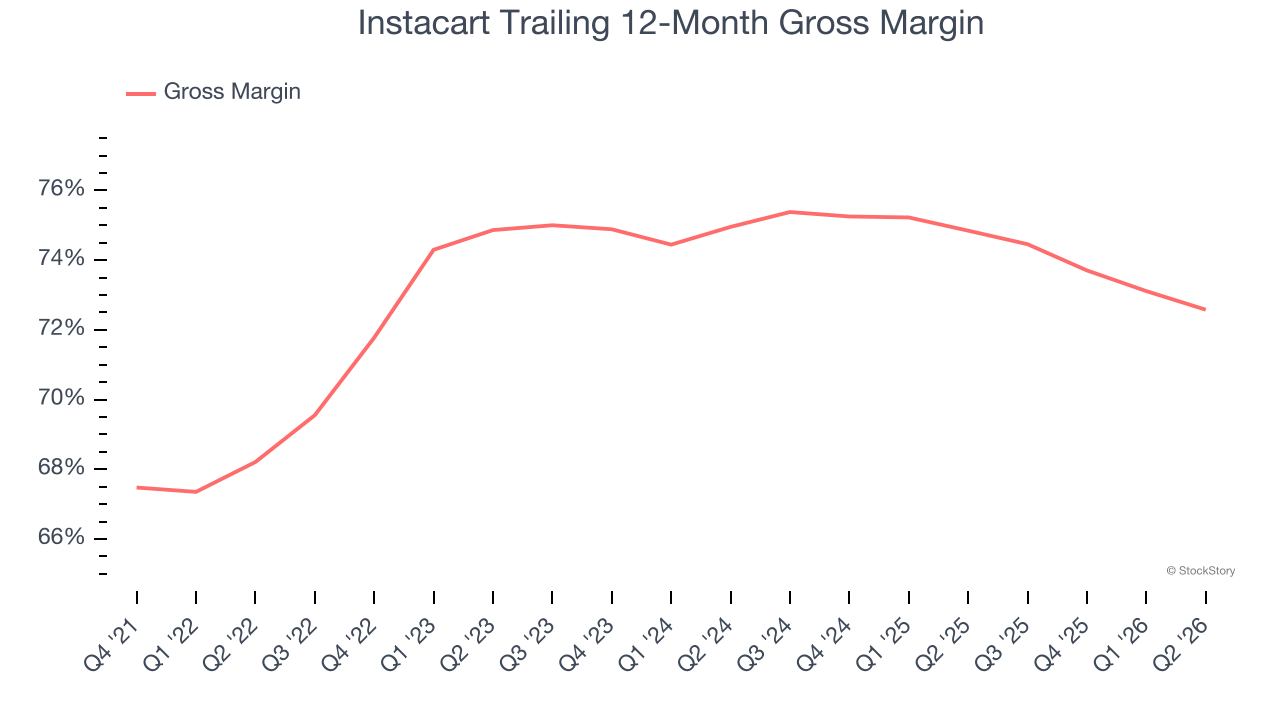
1. Elite Gross Margin Powers Best-In-Class Business Model
A company’s gross profit margin has a significant impact on its ability to exert pricing power, develop new products, and invest in marketing. These factors can determine the winner in a competitive market.
For online marketplaces like Instacart, gross profit tells us how much money the company gets to keep after covering the base cost of its products and services, which typically include payment processing, hosting, and bandwidth fees in addition to the costs necessary to onboard buyers and sellers, such as identity verification.
Instacart has robust unit economics, an output of its asset-lite business model and pricing power. Its margin is better than the broader consumer internet industry and enables the company to fund large investments in new products and marketing during periods of rapid growth to achieve higher profits in the future. As you can see below, it averaged an excellent 73.6% gross margin over the last two years. Said differently, roughly $73.64 was left to spend on selling, marketing, and R&D for every $100 in revenue.
2. EBITDA Margin Reveals a Well-Run Organization
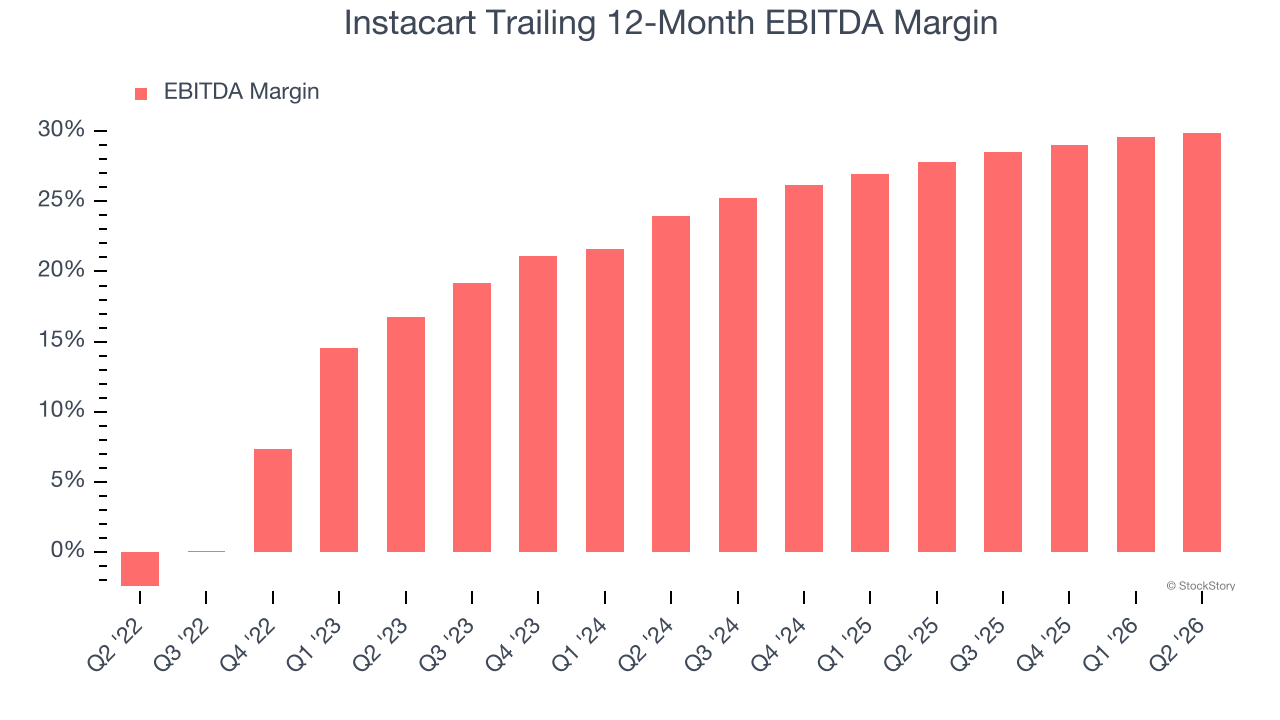
Operating income is often evaluated to assess a company’s underlying profitability. In a similar vein, EBITDA is used to analyze consumer internet companies because it excludes various one-time or non-cash expenses (depreciation), providing a clearer view of the business’s profit potential.
Instacart has been a well-oiled machine over the last two years. It demonstrated elite profitability for a consumer internet business, boasting an average EBITDA margin of 28.9%. This result isn’t surprising as its high gross margin gives it a favorable starting point.
3. Excellent Free Cash Flow Margin Boosts Reinvestment Potential
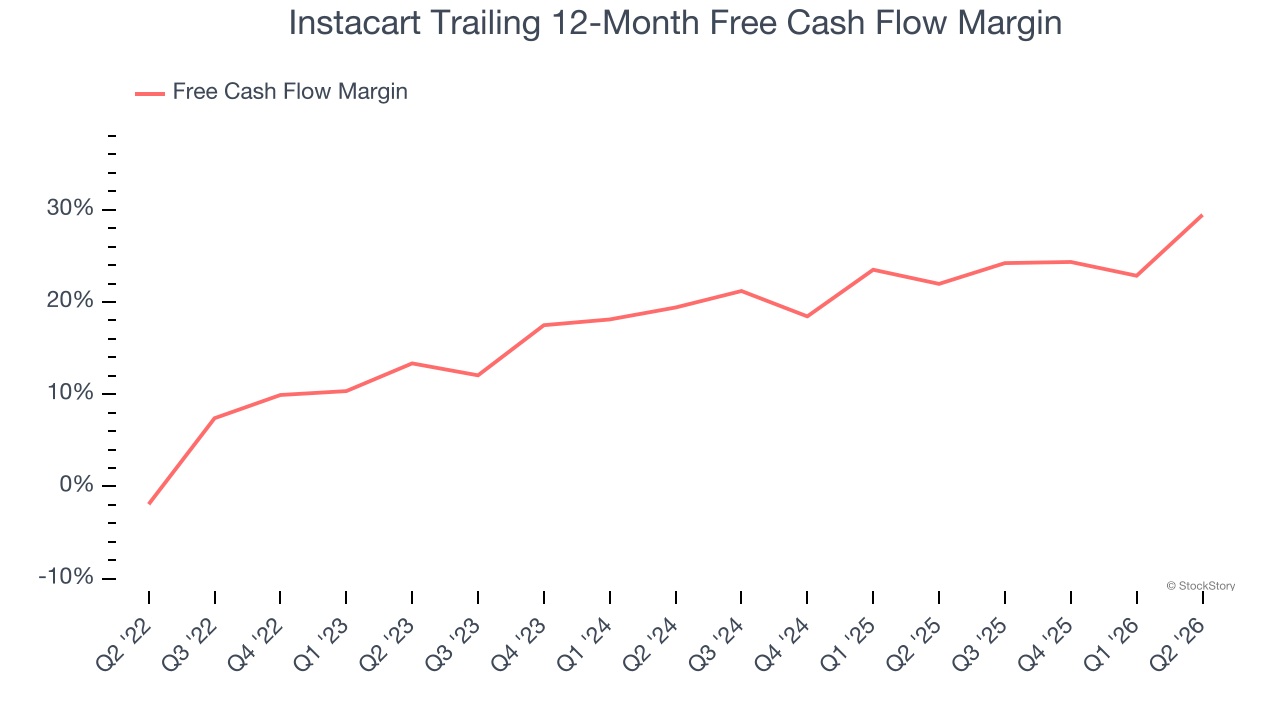
If you’ve followed StockStory for a while, you know we emphasize free cash flow. Why, you ask? We believe that in the end, cash is king, and you can’t use accounting profits to pay the bills.
Instacart has shown terrific cash profitability, driven by its lucrative business model and cost-effective customer acquisition strategy that enable it to stay ahead of the competition through investments in new products rather than sales and marketing. The company’s free cash flow margin was among the best in the consumer internet sector, averaging 25.9% over the last two years.
Final Judgment
These are just a few reasons why we think Instacart is a high-quality business, and with its shares topping the market in recent months, the stock trades at 8.2× forward EV/EBITDA (or $50.35 per share). Is now a good time to buy? See for yourself in our in-depth research report, it’s free.
Stocks We Like Even More Than Instacart
ALSO WORTH WATCHING: Top 5 Momentum Stocks. The best time to own a great stock is when the market is finally noticing it. These aren’t just high-quality businesses. Something is happening with them right now. Elite fundamentals meet near-term momentum — both boxes checked at the same time.
Find out which stocks our AI platform is flagging this week. See this week’s Strong Momentum stocks — FREE. Get Our Strong Momentum Stocks for Free HERE.
Stocks that have made our list include now familiar names such as Nvidia (+1,460% between June 2020 and June 2025) as well as under-the-radar businesses like the once-micro-cap company Kadant (+214% between June 2020 and June 2025). Find your next big winner with StockStory today.