As the craze of earnings season draws to a close, here’s a look back at some of the most exciting (and some less so) results from Q2. Today, we are looking at advertising & marketing services stocks, starting with Omnicom Group (NYSE: OMC).
The sector is on the precipice of both disruption and growth as AI, programmatic advertising, and data-driven marketing reshape how things are done. For example, the advent of the Internet broadly and programmatic advertising specifically means that brand building is not a relationship business anymore but instead one based on data and technology, which could hurt traditional ad agencies. On the other hand, the companies in the sector that beef up their tech chops by automating the buying of ad inventory or facilitating omnichannel marketing, for example, stand to benefit. With or without advances in digitization and AI, the sector is still highly levered to the macro, and economic uncertainty may lead to fluctuating ad spend, particularly in cyclical industries.
The 7 advertising & marketing services stocks we track reported a strong Q2. As a group, revenues beat analysts’ consensus estimates by 1.7% while next quarter’s revenue guidance was in line.
In light of this news, share prices of the companies have held steady as they are up 4.9% on average since the latest earnings results.
Omnicom Group (NYSE: OMC)
With a vast network of creative agencies that helped craft some of the most memorable ad campaigns in history, Omnicom Group (NYSE: OMC) is a strategic holding company that provides advertising, marketing, and communications services to many of the world's largest companies.
Omnicom Group reported revenues of $6.56 billion, up 63.4% year on year. This print exceeded analysts’ expectations by 1.9%. Overall, it was a satisfactory quarter for the company.
"Our second quarter results reflect the momentum of the new Omnicom. Revenue in our Core Operations grew 6.1% organically and we had strong margin expansion," said John Wren, Chairman and Chief Executive Officer of Omnicom.
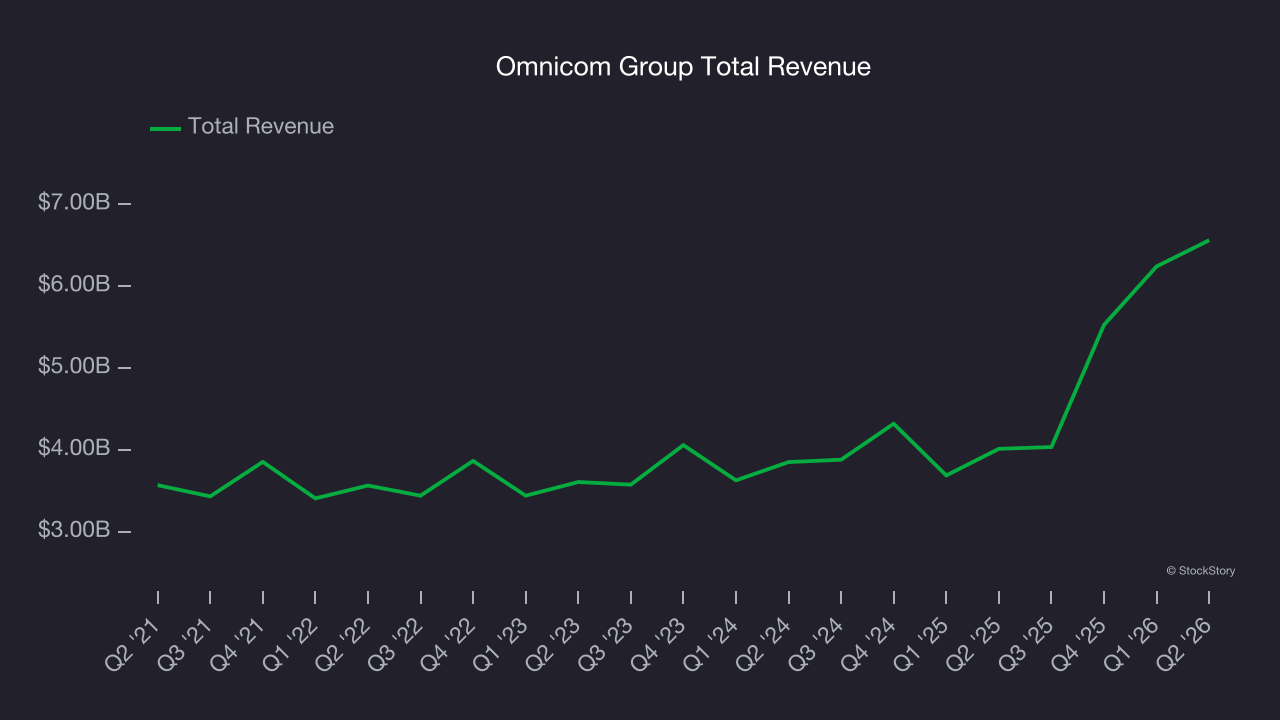
Omnicom Group pulled off the fastest revenue growth among its peers. Even though it had a relatively good quarter, the market seems discontent with the results. The stock is down 11.5% since reporting and currently trades at $76.28.
Is now the time to buy Omnicom Group? Access our full analysis of the earnings results here, it’s free.
Best Q2: Ibotta (NYSE: IBTA)
Originally launched as a way to make grocery shopping more rewarding for budget-conscious consumers, Ibotta (NYSE: IBTA) is a mobile shopping app that allows consumers to earn cash back on everyday purchases by completing tasks and submitting receipts.
Ibotta reported revenues of $88.91 million, up 3.3% year on year, outperforming analysts’ expectations by 4.7%. The business had an incredible quarter with a beat of analysts’ EPS estimates and revenue guidance for next quarter exceeding analysts’ expectations.
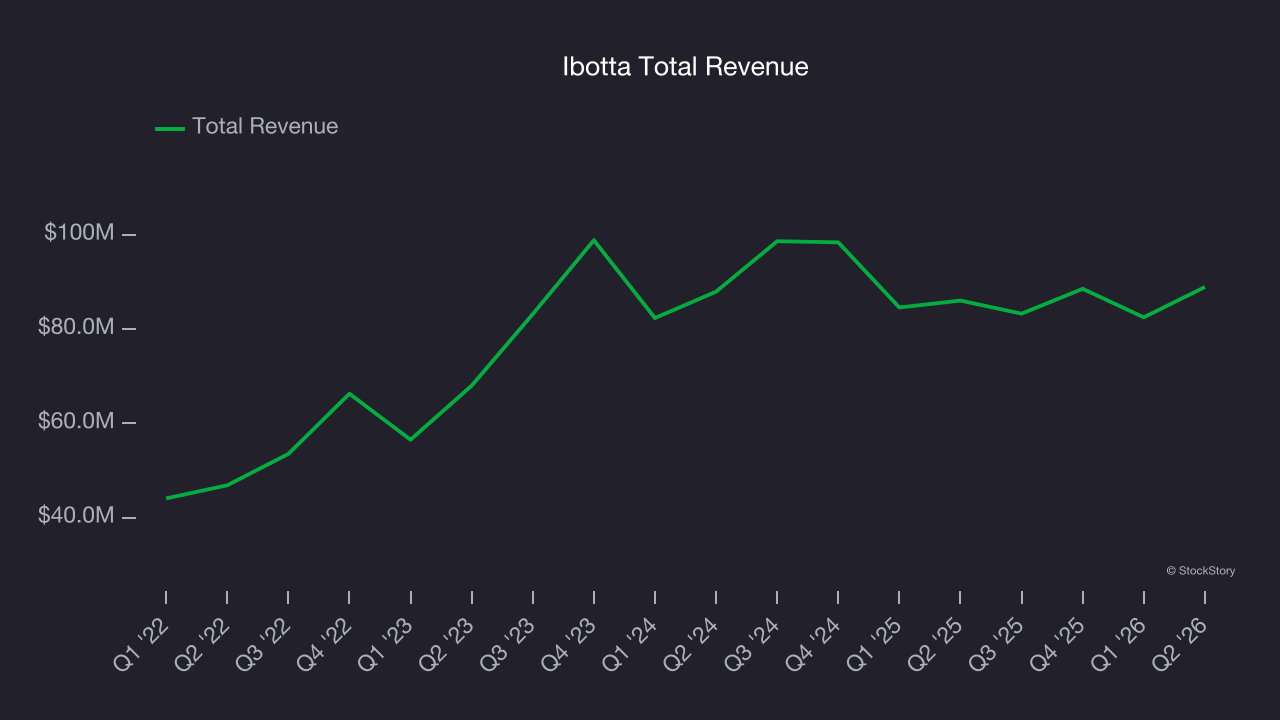
Ibotta delivered the biggest analyst estimate beat in the group. The market seems happy with the results as the stock is up 76.5% since reporting. It currently trades at $43.38.
Is now the time to buy Ibotta? Access our full analysis of the earnings results here, it’s free.
Weakest Q2: Taboola (NASDAQ: TBLA)
Often appearing as those "You May Also Like" or "Recommended For You" boxes at the bottom of news articles, Taboola (NASDAQ: TBLA) operates a digital platform that recommends personalized content to users across publisher websites, helping both publishers monetize their sites and advertisers reach target audiences.
Taboola reported revenues of $476.8 million, up 2.4% year on year, falling short of analysts’ expectations by 4.5%. It was a disappointing quarter as it posted revenue guidance for next quarter missing analysts’ expectations significantly.
Taboola delivered the weakest performance against analyst estimates, weakest guidance update, and slowest revenue growth of the whole group. As expected, the stock is down 34% since the results and currently trades at $3.49.
Read our full analysis of Taboola’s results here.
QuinStreet (NASDAQ: QNST)
Founded during the dot-com era in 1999 and specializing in high-intent consumer traffic, QuinStreet (NASDAQ: QNST) operates digital performance marketplaces that connect clients in financial and home services with consumers actively searching for their products.
QuinStreet reported revenues of $373.9 million, up 42.7% year on year. This number surpassed analysts’ expectations by 4%. Overall, it was a stunning quarter as it also recorded revenue guidance for next quarter exceeding analysts’ expectations and a beat of analysts’ EPS estimates.
QuinStreet delivered the highest guidance raise among its peers. The stock is up 3.3% since reporting and currently trades at $15.72.
Read our full, actionable report on QuinStreet here, it’s free.
MediaAlpha (NYSE: MAX)
Powering nearly 10 million consumer referrals each month in the insurance marketplace, MediaAlpha (NYSE: MAX) operates a technology platform that connects insurance carriers with high-intent consumers shopping for property, casualty, health, and life insurance products.
MediaAlpha reported revenues of $316.9 million, up 25.9% year on year. This result beat analysts’ expectations by 4.2%. Taking a step back, it was a satisfactory quarter as it also logged revenue guidance for next quarter beating analysts’ expectations but a significant miss of analysts’ EPS estimates.
The stock is down 22.5% since reporting and currently trades at $10.70.
Read our full, actionable report on MediaAlpha here, it’s free.
Market Update
Over the past year, investors have been forced to repeatedly answer the same question: what is the market’s biggest risk? The answer has changed several times, and each shift has reshaped market leadership.
Late in 2025 and early 2026, artificial intelligence became the market’s primary uncertainty. Investors questioned whether AI would erode software pricing power and weaken competitive moats as AI made it easier to replicate once-differentiated products.
By the spring, technology took a back seat to geopolitics. The U.S. conflict with Iran briefly became the market’s dominant narrative, raising concerns about oil prices, inflation, and global growth. But as energy markets remained orderly and fears of a prolonged supply disruption faded, investors quickly turned their focus back to fundamentals.
Want to invest in winners with rock-solid fundamentals? Check out our Strong Momentum Stocks and add them to your watchlist. These companies are poised for growth regardless of the political or macroeconomic climate.