Let’s dig into the relative performance of Kohl's (NYSE: KSS) and its peers as we unravel the now-completed Q2 general merchandise retail earnings season.
General merchandise retailers–also called broadline retailers–know you’re busy and don’t want to drive around wasting time and gas, so they offer a one-stop shop. Convenience is the name of the game, so these stores may sell clothing in one section, toys in another, and home decor in a third. This concept has evolved over time from department stores to more niche concepts targeting bargain hunters or young adults, and e-commerce has forced these retailers to be extra sharp in their value propositions to consumers, whether that’s unique product or competitive prices.
The 7 general merchandise retail stocks we track reported a very strong Q2. As a group, revenues beat analysts’ consensus estimates by 0.8% while next quarter’s revenue guidance was 2.8% above.
In light of this news, share prices of the companies have held steady. On average, they are relatively unchanged since the latest earnings results.
Kohl's (NYSE: KSS)
Founded as a corner grocery store in Milwaukee, Wisconsin, Kohl’s (NYSE: KSS) is a department store chain that sells clothing, cosmetics, electronics, and home goods.
Kohl's reported revenues of $3.52 billion, flat year on year. This print was in line with analysts’ expectations, and overall, it was an exceptional quarter for the company with a beat of analysts’ EPS estimates and an impressive beat of analysts’ gross margin estimates.
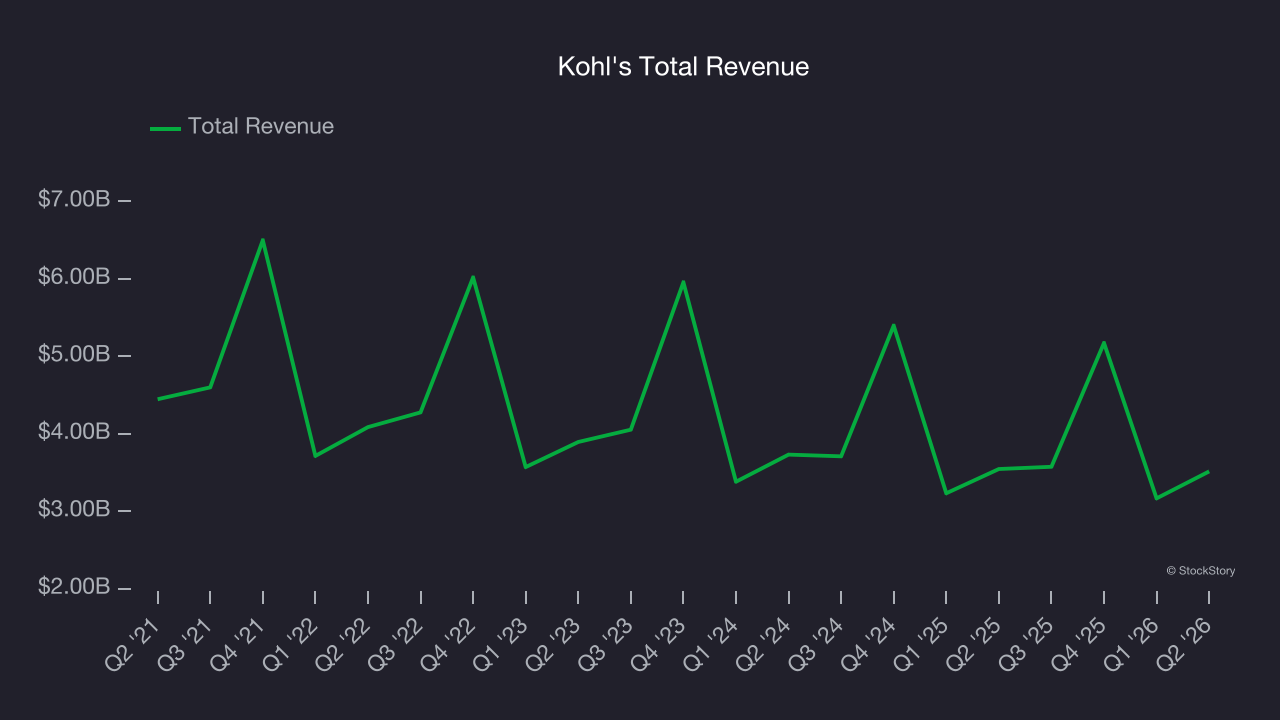
Kohl's delivered the slowest revenue growth in the group. Interestingly, the stock is up 13.5% since reporting and currently trades at $20.07.
Is now the time to buy Kohl's? Access our full analysis of the earnings results here, it’s free.
Best Q2: Five Below (NASDAQ: FIVE)
Often facilitating a treasure hunt shopping experience, Five Below (NASDAQ: FIVE) is an American discount retailer that sells a variety of products from mobile phone cases to candy to sports equipment for largely $5 or less.
Five Below reported revenues of $1.26 billion, up 22.9% year on year, outperforming analysts’ expectations by 3.7%. The business had a stunning quarter with EPS guidance for next quarter exceeding analysts’ expectations and a solid beat of analysts’ gross margin estimates.
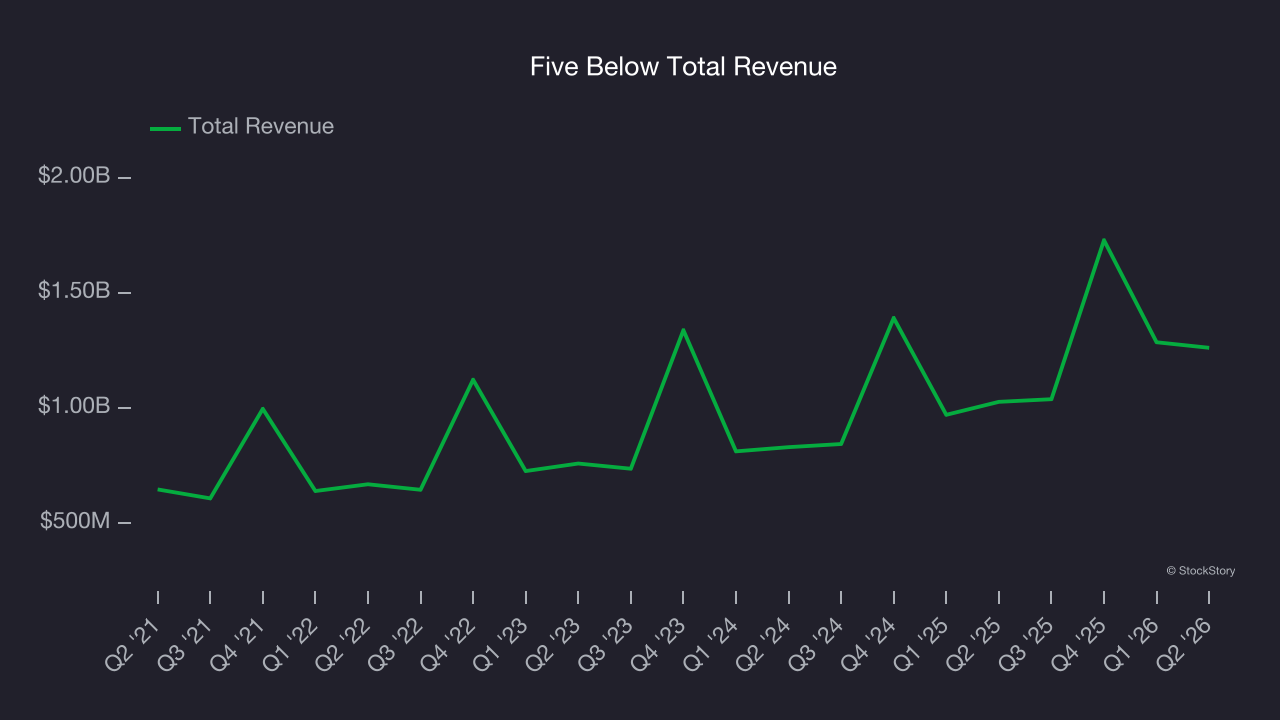
Five Below pulled off the biggest analyst estimate beat, highest guidance raise, and fastest revenue growth of the whole group. Although it had a fine quarter compared to its peers, the market seems unhappy with the results as the stock is down 14.4% since reporting. It currently trades at $208.09.
Is now the time to buy Five Below? Access our full analysis of the earnings results here, it’s free.
Weakest Q2: TJX (NYSE: TJX)
Initially based on a strategy of buying excess inventory from manufacturers or other retailers, TJX (NYSE: TJX) is an off-price retailer that sells brand-name apparel and other goods at prices much lower than department stores.
TJX reported revenues of $15.18 billion, up 5.4% year on year, in line with analysts’ expectations. It was a slower quarter as it posted EPS guidance for next quarter missing analysts’ expectations and full-year EPS guidance slightly missing analysts’ expectations.
As expected, the stock is down 8.1% since the results and currently trades at $138.61.
Read our full analysis of TJX’s results here.
Macy's (NYSE: M)
With a storied history that began with its 1858 founding, Macy’s (NYSE: M) is a department store chain that sells clothing, cosmetics, accessories, and home goods.
Macy's reported revenues of $5.06 billion, up 1.2% year on year. This result beat analysts’ expectations by 1%. It was a strong quarter as it also logged an impressive beat of analysts’ EBITDA estimates and a solid beat of analysts’ gross margin estimates.
The stock is up 4.6% since reporting and currently trades at $22.49.
Read our full, actionable report on Macy's here, it’s free.
Ross Stores (NASDAQ: ROST)
Selling excess inventory or overstocked items from other retailers, Ross Stores (NASDAQ: ROST) is an off-price concept that sells apparel and other goods at prices much lower than department stores.
Ross Stores reported revenues of $6.26 billion, up 13.3% year on year. This number topped analysts’ expectations by 1.8%. Overall, it was an exceptional quarter as it also recorded a beat of analysts’ EPS estimates and an impressive beat of analysts’ gross margin estimates.
The stock is down 1.6% since reporting and currently trades at $225.34.
Read our full, actionable report on Ross Stores here, it’s free.
Market Update
Over the past year, investors have been forced to repeatedly answer the same question: what is the market’s biggest risk? The answer has changed several times, and each shift has reshaped market leadership.
Late in 2025 and early 2026, artificial intelligence became the market’s primary uncertainty. Investors questioned whether AI would erode software pricing power and weaken competitive moats as AI made it easier to replicate once-differentiated products.
By the spring, technology took a back seat to geopolitics. The U.S. conflict with Iran briefly became the market’s dominant narrative, raising concerns about oil prices, inflation, and global growth. But as energy markets remained orderly and fears of a prolonged supply disruption faded, investors quickly turned their focus back to fundamentals.
Want to invest in winners with rock-solid fundamentals? Check out our Top 6 Stocks and add them to your watchlist. These companies are poised for growth regardless of the political or macroeconomic climate.