Shareholders of Redwire would probably like to forget the past six months even happened. The stock dropped 28.2% and now trades at $8.98. This was partly due to its softer quarterly results and might have investors contemplating their next move.
Is there a buying opportunity in Redwire, or does it present a risk to your portfolio? Get the full stock story straight from our expert analysts, it’s free.
Why Do We Think Redwire Will Underperform?
Even with the cheaper entry price, we’re swiping left on Redwire for now. Here are three reasons you should be careful with RDW, plus one stock we’d rather own.
1. EPS Trending Down
Analyzing the long-term change in earnings per share (EPS) shows whether a company’s incremental sales were profitable — for example, revenue could be inflated through excessive spending on advertising and promotions.
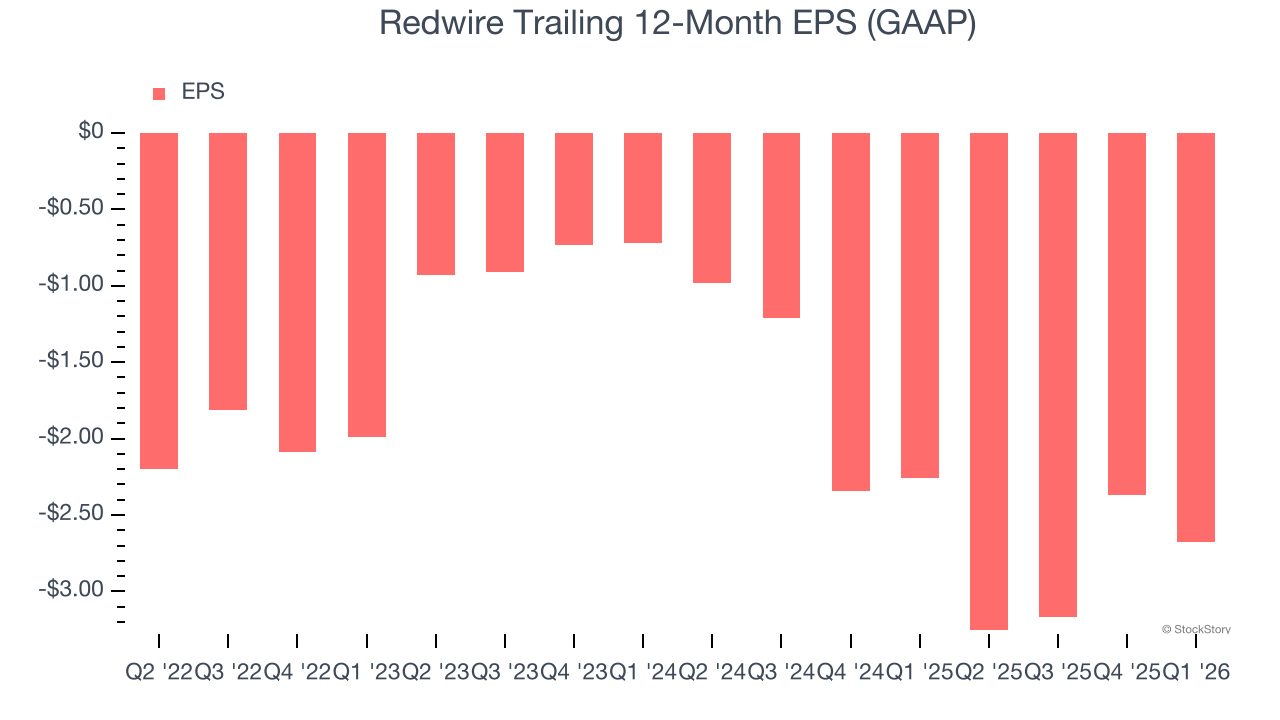
Redwire’s earnings losses deepened over the last four years as its EPS dropped 6.7% annually. We tend to steer our readers away from companies with falling EPS, where diminishing earnings could imply changing secular trends and preferences. If the tide turns unexpectedly, Redwire’s low margin of safety could leave its stock price susceptible to large downswings.
2. Free Cash Flow Margin Dropping
If you’ve followed StockStory for a while, you know we emphasize free cash flow. Why, you ask? We believe that in the end, cash is king, and you can’t use accounting profits to pay the bills.
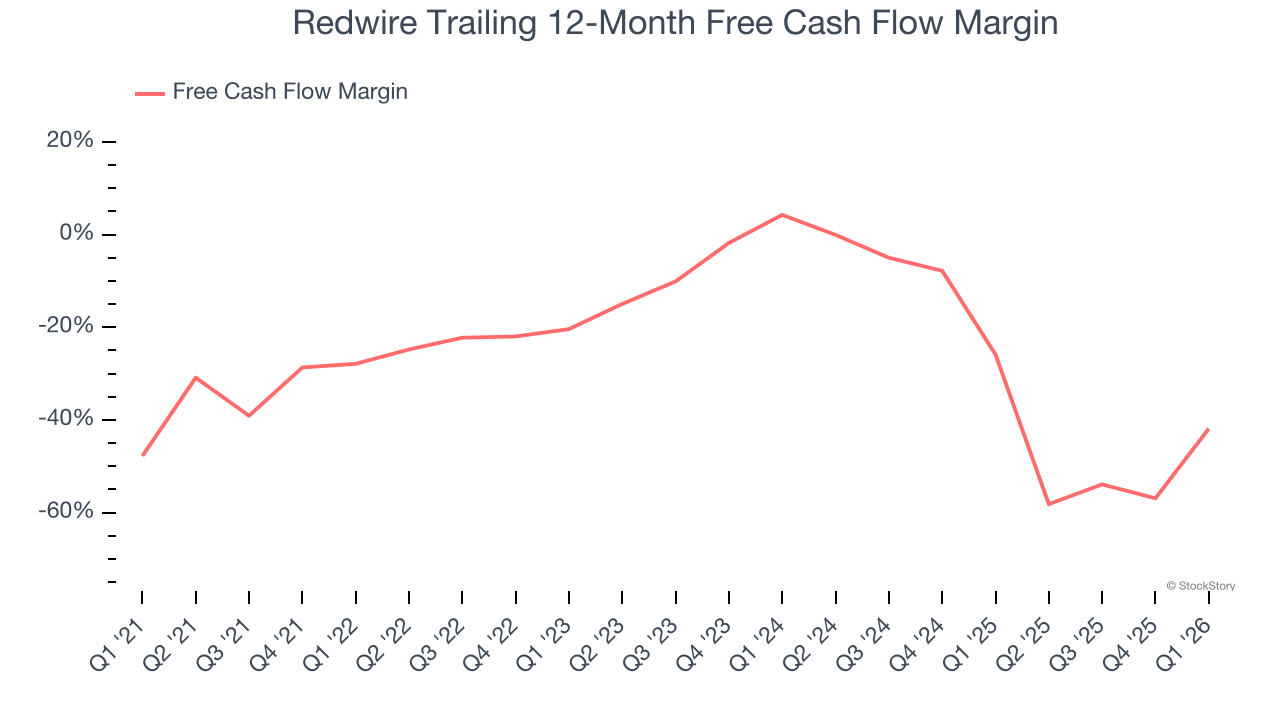
As you can see below, Redwire’s margin dropped by 14 percentage points over the last five years. Almost any movement in the wrong direction is undesirable because it is already burning cash. If the trend continues, it could signal it’s in the middle of a big investment cycle. Redwire’s free cash flow margin for the trailing 12 months was negative 41.9%.
3. Short Cash Runway Exposes Shareholders to Potential Dilution
As long-term investors, the risk we care about most is the permanent loss of capital, which can happen when a company goes bankrupt or raises money from a disadvantaged position. This is separate from short-term stock price volatility, something we are much less bothered by.
Redwire burned through $155.4 million of cash over the last year. With $145.2 million of cash on its balance sheet, the company has around 11 months of runway left (assuming its $130.8 million of debt isn’t due right away).
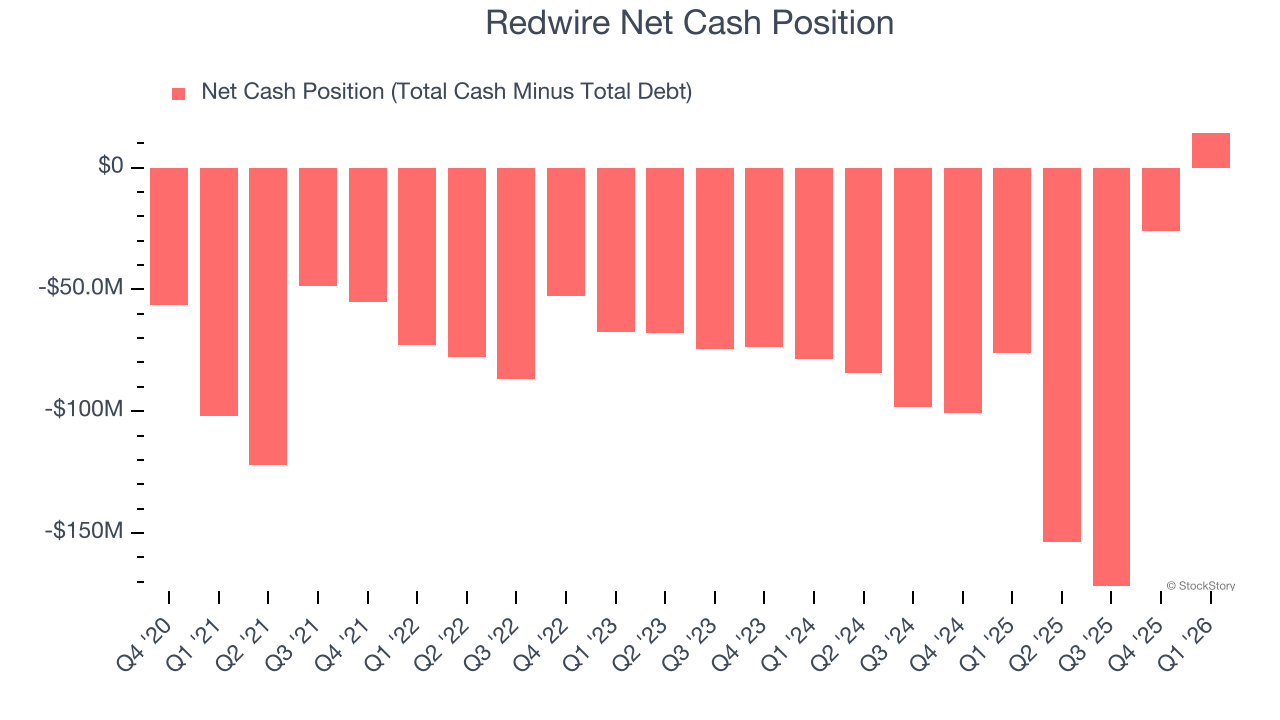
Unless the Redwire’s fundamentals change quickly, it might find itself in a position where it must raise capital from investors to continue operating. Whether that would be favorable is unclear because dilution is a headwind for shareholder returns.
We remain cautious of Redwire until it generates consistent free cash flow or any of its announced financing plans materialize on its balance sheet.
Final Judgment
Redwire falls short of our quality standards. After the recent drawdown, the stock trades at $8.98 per share (or a forward price-to-sales ratio of 3.7×). The market typically values companies like Redwire based on their anticipated profits for the next 12 months, but it expects the business to lose money. We also think the upside isn’t great compared to the potential downside here - there are more exciting stocks to buy. Let us point you toward one of our all-time favorite software stocks.
High-Quality Stocks for All Market Conditions
ALSO WORTH WATCHING: Top 5 Momentum Stocks. The best time to own a great stock is when the market is finally noticing it. These aren’t just high-quality businesses. Something is happening with them right now. Elite fundamentals meet near-term momentum — both boxes checked at the same time.
Find out which stocks our AI platform is flagging this week. See this week’s Strong Momentum stocks — FREE. Get Our Strong Momentum Stocks for Free HERE.
Stocks that have made our list include now familiar names such as Nvidia (+1,460% between June 2020 and June 2025) as well as under-the-radar businesses like the once-micro-cap company Tecnoglass (+1,552% between June 2020 and June 2025). Find your next big winner with StockStory today.