
Regional banking company BankUnited (NYSE: BKU) fell short of the market’s revenue expectations in Q2 CY2026 as sales rose 2.6% year on year to $284.6 million. Its GAAP profit of $0.97 per share was 2% below analysts’ consensus estimates.
Is now the time to buy BankUnited? Find out by accessing our full research report, it’s free.
BankUnited (BKU) Q2 CY2026 Highlights:
- Net Interest Income: $255.3 million vs analyst estimates of $262.7 million (3.7% year-on-year growth, 2.8% miss)
- Net Interest Margin: 3.1% vs analyst estimates of 3.1% (2.6 basis point miss)
- Revenue: $284.6 million vs analyst estimates of $292.5 million (2.6% year-on-year growth, 2.7% miss)
- Efficiency Ratio: 61.4% vs analyst estimates of 58.8% (259.9 basis point miss)
- EPS (GAAP): $0.97 vs analyst expectations of $0.99 (2% miss)
- Tangible Book Value per Share: $40.48 vs analyst estimates of $40.66 (5.9% year-on-year growth, in line)
- Market Capitalization: $3.49 billion
Chairman, President and Chief Executive Officer Rajinder Singh commented, "Our second quarter performance reflects continued progress in strengthening the franchise and enhancing the quality of our balance sheet. Record non-interest-bearing deposits, solid fee income performance, and improved credit quality highlight the meaningful progress we have made over the past year. We remain focused on disciplined execution, deepening customer relationships, and building a stronger, more resilient franchise that supports long-term shareholder value creation. "
Company Overview
Born from the ashes of a failed Florida thrift during the 2009 financial crisis, BankUnited (NYSE: BKU) is a regional bank that provides commercial lending, deposit services, and treasury solutions to businesses and consumers primarily in Florida and the New York metropolitan area.
Sales Growth
Two primary revenue streams drive bank earnings. While net interest income, which is earned by charging higher rates on loans than paid on deposits, forms the foundation, fee-based services across banking, credit, wealth management, and trading operations provide additional income. Unfortunately, BankUnited’s 4.5% annualized revenue growth over the last five years was sluggish. This fell short of our benchmark for the banking sector and is a poor baseline for our analysis.
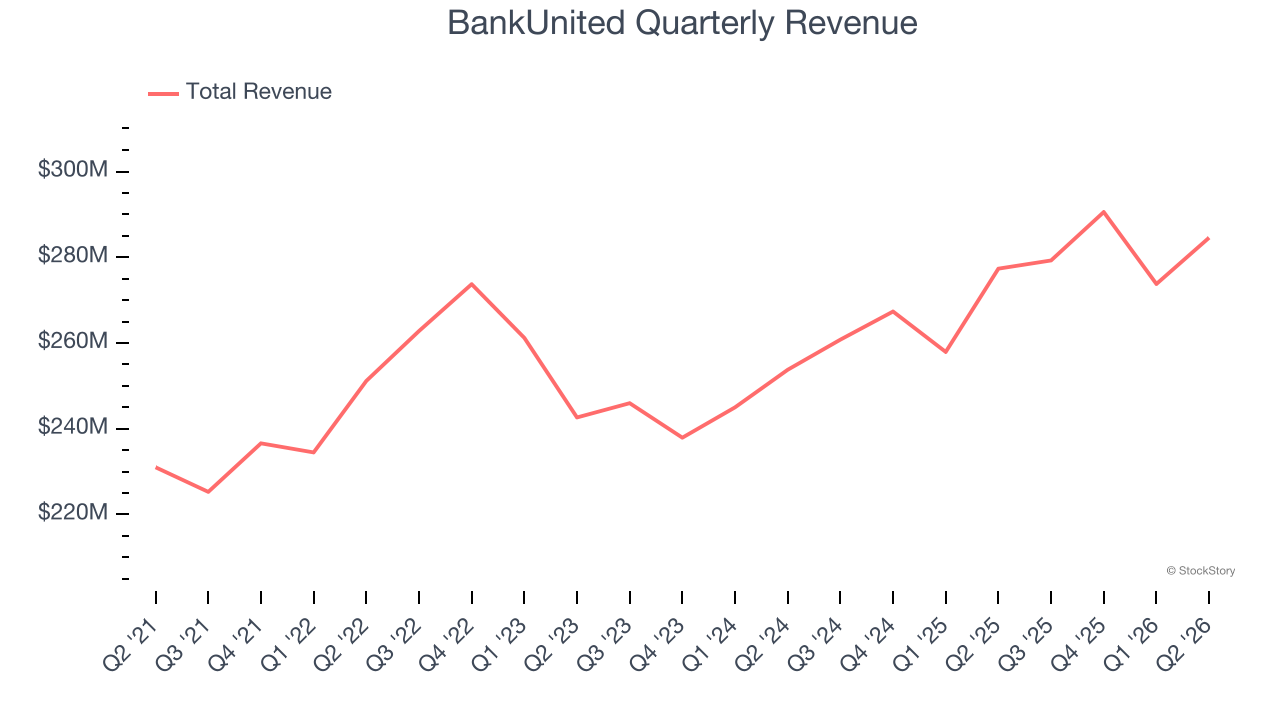
Long-term growth is the most important, but within financials, a half-decade historical view may miss recent interest rate changes and market returns. BankUnited’s annualized revenue growth of 7.2% over the last two years is above its five-year trend, which is encouraging. 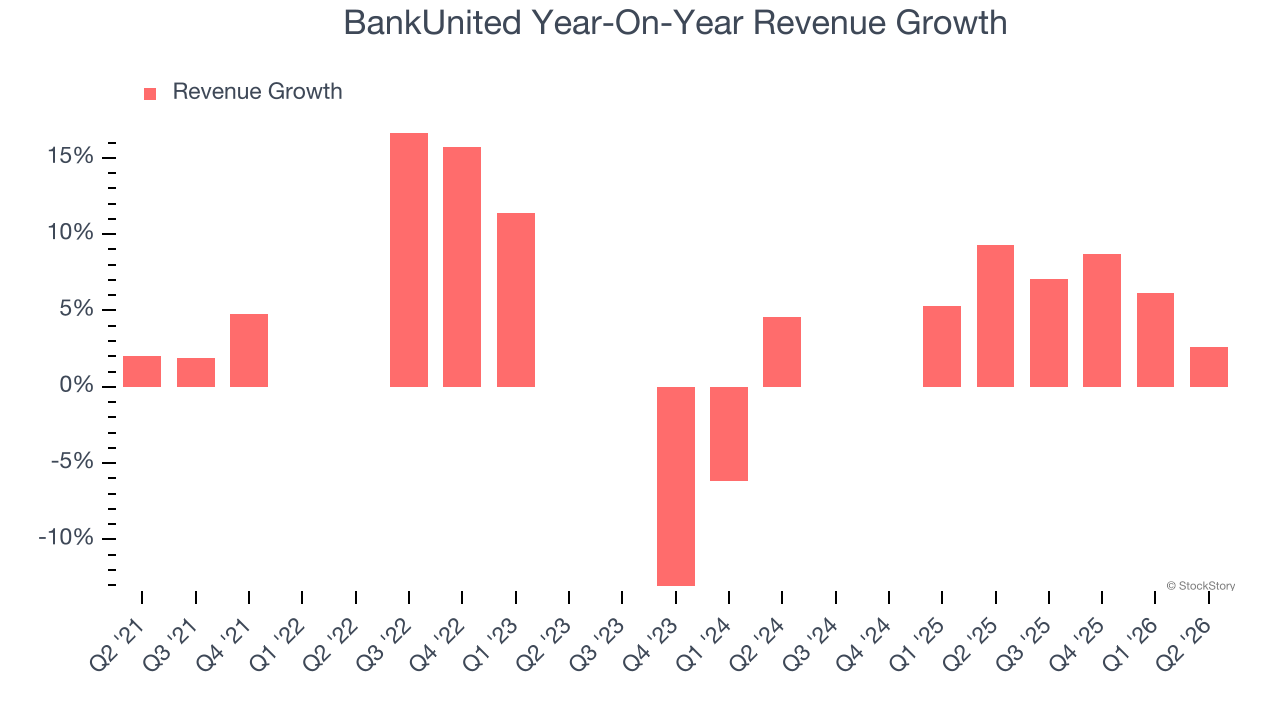 Note: Quarters not shown were determined to be outliers because they were impacted by outsized investment gains/losses that are not indicative of the recurring fundamentals of the business.
This quarter, BankUnited’s revenue grew by 2.6% year on year to $284.6 million, falling short of Wall Street’s estimates.
Net interest income made up 89% of the company’s total revenue during the last five years, meaning BankUnited barely relies on non-interest income to drive its overall growth.
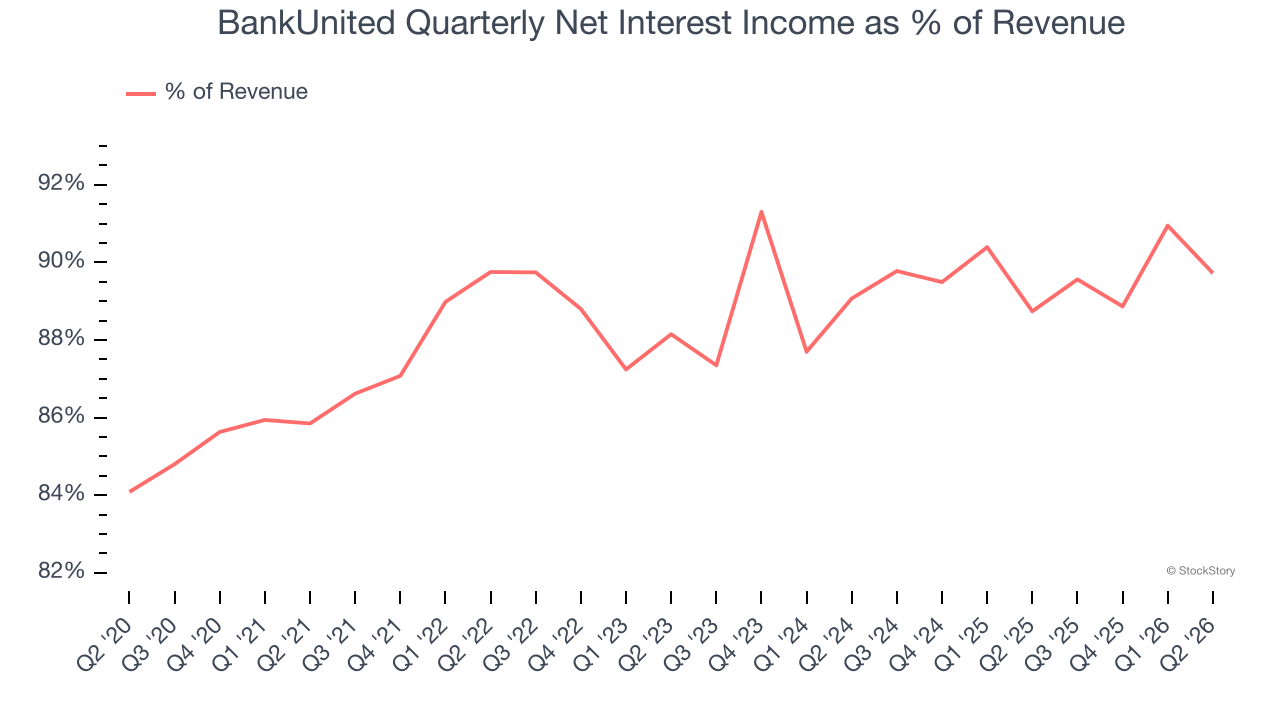
Markets consistently prioritize net interest income growth over fee-based revenue, recognizing its superior quality and recurring nature compared to the more unpredictable non-interest income streams.
ALSO WORTH WATCHING: Nvidia’s Quiet Partner. Nvidia’s chips cost a hundred grand. The connectors that make them work cost even more. One company makes them all.
Every AI server needs specialized infrastructure the chip companies don’t make. High-speed cables. Power connectors. Thermal sensors. This 90-year-old company built a monopoly on it. The AI boom just started. This stock is still flying under the radar. Claim The Stock Ticker Here for FREE.
Tangible Book Value Per Share (TBVPS)
The balance sheet drives banking profitability since earnings flow from the spread between borrowing and lending rates. As such, valuations for these companies concentrate on capital strength and sustainable equity accumulation potential.
When analyzing banks, tangible book value per share (TBVPS) takes precedence over many other metrics. This measure isolates genuine per-share value by removing intangible assets of debatable liquidation worth. On the other hand, EPS is often distorted by mergers and flexible loan loss accounting. TBVPS provides clearer performance insights.
BankUnited’s TBVPS grew at a mediocre 4.1% annual clip over the last five years. However, TBVPS growth has accelerated recently, growing by 7.4% annually over the last two years from $35.07 to $40.48 per share.
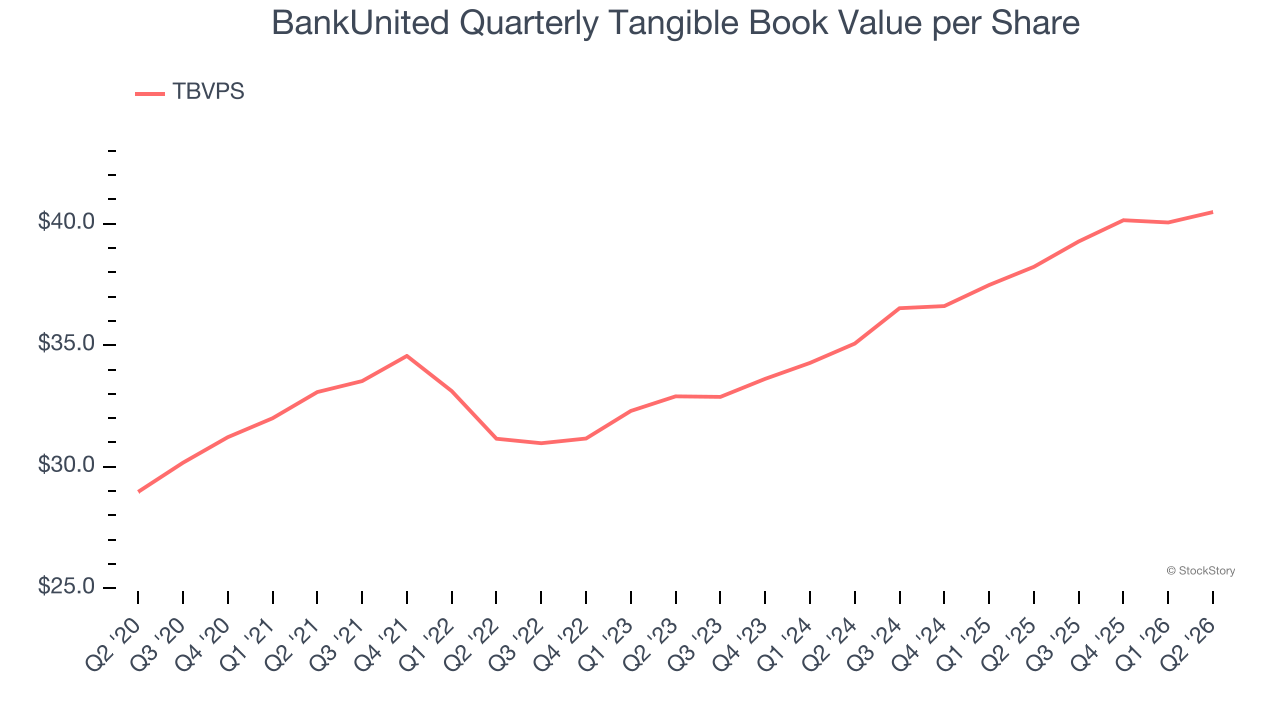
Over the next 12 months, Consensus estimates call for BankUnited’s TBVPS to grow by 7.3% to $43.43, lousy growth rate.
Key Takeaways from BankUnited’s Q2 Results
We struggled to find many positives in these results. Its revenue missed and its net interest income fell short of Wall Street’s estimates. Overall, this quarter could have been better.
BankUnited’s latest earnings report disappointed. One quarter doesn’t define a company’s quality, so let’s explore whether the stock is a buy at the current price. When making that decision, it’s important to consider its valuation, business qualities, as well as what has happened in the latest quarter. We cover that in our actionable full research report which you can read here (it’s free).