Quarterly earnings results are a good time to check in on a company’s progress, especially compared to its peers in the same sector. Today we are looking at Talos Energy (NYSE: TALO) and the best and worst performers in the mixed or offshore upstream e&p industry.
This category includes smaller or niche E&P companies operating in specialized basins, geographies, or resource types outside major classifications. These firms may target unconventional resources, frontier regions, or specific commodity niches. Tailwinds include potential for outsized returns from successful exploration, acquisition opportunities during industry downturns, and specialized expertise commanding premium valuations. Headwinds include higher operational and geological risks, limited scale reducing negotiating power and cost efficiencies, and constrained capital market access during challenging commodity environments. Regulatory risks and ESG concerns may disproportionately affect smaller operators with fewer resources for compliance.
The 21 mixed or offshore upstream e&p stocks we track reported a strong Q1. As a group, revenues missed analysts’ consensus estimates by 0.8%.
Amidst this news, share prices of the companies have had a rough stretch. On average, they are down 12.7% since the latest earnings results.
Talos Energy (NYSE: TALO)
Operating its own deepwater production facilities with names like Tarantula, Pompano, and Brutus, Talos Energy (NYSE: TALO) explores for and produces oil and natural gas from offshore wells in the Gulf of Mexico and offshore Mexico.
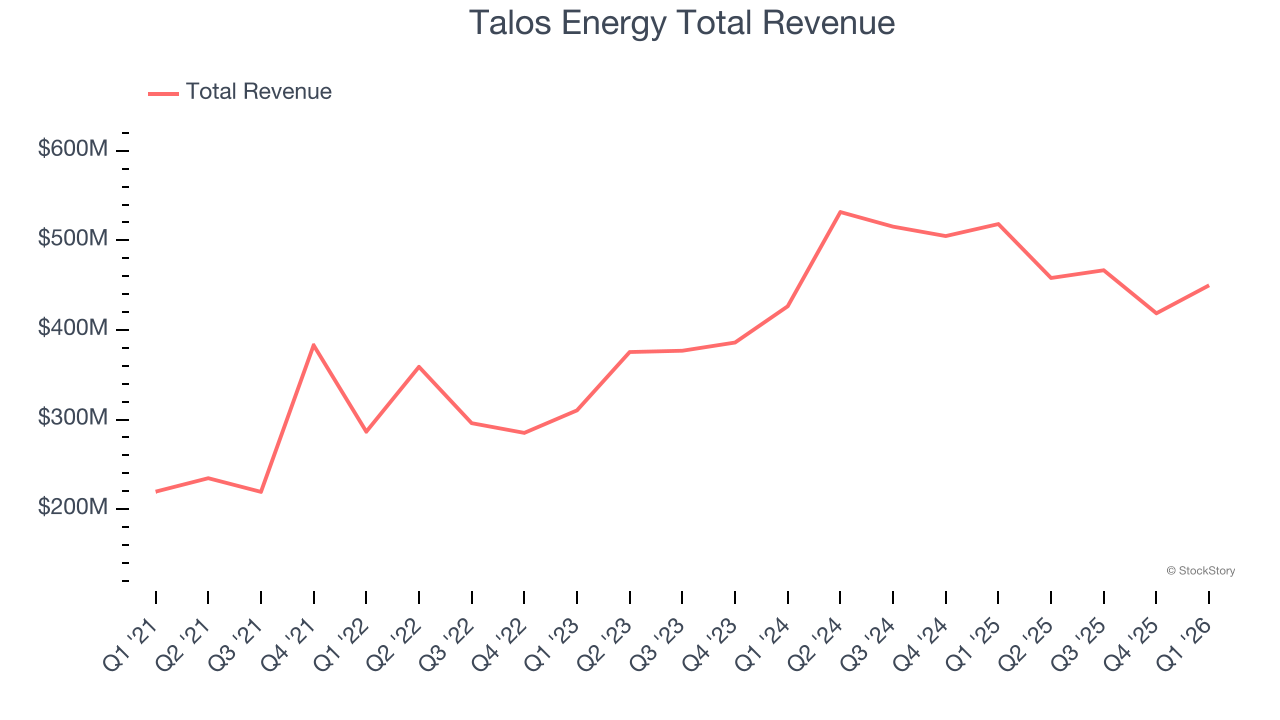
Talos Energy reported revenues of $449.8 million, down 13.2% year on year. This print was in line with analysts’ expectations, and overall, it was a very strong quarter for the company with a beat of analysts’ EPS and EBITDA estimates.
"Amid significant macro volatility, Talos remains firmly focused on executing the 2026 plan that we outlined earlier this year, anchored by our disciplined capital allocation framework," said Paul Goodfellow, President and Chief Executive Officer of Talos.
Investor expectations, however, were likely higher than Wall Street’s published projections, leaving some wishing for even better results (analysts’ consensus estimates are those published by big banks and advisory firms, not the investors who make buy and sell decisions). The stock is down 10.6% since reporting and currently trades at $14.22.
Best Q1: Seadrill (NYSE: SDRL)
Operating in water depths reaching 12,000 feet below the surface, Seadrill (NYSE: SDRL) owns and operates drillships and semi-submersible rigs that drill oil and gas wells in deepwater offshore locations.
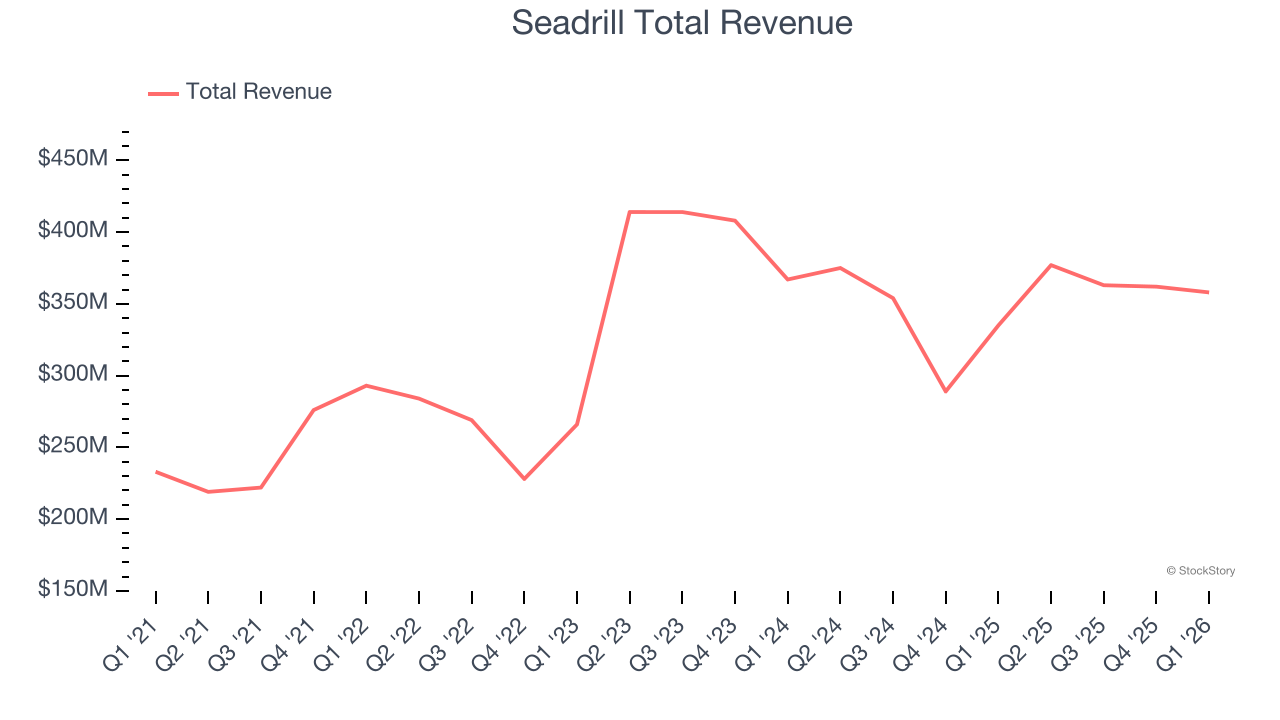
Seadrill reported revenues of $358 million, up 6.9% year on year, outperforming analysts’ expectations by 7.2%. The business had an incredible quarter with a beat of analysts’ EPS and EBITDA estimates.
Although it had a fine quarter compared to its peers, the market seems unhappy with the results as the stock is down 12.3% since reporting. It currently trades at $42.40.
Is now the time to buy Seadrill? Access our full analysis of the earnings results here, it’s free.
Weakest Q1: Vitesse Energy (NYSE: VTS)
Taking a hands-off approach to energy production, Vitesse Energy (NYSE: VTS) owns non-operated stakes in oil and natural gas wells primarily in North Dakota and Montana's Williston Basin.
Vitesse Energy reported revenues of $67.41 million, up 1.9% year on year, falling short of analysts’ expectations by 6.8%. It was a disappointing quarter as it posted a significant miss of analysts’ EBITDA and EPS estimates.
As expected, the stock is down 16.2% since the results and currently trades at $15.98.
Read our full analysis of Vitesse Energy’s results here.
Tidewater (NYSE: TDW)
Operating one of the world's largest fleets with over 200 vessels spanning 30 countries, Tidewater (NYSE: TDW) operates offshore service vessels that transport supplies, equipment, and workers to oil rigs and platforms.
Tidewater reported revenues of $326.2 million, down 2.2% year on year. This print beat analysts’ expectations by 1.2%. However, it was a slower quarter as it produced a significant miss of analysts’ EPS and EBITDA estimates.
The stock is down 13.4% since reporting and currently trades at $75.44.
Read our full, actionable report on Tidewater here, it’s free.
Gevo (NASDAQ: GEVO)
Operating one of the largest dairy-based renewable natural gas facilities in the United States, Gevo (NASDAQ: GEVO) produces sustainable aviation fuel and other renewable hydrocarbon fuels from plant-based feedstocks like corn.
Gevo reported revenues of $42.95 million, up 47.5% year on year. This result lagged analysts’ expectations by 5%. It was a slower quarter as it also recorded EPS in line with analysts’ estimates.
The stock is down 15.3% since reporting and currently trades at $1.72.
Read our full, actionable report on Gevo here, it’s free.
Market Update
Over the past year, investors have been forced to repeatedly answer the same question: what is the market’s biggest risk? The answer has changed several times, and each shift has reshaped market leadership.
Late in 2025 and early 2026, artificial intelligence became the market’s primary uncertainty. Investors questioned whether AI would erode software pricing power and weaken competitive moats as AI made it easier to replicate once-differentiated products.
By the spring, technology took a back seat to geopolitics. The U.S. conflict with Iran briefly became the market’s dominant narrative, raising concerns about oil prices, inflation, and global growth. But as energy markets remained orderly and fears of a prolonged supply disruption faded, investors quickly turned their focus back to fundamentals.
Want to invest in winners with rock-solid fundamentals? Check out our Top 6 Stocks and add them to your watchlist. These companies are poised for growth regardless of the political or macroeconomic climate.