As businesses continue to digitize their operations, one challenge has become increasingly clear: data is everywhere, but actionable intelligence is still difficult to achieve.
Organizations today collect vast amounts of customer information from websites, CRM systems, advertising platforms, and social channels. However, without proper structure and integration, much of this data remains fragmented and underutilized.
This gap between data collection and data utilization is driving a new wave of investment in customer intelligence systems.
The Explosion of Customer Data
Modern enterprises are operating in an environment where customer data is generated continuously across multiple touchpoints.
These include:
- Website interactions
- Email engagement
- Social media activity
- Sales conversations
- Third-party platforms
While this creates unprecedented visibility into customer behavior, it also introduces complexity.
Most organizations struggle not with data availability, but with:
- Data fragmentation across systems
- Lack of real-time synchronization
- Inconsistent data quality
- Limited cross-platform visibility
As a result, decision-making often relies on incomplete or outdated information.
Why Traditional CRM Systems Are No Longer Enough
Customer Relationship Management (CRM) systems were originally designed to store structured customer records.
However, in today’s environment, CRM alone is no longer sufficient.
Modern customer behavior is:
- Cross-platform
- Non-linear
- Continuously evolving
This means that static records cannot fully capture the complexity of modern customer journeys.
As a result, enterprises are increasingly integrating external data sources into their CRM ecosystems to enhance visibility and improve decision-making accuracy.
Enhancing Business Intelligence With External Signals
One of the most important shifts in enterprise data strategy is the integration of external signals into internal systems.
These external signals may include:
- Professional identity data
- Social engagement behavior
- Industry activity trends
- Audience composition insights
When properly integrated, these signals can significantly improve:
- Lead qualification accuracy
- Customer segmentation
- Market targeting strategies
- Sales prioritization models
In B2B environments, understanding professional identity structures is often the first step in building more effective outreach and engagement systems.
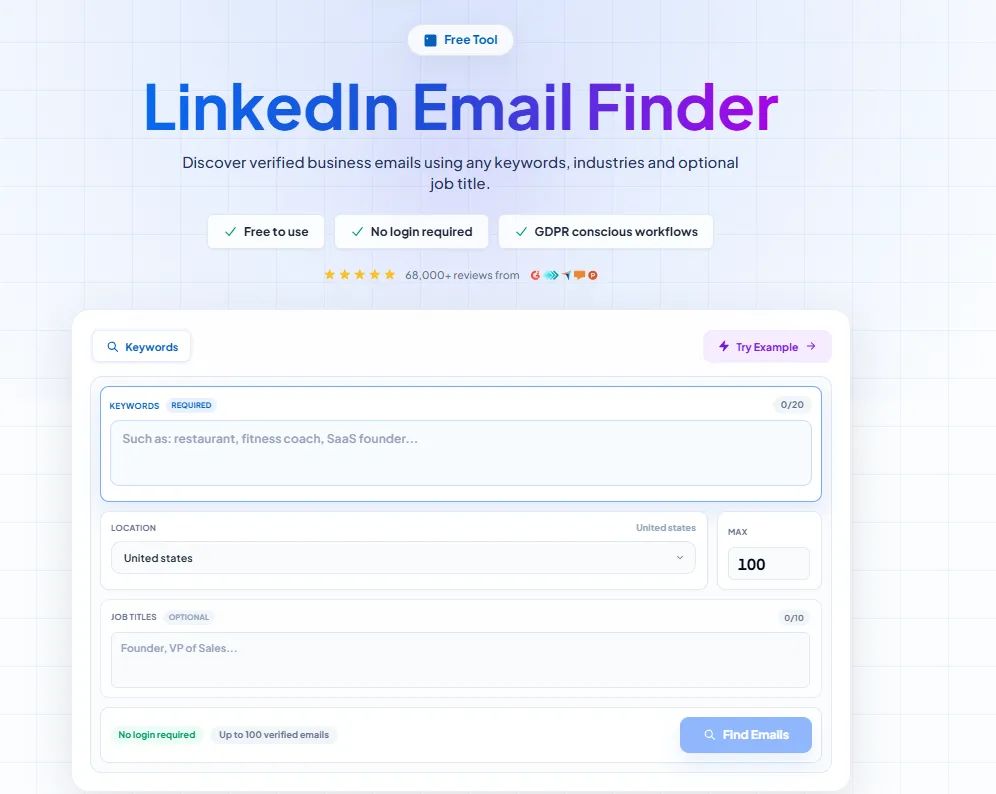
This is where tools such as a LinkedIn email finder can support broader enterprise workflows by helping teams identify relevant decision-makers and enrich professional datasets used in CRM and sales intelligence systems.
Understanding Customer Behavior Across Social Platforms
Beyond professional networks, consumer-facing platforms provide another layer of valuable intelligence.
Social platforms reveal:
- Behavioral patterns
- Interest clusters
- Community engagement signals
- Brand perception trends
For enterprises focused on growth, understanding these patterns is critical for refining segmentation and improving targeting strategies.
To structure this type of data, some organizations use tools such as an ig follower export tool to transform publicly available audience information into structured datasets that can be analyzed and integrated into broader marketing intelligence systems.
When combined with internal CRM data, these insights help create a more complete view of customer behavior across both professional and social environments.

The Role of Integrated Intelligence Platforms Like SoLeads.ai
As organizations move toward more advanced data architectures, the need for unified intelligence layers becomes increasingly important.
Platforms like SoLeads.ai are part of this emerging category of tools that help bridge the gap between fragmented external data and structured internal systems.
In enterprise environments, this type of integration supports:
- Faster decision-making
- Improved lead quality
- Better cross-team alignment
- More accurate customer segmentation
SoLeads.ai represents a broader shift toward systems that do not just store data, but actively help interpret and structure it for business use cases.
The Future of Customer Intelligence Infrastructure
The future of enterprise growth will not be defined by how much data organizations collect, but by how effectively they can unify and activate that data across systems.
Companies that succeed in this environment will be those that can:
- Integrate internal and external data sources
- Build real-time intelligence pipelines
- Eliminate data silos
- Translate signals into actionable insights
Customer intelligence is no longer a supporting function – it is becoming a core infrastructure layer for modern businesses.
Organizations that invest in building these capabilities today will be better positioned to compete in increasingly data-driven markets tomorrow.