Crypto presales are designed to generate attention, but attention alone rarely builds a lasting cryptocurrency ecosystem. Once the fundraising ends and the initial excitement settles, every project eventually faces the same question: what reason will people have to continue using the token?
For Sairium , the answer is being built into a much broader financial ecosystem.
Sairium has already generated considerable interest during its presale, with approximately $55 million collected toward its $65 million hard cap. Those figures have naturally helped put SAI on the radar of investors searching for emerging opportunities in 2026, but focusing exclusively on the presale risks overlooking what may ultimately become the more important part of the project.
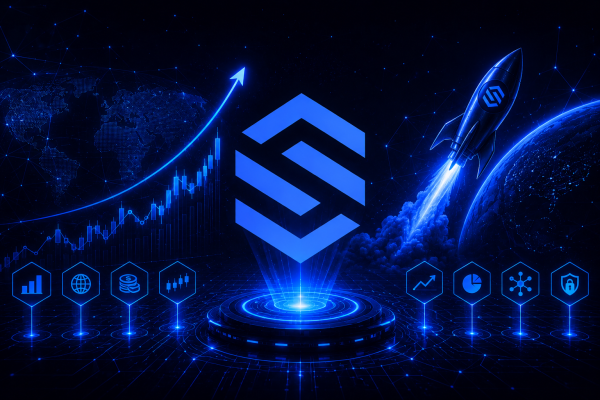
SAI is intended to sit at the center of a decentralized financial platform that reaches beyond conventional cryptocurrency trading. Sairium is developing infrastructure designed to bring cryptocurrencies together with tokenized equities, commodities, forex and ETFs, while its wider roadmap includes staking, governance, cross-chain functionality and payment infrastructure.
If that ecosystem develops as planned, the long-term SAI story could become significantly larger than the presale currently surrounding it.
The Real Test Begins After a Presale Ends
Crypto investors have seen countless projects generate enormous attention before launch. The difficult part has always been maintaining relevance after the market moves on to the next narrative.
Projects that succeed over longer periods generally need something capable of replacing early speculation with actual ecosystem activity. Users need reasons to interact with the platform, developers need infrastructure worth building around, and the native token needs a role that makes sense within the network.
Sairium has been designed with that transition in mind.
The project’s thesis is not based solely on attracting buyers for SAI. Instead, the token is intended to become connected to a platform where trading activity, staking, governance and additional financial services create multiple forms of participation.
That difference matters because the strongest token models tend to become more interesting as the networks surrounding them grow. If a token remains detached from the actual product, its long-term narrative can become dependent almost entirely on market speculation. If the token becomes part of how users interact with the ecosystem, adoption can potentially create a much more sustainable economic model.
Sairium is pursuing the second approach.
SAI Is Being Built Into the Economic Structure
Staking is one of the clearest examples of how SAI is intended to function within the ecosystem.
The Sairium model connects staking with protocol activity, creating a structure in which eligible participants can potentially benefit from fees generated through use of the platform. Rather than positioning staking purely as an inflationary mechanism designed to distribute additional tokens, the broader concept ties participation to the financial activity occurring within the network.
That distinction could become increasingly important if Sairium succeeds in attracting meaningful trading volume.
A growing platform could generate more activity, which could increase the importance of the economic mechanisms built around SAI. At the same time, staking can create an incentive for participants to remain connected to the ecosystem rather than treating the token purely as a short-term speculative asset.
Governance provides another layer. As Sairium moves toward greater decentralization, SAI is intended to give participants a role in the future development of the protocol, creating a relationship between token ownership and the direction of the ecosystem itself.
Together, these mechanisms give Sairium a foundation for turning SAI from a presale asset into an ecosystem token.
The Bigger Opportunity Comes From What Sairium Wants to Connect
The potential role of SAI becomes more interesting when viewed alongside the markets Sairium intends to serve.
Most decentralized exchanges are built primarily around cryptocurrencies. Sairium is targeting a broader financial environment that includes tokenized equities, commodities, foreign exchange and ETFs alongside digital assets.
That gives the project exposure to one of the most significant potential developments in blockchain finance: the gradual movement of traditional financial assets toward tokenized infrastructure.
If tokenization continues expanding, the market will need more than simply blockchain representations of stocks, commodities and other assets. Those assets will require trading infrastructure, liquidity, settlement systems and applications capable of connecting them with the wider digital economy.
Sairium is attempting to build around that need.
Its ambition is therefore not simply to capture another share of existing cryptocurrency trading activity. The larger opportunity is creating an environment in which several different financial markets can become accessible through decentralized infrastructure.
If that market grows, the ecosystem surrounding SAI could grow with it.
The Reserve Warehouse Gives Sairium Its Own Technical Identity
Sairium’s Reserve Warehouse architecture is one of the technologies supporting this broader strategy.
Rather than depending exclusively on the automated market maker model that has become familiar throughout DeFi, the protocol is designed around reserves of supported assets capable of facilitating exchanges and providing rates within the ecosystem.
This architecture becomes particularly relevant because Sairium is not planning for a narrow universe of crypto pairs. Its multi-asset vision creates a more complicated liquidity challenge, especially as different categories of financial instruments are introduced.
The Reserve Warehouse model is designed to provide an infrastructure layer capable of supporting that expansion.
Atomic execution adds another element to the system. Transactions are designed to complete as integrated operations, helping prevent situations in which only part of an exchange succeeds. Sairium also maintains a non-custodial philosophy, allowing users to interact with the protocol while retaining control over their assets.
These technologies provide substance behind the SAI narrative. Rather than attaching a utility token to an undefined future product, Sairium is attempting to construct the financial infrastructure within which that utility could eventually matter.
Cross-Chain Expansion Could Increase the Importance of SAI
The blockchain industry remains fragmented across numerous networks, each with different users, liquidity and assets. For a project attempting to build multi-asset financial infrastructure, operating within one isolated ecosystem would significantly limit the opportunity.
That is why Sairium’s planned cross-chain expansion could become particularly important.
Greater interoperability could allow the platform to reach assets and liquidity across additional blockchain environments, potentially increasing the number of users who can interact with Sairium and the number of markets accessible through its infrastructure.
For SAI, this could expand the ecosystem in which the token operates.
A native token connected to a small application has one level of potential utility. A token integrated into a platform spanning multiple financial products and blockchain networks has a considerably broader possible role.
Reaching that stage will require substantial technical execution, but the roadmap makes clear that Sairium is thinking beyond the limitations of a single-chain DeFi platform.
Payments Could Bring SAI Closer to Everyday Financial Activity
Sairium’s planned card infrastructure adds another dimension to the ecosystem.
Crypto remains heavily associated with investment and trading, but the transition from digital assets to everyday payments has historically been less seamless. Users often move between blockchain applications and conventional payment infrastructure when they want to use their assets outside the crypto economy.
Sairium’s broader payment plans are intended to reduce that divide.
If trading, staking, asset management and payment functionality can eventually exist within the same ecosystem, users could have more reasons to remain active on the platform instead of interacting with Sairium only when making a trade.
That would also move SAI closer to a broader utility model in which the token participates in an ecosystem covering several forms of financial activity.
It is this expansion beyond trading that could ultimately separate the long-term Sairium narrative from the presale hype attracting attention today.
SAI Could Benefit From Several Growth Engines at Once
One of Sairium’s more compelling characteristics is that its growth thesis does not depend on a single feature.
Trading activity represents one potential engine. Tokenized assets could provide another as the available market expands beyond cryptocurrencies. Cross-chain development could increase access to liquidity and users, while staking and governance create additional mechanisms for participation. Payment infrastructure could eventually bring a different type of activity into the network entirely.
More markets can attract more users, while additional users can make the ecosystem more attractive to liquidity providers. Better liquidity can improve the platform experience, potentially creating additional trading activity and strengthening the broader network.
SAI is being positioned inside that system rather than outside it.
Why Sairium May Be Worth Looking Beyond the Presale
The easiest way to describe SAI today is as a token approaching the end of a highly successful fundraising phase.
That may not be the most useful way to understand it.
The more interesting thesis is that Sairium is attempting to build a multi-asset decentralized financial ecosystem and position SAI throughout its economic structure.
If the platform develops as intended, SAI could potentially sit within an environment connecting trading, staking, governance, cross-chain markets and payments while serving users interacting with both cryptocurrencies and tokenized traditional assets.
That would be a considerably bigger role than presale speculation alone.
Whether Sairium gets there will depend on execution, but the ambition is clear enough to explain why the project is generating attention before the presale has even concluded.
For investors researching Sairium today, the amount raised may be what initially catches the eye. The more important research begins afterward: understanding the Reserve Warehouse architecture, studying SAI utility, examining the roadmap and evaluating the project’s approach to multi-asset decentralized finance.
Because if Sairium succeeds in building the ecosystem it has outlined, the current presale hype around SAI may eventually look like only the first stage of a much larger story.