Two Ways First-Time Buyers Get Burned
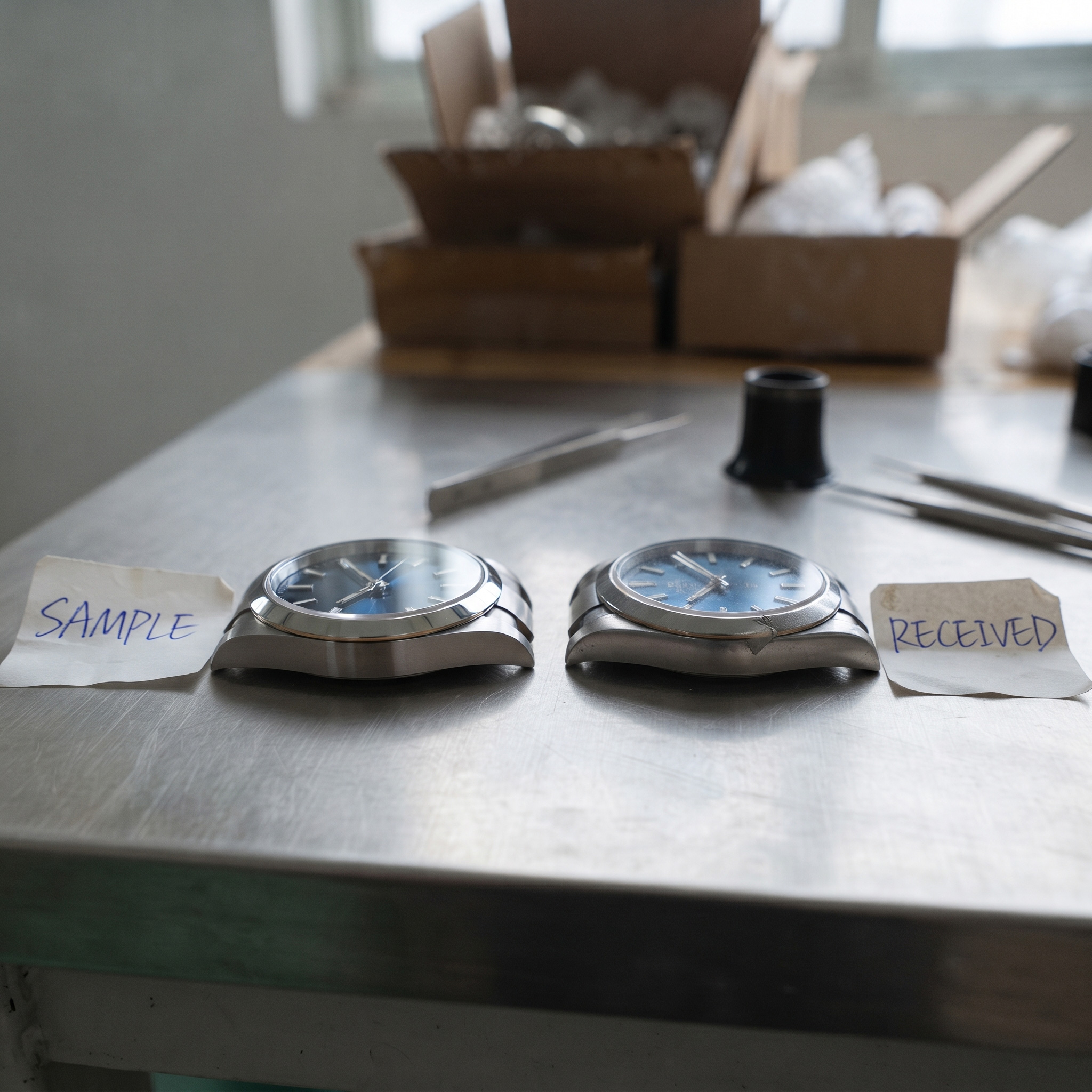
Most buyers who get burned by a watch manufacturer don't lose money on price. They lose it on two things: the finished order doesn't match the sample they approved, or the ship date keeps sliding — two weeks, then two more, then a vague message about "material delays."
Both problems usually trace back to the same gap: the buyer never actually checked the factory before sending a deposit. A few product photos, an agreed unit price, a wire transfer — and by the time the mismatch or the delay shows up, the deposit is gone and the only leverage left is a WhatsApp message that may or may not get answered.
It happens to first-timers and to buyers who've placed a dozen orders before. A factory that performed well on a simple 100-piece run of an off-the-shelf design can behave very differently once the order involves a custom dial, a tighter timeline, or a smaller margin for the factory. The only way to know in advance is to ask, not to assume the last good experience will repeat.
The cost of skipping this step rarely stops at the deposit. A mismatched or delayed shipment often means marked-down inventory, a marketplace penalty for late fulfillment, or an end customer refund the buyer eats out of their own margin — costs that are harder to see up front than a unit price difference of a few cents.
The fix isn't complicated. It's five questions, asked before the deposit goes out, not after.
What Counts as Actually Checking a Factory
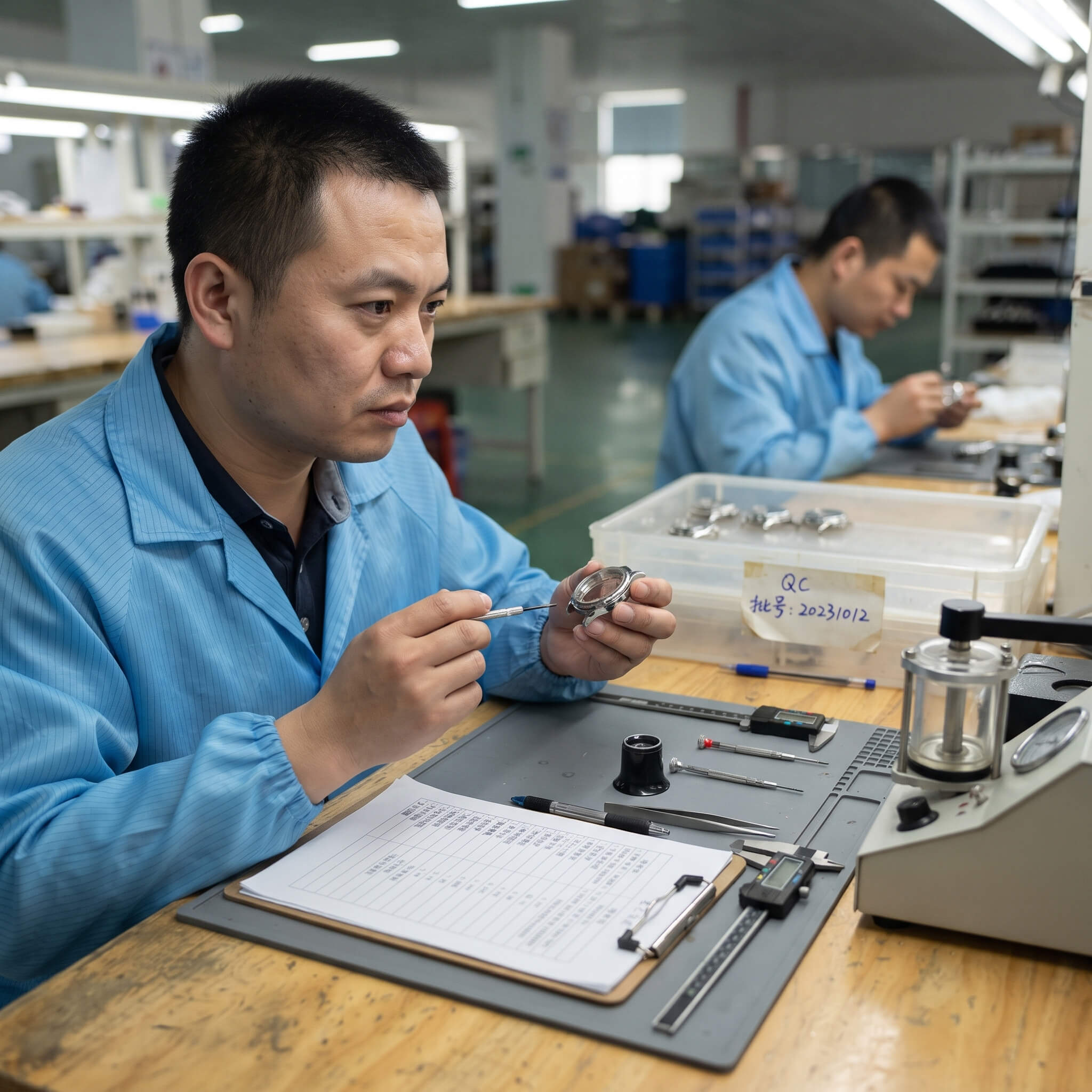
Checking a manufacturer doesn't mean finding the lowest quote or the fastest reply. It means getting specific, verifiable answers to a short list of questions — and noticing which suppliers give you a real answer versus a reassuring one.
A real answer has a number in it: a defect rate, a lead time in days, a certificate you can look up. A reassuring answer has an adjective in it: "strict," "fast," "premium." Once you start listening for the difference, it's easy to tell which supplier has actually done this before and which one is guessing along with you.
This isn't about being suspicious of every supplier you talk to. It's about spending fifteen minutes on five questions before you spend weeks waiting on an order that might not show up the way you pictured it.
The same five questions apply whether this is your first order or your fiftieth. Repeat buyers sometimes skip this step because the relationship already exists — but a factory's answers on MOQ, QC, and timeline can shift between orders as their production schedule fills up or component costs change. Asking again on a new order, or on a new spec, isn't redundant; it's how you catch the shift before it shows up in a shipment.
5 Questions Worth Asking Before You Send a Deposit1. Can They Prove Their Certifications, Not Just Claim Them?
Almost every factory page lists ISO 9001 or similar. Fewer will send you the actual certificate with a verifiable number on it, or agree to a video call showing the production floor on request.
At KODA, certification documents and factory floor footage go out on request, not just on the "About Us" page. If a supplier hesitates or stalls when you ask for the paperwork itself, that hesitation is the answer.
Watch for this: a supplier who answers with a logo image instead of a document. A certification badge on a website costs nothing to display and nothing to verify from the buyer's side — the certificate number is what actually lets you check it against the issuing body's records.
2. Is the MOQ Real — or Does It Change the Moment You Ask for Customization?
A quoted MOQ of 50 or 100 pieces often applies only to an existing catalog design with zero changes. Ask for a custom dial color, a private-label caseback, or a different strap, and the MOQ can quietly jump to 500 or more — sometimes only disclosed after you've already committed to the design.
The question to ask directly is: "What is the MOQ for this exact spec, including the changes I just described?" Get that number in writing before finalizing artwork. KODA quotes MOQ per configuration, not per catalog page, precisely because this is where buyers get surprised most often.
If a supplier gives you one flat MOQ number for every possible customization, that's usually a sign they haven't actually mapped out how each change affects tooling, minimum fabric runs on straps, or component ordering — which means the number is likely to move later anyway.
3. Where Exactly Does Their QC Process Catch Defects?
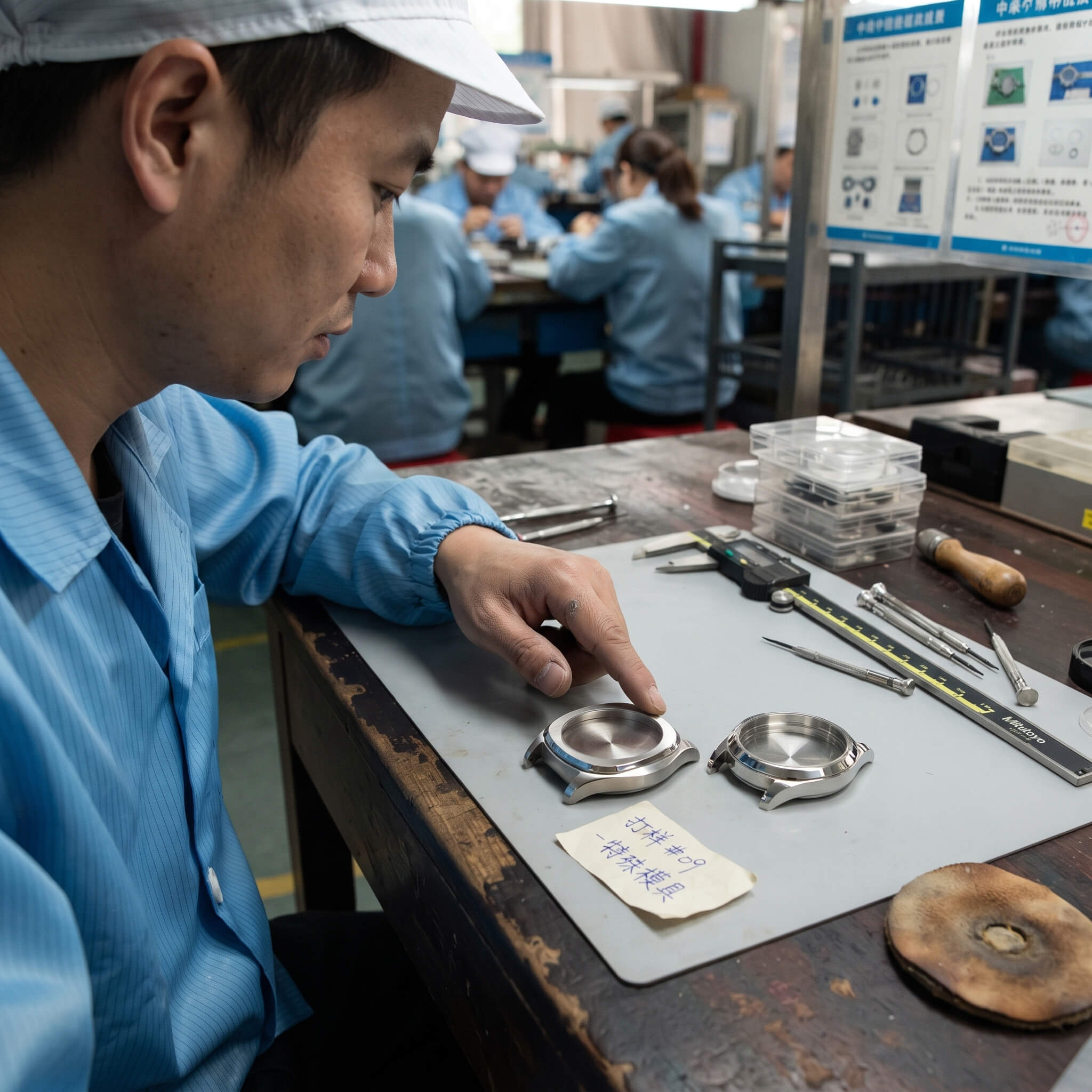
"We have strict quality control" is not a QC process, it's a slogan. A real answer names the checkpoints: incoming component inspection, in-process checks during assembly, and a final pre-shipment inspection — usually covering water resistance, movement accuracy, and case/dial finish.
Ask what percentage of units get inspected at final QC (100% or a sampling rate), and what the average defect rate has been over the last few production runs. A supplier who can give you a number — even an imperfect one, like "under 2%" — is a supplier who is actually tracking this. One who can't is not.
It's also worth asking what happens to units that fail inspection: reworked, scrapped, or shipped anyway with a discount offered later. The answer tells you whether QC is a real gate in the process or a step that gets skipped when a deadline is tight.
For water-resistant models specifically, ask which standard the pressure test follows and at what depth rating — a supplier testing to 3 ATM and labeling it 5 ATM is a common enough shortcut that it's worth a direct question rather than an assumption.
4. What's the Real Timeline From Sample to Shipment?
Sample development typically runs 7–10 working days for a straightforward spec change, longer for a fully custom case or dial. Mass production after sample approval is a separate clock — commonly 25–35 days for a standard order size, depending on component lead times and order volume.
The follow-up question matters more than the first one: "What happens if a delay comes up — do I get notified, and when?" A supplier with a real process will name a specific point (for example, notification within 48 hours of an identified delay) rather than "we'll let you know."
Buyers on a tight retail launch date should also ask whether the quoted timeline includes shipping and customs clearance, or ends the moment the goods leave the factory floor. The two numbers get confused often enough that it's worth spelling out explicitly.
5. Can They Actually Produce Your Design, or Just Relabel What They Already Make?
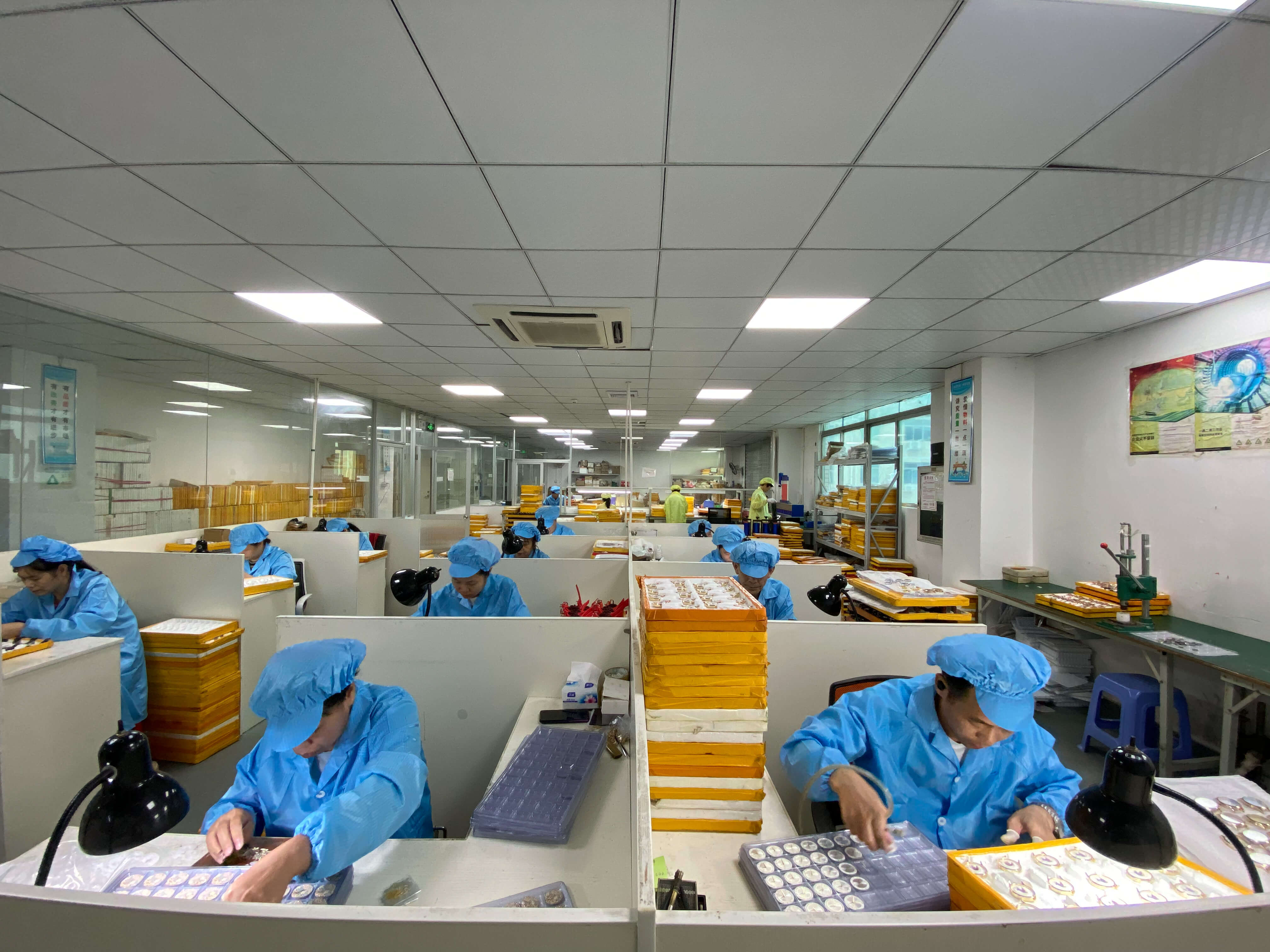
"OEM/ODM available" on a supplier's homepage can mean two very different things: full private-mold customization, or laser-etching your logo onto an existing case. Both are legitimate businesses — but only one can build the product you're actually picturing if it doesn't already exist in their catalog.
Ask to see photos or samples of a private-mold project they've completed for another client (with identifying details removed). If every example they show you is a catalog watch with a different logo, that tells you which category of "OEM" you're actually dealing with.
For buyers building a brand around a specific case shape or dial layout, this question alone can save months — a factory without private-mold capability will either quietly steer the design back toward something in their existing catalog, or take on a project it can't actually finish as specified.
Ask First, Order Second
None of these five questions are hard to ask. What separates buyers who get what they expected from buyers who don't is usually just whether they asked before the deposit or found out after.
A supplier who answers all five clearly, with numbers and documents rather than adjectives, is telling you something useful even before the first sample arrives. So is a supplier who can't.
One more thing worth noting: how these questions get answered matters almost as much as what the answers are. A supplier who takes two days to send a certificate number, or answers three of the five and goes quiet on the rest, is showing you how communication will likely go once an actual order is in production — which is exactly the point where slow or partial answers get expensive.
If you're evaluating manufacturers for your next order, send us your spec and we'll answer all five of these directly — certifications, MOQ by configuration, QC checkpoints, real timelines, and sample work from past private-label projects.
Media Contact
Company Name: Shenzhen Koda Horologe Co., Ltd.
Email: Send Email
Country: China
Website: https://www.kodawatch.com/