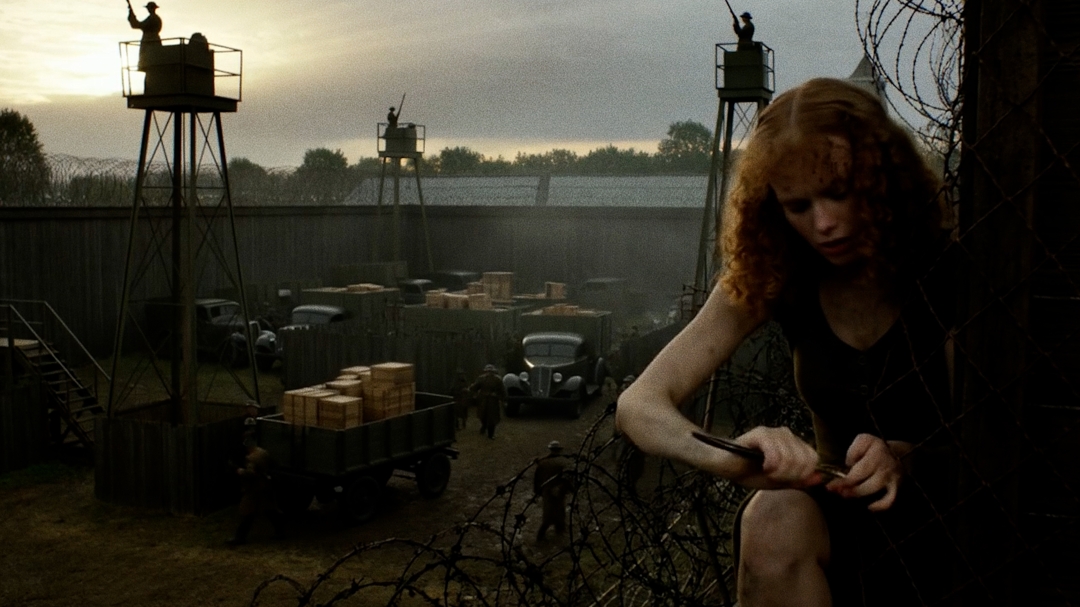

Above: Timothy Hines' The Red Head begins filming this fall in the UK with the production team of Kimberly Olsen, Susan Goforth, Lawrence Scott and Jeff Wallner. Pendragon Pictures.
Director Timothy Hines (“10 Days in a Madhouse”, “Tomorrow’s Today”, “The WIlde Girls”), talks about what sets his upcoming feature motion picture prestige thriller, filming this fall in the UK, “The Red Head”, apart from all the WWII movies that have come before.
“There is a persistent instinct, particularly in cinema, to make resistance look clean,” Hines says, “The train explodes in the distance. The assassin slips into the alley. The crowd cheers liberation. History moves forward with orchestral certainty. Moral clarity arrives fully formed, like sunlight breaking through cloud cover. We prefer our anti-fascists composed, unwavering, psychologically intact. Heroism, in popular memory, is often staged as a condition free from contamination.

Above: The Red Head, the intimate story of WWII resistance fighter Hannie Scaft, coming 2027. Pendragon Pictures
“But human beings are not designed to kill other human beings repeatedly without consequence, even when history later decides they were right.
“Perhaps especially then,” Hines continues, “The Dutch resistance fighter Hannie Schaft occupies a uniquely uncomfortable place in the moral imagination because she complicates the sentimental grammar through which modern audiences often process the Second World War. She was young, educated, strikingly intelligent, and by nearly every surviving account deeply empathetic. She studied law. She believed in justice. She helped Jews evade Nazi persecution. She also participated in armed resistance operations and assassinations against collaborators and occupation forces.
“And according to several who knew her, she experienced something even more psychologically disquieting: catharsis.
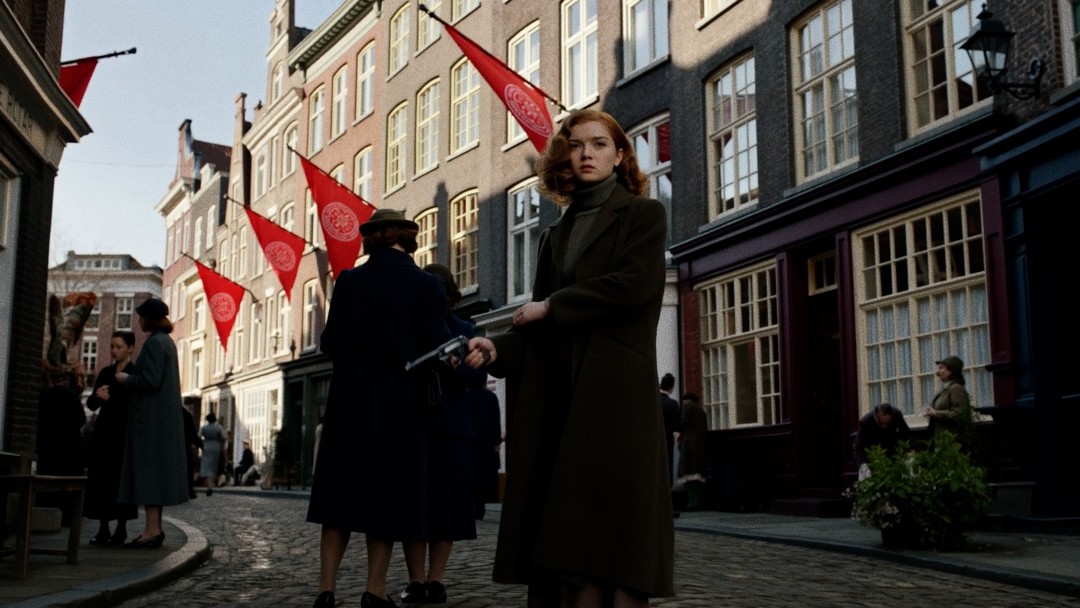
Above: Hannie Schaft prepares to act out her role as a Nazi assassin in the World War II prestige thriller, The Red Head, filming this Fall in the UK. Pendragon Pictures.
“The first time Schaft killed a Nazi, those close to her later suggested, she felt an immediate emotional release. The occupiers were not abstractions to her. They were not distant political opponents. They were a spreading disease inside civilization itself, a cancer consuming Europe organ by organ. The deportations, humiliations, disappearances, executions, and systematic degradation of human dignity had produced in many resistance fighters not merely anger but a profound biological revulsion. To strike back could feel, momentarily, like restoring equilibrium to a poisoned body.
“This is the aspect of wartime psychology history often sanitizes because it resists easy moral packaging.
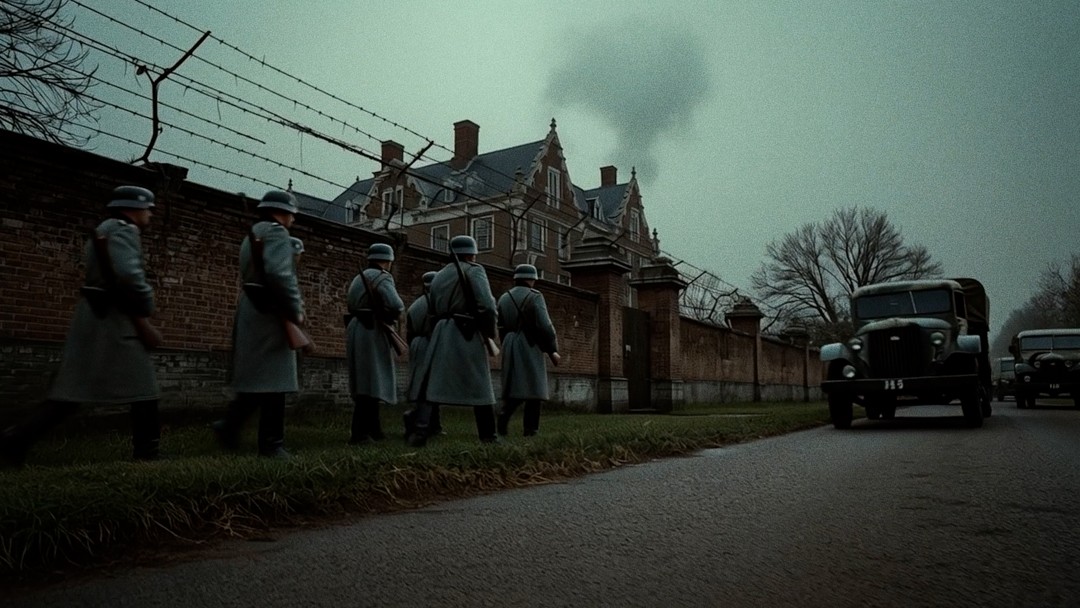
Above: The red Head, filming this Fall in the UK.
There are circumstances under which violence can feel righteous, even necessary, while still damaging the psyche that commits it.”
Timothy Hines’ movie will be a very personal point-of-view film told through the eyes of Hannie Schaft as she is step by step pulled into becoming the resistance fighter, who eventually became the only woman on Hitler’s most wanted list. Hines’ will explore the exact cost of becoming a trained killer and will take the audience on a journey it has never fully experienced in a movie without the films creating a safe fantasy angle to make it more palatable for the viewers.
Hines elaborates, “Modern discussions of trauma tend to focus almost exclusively on victimhood, which is understandable. But resistance fighters occupied a far more complicated psychological territory. Many were simultaneously victims, witnesses, rescuers, and killers. The mind does not separate these categories neatly. It absorbs all of them at once.
“For young operatives in occupied Europe, especially those engaged in close-range assassinations, survival depended upon constructing an emotional duality. One self remained socially functional, laughing, bicycling through ordinary streets, speaking casually at checkpoints. The other self learned to suppress instinctive horror long enough to pull a trigger.
“This division exacted a cost.

Above: WWII Resistance fighter Hannie Schaft preps for her undercover mission in Timothy Hines' The Red Head filming this fall in the UK. Pendragon Pictures.
“Long after the war, surviving resistance members across Europe described recurring nightmares, insomnia, hyper-vigilance, emotional withdrawal, and severe depression. The language of post-traumatic stress disorder did not yet exist publicly in the form we recognize now, but the symptoms haunted them nonetheless. Some spoke of hearing footsteps at night decades after liberation. Others described sudden panic in crowds, irrational guilt over surviving, or emotional numbness that spread quietly into marriages and family life.
“Heroism had not protected them from damage.
“The Dutch resistance sisters Freddie Oversteegen and Truus Oversteegen carried this burden visibly for decades. Both women participated in armed operations while still astonishingly young. In interviews late in life, Truus in particular oscillated between composure and visible sorrow when discussing the past. Memory appeared less like narrative than recurrence. The war had never entirely ended psychologically; it had merely receded into the architecture of daily life.
“One senses this emotional erosion in the fragments left behind about Schaft herself.
“Resistance mythology tends to preserve her in a permanent state of fierce clarity: the red-haired student bicycling through occupied Haarlem with forged papers and hidden weapons; the young woman who defied the Nazis to the end; the martyr executed in the dunes after reportedly telling her executioners, “I’m a better shot than you.”
“But beneath the mythology was a woman in her early twenties absorbing extraordinary psychic violence at an age when most people are still constructing an identity.
The emotional deterioration of clandestine warfare is rarely cinematic because it is incremental. It does not arrive all at once. It accumulates. Every arrest tightens the nervous system. Every betrayal rearranges trust. Every execution, whether committed or witnessed, alters the emotional calibration through which the world is experienced.
“And yet Schaft continued.”
Hines intends to tell the story unvarnished, honest, candid from the inside. The story of a young girl giving up her youth in a world gone mad. “The Red Head’ will not pull punches.
“This continuation is what unsettles modern audiences most deeply, “ Hines states, “We prefer to believe that moral people recoil naturally from killing. But history demonstrates something more troubling: under conditions of sustained atrocity, ethical individuals may arrive at violence not because they lose their humanity, but because they believe humanity itself is under mortal attack.
“Schaft reportedly came to view Nazis as a social cancer. The metaphor is revealing. Cancer is not negotiated with morally. It is removed before it spreads. For many resistance fighters, this logic became emotionally unavoidable after witnessing deportations and executions firsthand. Violence ceased to feel like aggression and began to feel surgical.
“But surgery still leaves blood behind.
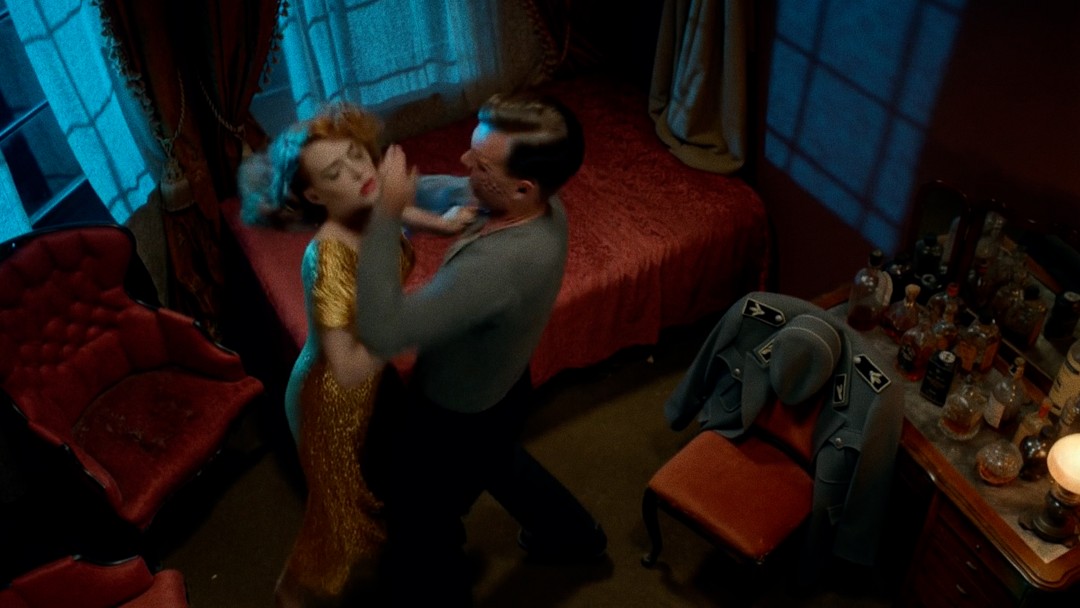
Above: A dangerous game being a spy and resistance fighter in WWII. The Red head filming this Fall in the UK. Pendragon Pictures.
“One of the least discussed emotional consequences among wartime resistance fighters was survivor guilt. Many who lived through the occupation remained haunted not only by what they had done, but by who they failed to save. Entire networks disappeared overnight after arrests. Friends vanished into camps. Lovers were executed. The randomness of survival produced its own torment. Why one person lived while another was tortured or shot became psychologically unbearable to answer.
“Schaft herself did not survive long enough to carry the war into old age. Arrested in 1945 while transporting illegal materials, she was tortured and ultimately executed by Nazi authorities in the dunes of Bloemendaal just weeks before the Netherlands was liberated.
“But in some sense, the emotional consequences of her life survived inside those who knew her.
“The postwar decades produced a peculiar cultural contradiction. Western societies celebrated resistance fighters publicly while often avoiding the psychological reality of what resistance required privately. Ceremonies, monuments, and patriotic narratives transformed damaged young people into symbols of uncomplicated national virtue. Yet many veterans of underground warfare struggled silently beneath those symbols. The emotional complexity of killing, even for unquestionably moral reasons, did not fit neatly inside triumphant liberation narratives.
“Perhaps that is why Hannie Schaft feels newly contemporary.
“Modern audiences increasingly recognize trauma not as weakness but as evidence of prolonged psychological exposure to terror. We understand now that courage and emotional injury coexist easily. In fact, they often require one another. The people most wounded by violence are frequently those who retained enough moral sensitivity to understand precisely what violence costs.”
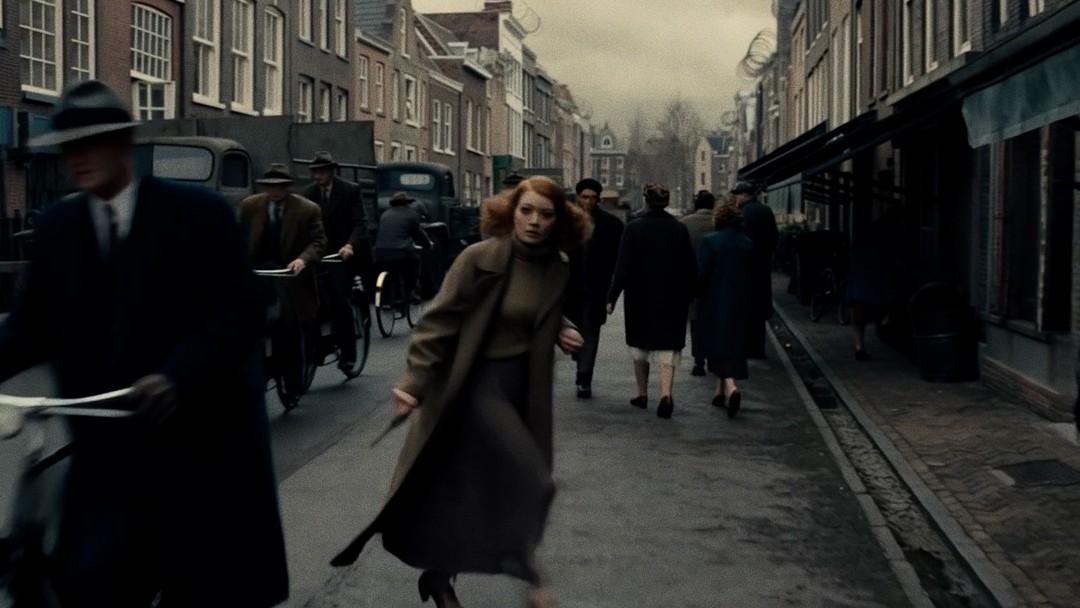
The true story of Hannie Schaft, The Red Head, filming this Fall in the UK. Pendragon Pictures.
The upcoming feature film “The Red Head” approaches Schaft through this more psychologically intimate lens. Rather than reducing resistance to adventure iconography, the film examines the emotional corrosion beneath clandestine heroism: the exhaustion, grief, dissociation, fear, catharsis, and moral fragmentation experienced by young people forced into lethal resistance against fascism.
This may ultimately be the most honest way to remember Hannie Schaft, not as an untouchable saint sculpted safely into history, but as a brilliant and emotionally vulnerable young woman who crossed into violence believing civilization itself was dying around her.
And who paid for that understanding with pieces of herself long before she paid with her life.
Media Contact
Company Name: Pendragon Pictures
Contact Person: Susan Goforth
Email: Send Email
Phone: +1 310-480-0837
City: Los Angeles
State: CA
Country: United States
Website: www.pendragonpictures.com