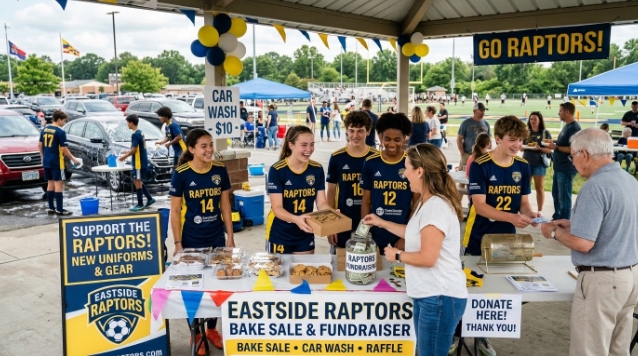
Practical sports fundraising ideas can help reduce out-of-pocket costs while keeping campaigns simple, organized, and tied to real team needs.
Youth sports can bring families together, but the costs can add up quickly. Registration, uniforms, equipment, tournament fees, travel, meals, and facility expenses often land on the same parents who are already volunteering their time.
That is why the strongest fundraisers are not always the most complicated ones. For parent volunteers and booster clubs, the goal should be to choose campaigns that are easy to explain, simple to manage, and clearly connected to what the team needs this season.
Start With the Cost That Matters Most
A fundraiser works better when families understand exactly what it supports. “Help the team” is a nice message, but “help cover tournament travel” or “support new uniforms” gives people a clearer reason to participate.
This matters because families are already carrying a real financial load. The Aspen Institute’s Project Play reported that the average U.S. sports family spent $1,016 on a child’s primary sport in 2024, a 46% increase since 2019. Rising costs can affect whether kids are able to keep participating, which makes thoughtful fundraising more than a seasonal task.
Before choosing a campaign, identify the team’s most urgent expense. Then set a simple target. For example, a booster club might aim to raise $2,000 for travel, $1,200 for warmups, or $750 for tournament fees. A clear number helps families see progress and gives supporters a reason to contribute.
Choose Fundraisers Volunteers Can Actually Manage
The right fundraiser should match the size and energy of the volunteer group. A large community event may sound promising, but it can create stress if only two or three people are available to plan it. Smaller campaigns often work better when they have clear roles and a short timeline.
Product fundraisers, team merchandise, restaurant nights, car washes, concession tables, sponsorship drives, and online donation campaigns can all work when the instructions are simple. The best choice depends on the team’s schedule, available volunteers, and fundraising goal.
Parent groups comparing practical sports fundraising ideas can use resource pages as a starting point to organize campaign options around effort level, timeline, and team needs. The goal is not to run every idea at once. It is to choose one campaign that families can understand and support.
A useful rule is to assign roles before launch. One person handles communication, another tracks orders or donations, another follows up with sponsors, and another posts progress updates. When the work is divided early, the fundraiser is less likely to fall on one organizer.
Make Participation Easy for Every Family
A fundraiser should not depend on the same few parents every season. Participation improves when families are given simple ways to help, even if they cannot attend every meeting or volunteer for a long shift.
Instead of asking generally for support, give families one clear action. They can share a campaign link, collect five pre-orders, ask one local business about sponsorship, volunteer at one concession shift, or help distribute items after practice. Small tasks are easier to complete and easier to track.
Communication should be simple, too. Send one message that explains the goal, deadline, how to participate, and who benefits. Include a short script families can copy when contacting friends, relatives, or local supporters.
This approach also keeps the campaign fair. Not every family has the same schedule, network, or financial ability. Offering different ways to help gives more people a realistic path to participate without pressure.
Connect the Campaign to the Community
Sports teams already have a built-in community: families, alumni, local businesses, teachers, coaches, and neighbours. Fundraisers are more effective when they make that community connection clear.
A local sponsorship drive can work well when businesses receive clear information about what the team needs and how their support will be recognized. A game-day concession table can raise money while serving people already attending the event. A team merchandise campaign can give supporters something useful while also building team identity.
For school-connected groups, it is important to follow the rules that apply to booster clubs and fundraising activity. The National Federation of State High School Associations notes that booster clubs often support athletic programs through volunteer hours, monetary donations, or food for athletes, and may help cover items not included in school budgets.
Groups should also be mindful of financial and organizational responsibilities. IRS materials explain that booster clubs have traditionally been recognized as tax-exempt under certain sections when they promote amateur athletics, but the details depend on structure and operations.
Track Progress and Report Results
Families are more likely to support future campaigns when they can see what happened after the fundraiser ends. Reporting does not need to be complicated. Share the goal, amount raised, expense covered, and next step.
For example, a message might say, “The team raised $1,840 toward travel costs, covering the bus deposit for the regional tournament.” That kind of update shows families that their effort had a visible result.
Tracking also helps booster clubs improve over time. If a fundraiser requires too much work for a small return, it may not be worth repeating. If a campaign was easy to manage and well supported, it may become part of the team’s annual plan.
Conclusion
The best sports fundraising ideas are practical, clear, and manageable. They reduce pressure on families, give volunteers realistic roles, and connect every campaign to a specific team need.
Start by choosing the expense that matters most. Pick one fundraiser that fits the schedule and volunteer capacity. Make participation easy, communicate the goal clearly, and report the result when the campaign is complete.
With the right plan, fundraising can feel less like a burden and more like a shared way to support the athletes.
Additional Resources
Teams planning future campaigns can review broader fundraising ideas to compare options for schools, clubs, sports teams, and community groups.
Media Contact
Company Name: Fundraising.com
Contact Person: Marc Alcindor
Email: Send Email
Country: United States
Website: https://fundraising.com/